 Whalesbook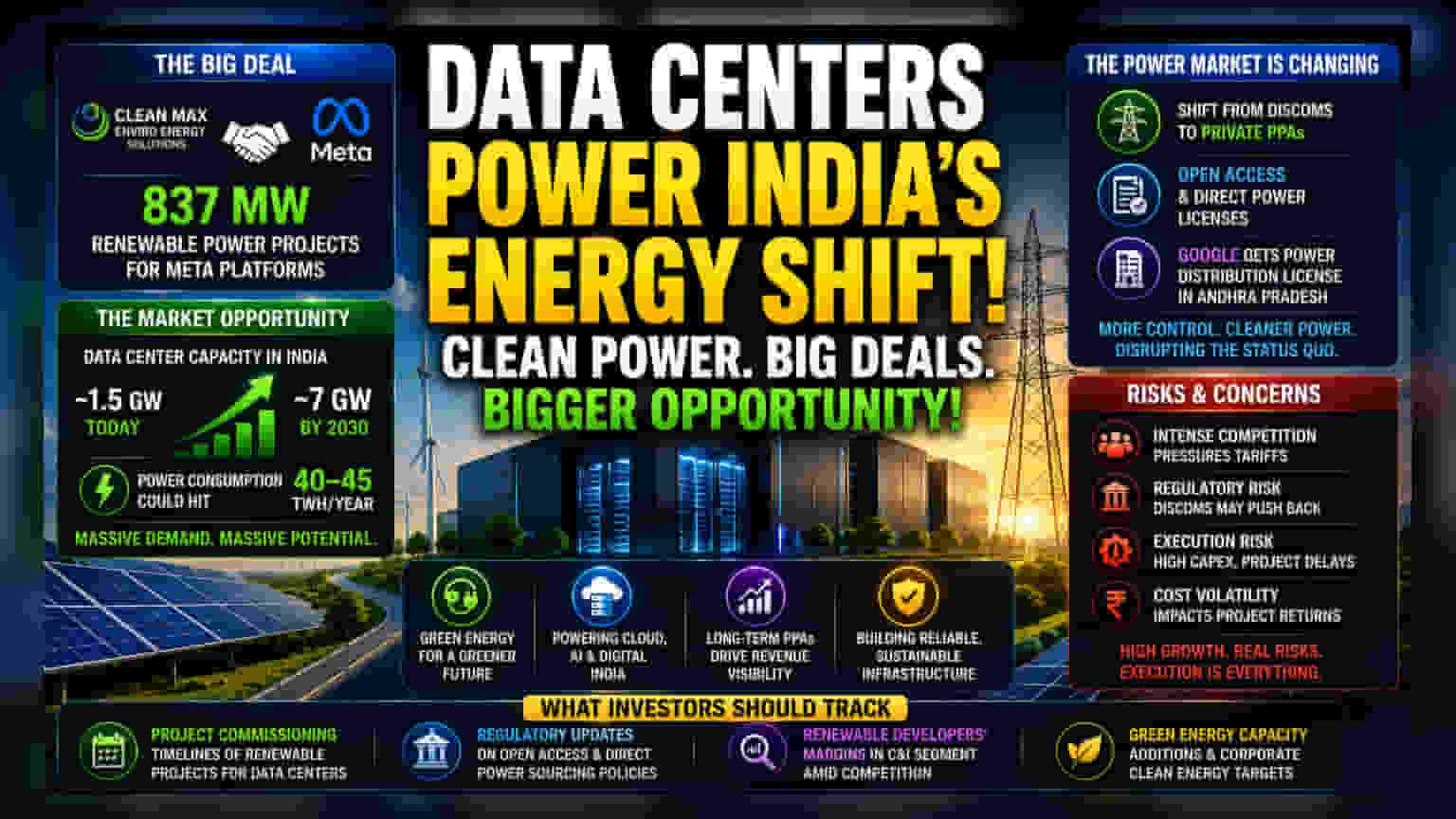


India's booming data center sector is creating massive demand for renewable energy. As tech giants move to secure clean power through private agreements, power companies face new growth opportunities and competitive pressures. This article explains what the surge in data center electricity demand means for market participants and where the risks lie.
What Happened
India is witnessing a significant transformation in its power market, primarily driven by the rapid growth of data centers. Technology companies, which require massive and constant electricity supply to power cloud services and artificial intelligence (AI) infrastructure, are increasingly turning to private energy producers. A notable example is the recent deal where Clean Max Enviro Energy Solutions agreed to develop 837 megawatts of renewable power projects specifically for Meta Platforms. This shift highlights a broader trend where tech giants are actively seeking to secure their own green energy sources to meet their internal sustainability goals.
Why This Matters For Investors
For investors, the growth of data centers represents a shift in how power is sold and consumed in India. Historically, commercial and industrial users relied heavily on government-run power distribution companies (discoms). Now, large tech firms are favoring private Power Purchase Agreements (PPAs). These contracts are important because they often provide long-term revenue visibility for power producers. As data centers scale, they demand high reliability and clean energy, forcing energy companies to build specialized infrastructure to win these lucrative contracts.
The Market Opportunity
Data center capacity in India is expected to rise sharply, moving from approximately 1.5 gigawatts today to nearly 7 gigawatts by 2030. This expansion creates a direct need for more electricity. Estimates suggest power consumption for these facilities could hit 40-45 terawatt-hours annually. This creates a large market for developers of wind, solar, and other renewable energy projects. As tech firms prioritize decarbonization, they are becoming a dominant customer base for renewable energy providers, potentially accounting for a significant share of new capacity additions in the coming years.
How The Power Market Is Changing
Data center operators are becoming more creative in their energy sourcing. They are moving away from traditional grid reliance by using methods like open access, which allows them to bypass standard distribution networks, and securing direct electricity licenses. For instance, Google has obtained a power distribution license in Andhra Pradesh to source electricity directly. While these moves give tech firms more control over costs and energy type, they also disrupt the traditional revenue models of regional power distribution companies.
Risks And Concerns
While the growth potential is high, the sector is not without risks. Competition is intensifying as more players enter the market to capture this demand. Success in this space depends on the ability of power producers to manage costs and keep tariffs competitive. There is also a regulatory risk; power distribution companies may lobby against open access policies if they lose too much business to private power sellers. Additionally, execution risk remains, as these projects require significant upfront money spent on expansion, and any delays in construction can impact the expected returns.
What Investors Should Track
Investors may monitor a few key areas to understand the health of this trend. First, track the commissioning timelines of large renewable projects linked to data centers to see if companies can deliver on schedule. Second, observe regulatory updates regarding open access and direct power sourcing, as these policies directly affect the ability of companies to win these contracts. Finally, watch the profit margins of renewable energy developers in the commercial and industrial space. While volume growth is high, the ability to maintain healthy margins amidst rising competition will be a crucial indicator of long-term business strength.