

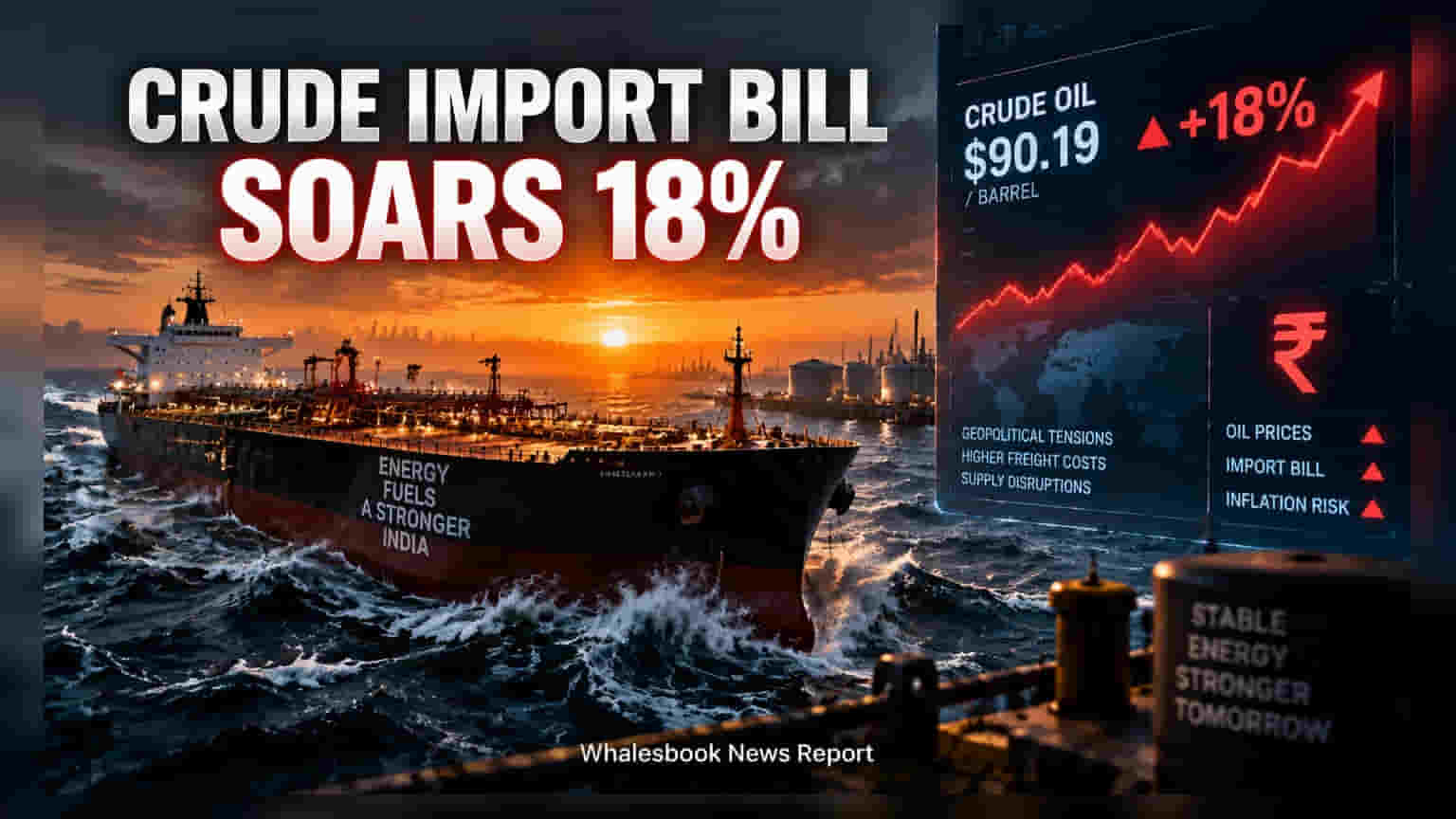
India's crude oil import costs reached $11.7 billion in August, an 18% jump from last year, even though the country bought 3% less oil. Rising global prices, driven by geopolitical tensions, have increased the financial burden. This shift is a key factor for investors to track, as it can pressure the profit margins of oil marketing companies and influence broader economic stability, including inflation and the value of the Indian Rupee.
India’s energy import costs saw a significant increase in August 2026. While the country imported 19 million tonnes of crude oil, down from 19.6 million tonnes during the same month last year, the total bill rose to $11.7 billion. This is an 18% increase from the $9.9 billion spent in August 2025. This situation highlights how vulnerable the Indian economy remains to global oil price swings, where even a slight reduction in volume cannot offset the impact of high prices.
Why Global Prices Are Rising
The primary driver behind this jump is the average price of the Indian crude basket, which climbed to $90.19 per barrel in August, significantly higher than the $69.11 per barrel recorded a year ago. Ongoing geopolitical instability in the Middle East has disrupted key shipping routes, such as the Strait of Hormuz and the Bab el-Mandeb. These disruptions have forced shipping companies to navigate longer or riskier routes, leading to higher freight costs and increased war-risk insurance premiums. These costs are ultimately passed on to the buyer, adding a premium to every barrel of oil imported.
Impact on Oil Marketing Companies
For investors, this trend is particularly important for state-run Oil Marketing Companies (OMCs) like Indian Oil, HPCL, and BPCL. These companies refine crude oil and sell fuel to consumers. When the cost of importing crude rises sharply, these companies face pressure on their profit margins unless they can increase retail fuel prices to cover the additional expense. If retail prices remain stable while crude costs stay high, it can hurt the profitability of these companies, which is a major factor shareholders track.
Macroeconomic Effects
Beyond individual companies, a consistently high import bill impacts the broader economy. India relies heavily on imports to meet its energy needs. When the import bill swells, it increases the demand for foreign currency, which can place pressure on the Indian Rupee. Additionally, higher crude prices often act as a hidden tax on the economy, potentially fueling inflation. This makes it more difficult for the central bank to manage interest rates if energy-driven inflation starts to affect the prices of other essential goods and services.
Consumption Trends
The domestic consumption data shows a mixed picture. While demand for high-speed diesel and petrol grew by 6.8% and 8.2% respectively, total petroleum product usage dropped by 2.8% to 18.6 million tonnes. The decline was largely driven by a sharp fall in the use of LPG and naphtha, which fell by 17.1% and 22.3% respectively. This suggests that while transport fuel demand remains resilient, indicating steady mobility and economic activity, industrial and household gas usage is facing pressure, likely due to the higher costs.
Investors will now be watching to see if global crude prices stabilize or if these geopolitical tensions persist. The key monitorable remains whether the oil marketing companies can manage their margins effectively through operational efficiency or if the government will need to adjust fuel pricing policies to balance the impact of these elevated global energy costs.