 Whalesbook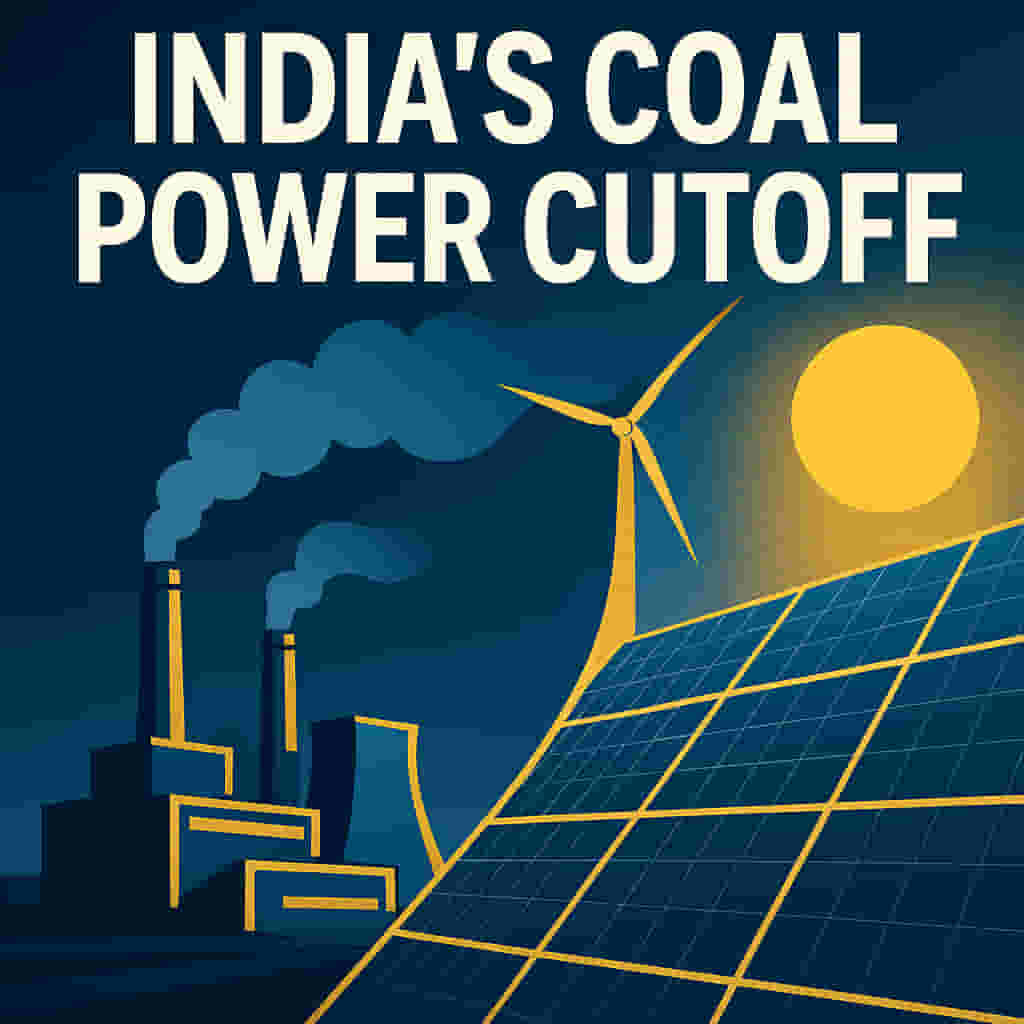
India's top power ministry official has indicated that the country does not foresee adding new coal power generation capacity beyond the year 2035. This statement suggests a long-term strategy to limit reliance on coal.
Future Capacity Target
- Pankaj Agarwal, the secretary at the power ministry, announced that India's coal power generation capacity is projected to reach 307 gigawatts by 2035.
- He clarified that there are no immediate plans to expand this capacity further after that target year.
Energy Policy Shift
- This announcement points towards a significant potential shift in India's long-term energy planning.
- While coal remains a crucial part of India's current energy mix, the focus on capping capacity suggests a growing emphasis on cleaner energy sources for future expansion.
Implications for the Sector
- Investors and stakeholders in the energy sector will be closely watching how this policy evolves.
- The decision could influence future investments in both coal-fired power plants and renewable energy projects.
Background Context
- India is one of the world's largest emitters of greenhouse gases, and its energy demand continues to grow.
- Balancing energy security with climate commitments has been a key challenge for the government.
Impact
- This news could significantly impact companies involved in coal mining, coal-fired power generation, and related infrastructure.
- It may also accelerate investment in renewable energy sources like solar and wind power, as well as in energy storage solutions.
- Impact Rating: 7/10
Difficult Terms Explained
- Coal Power Generation Capacity: The maximum amount of electricity a coal-fired power plant can produce. Measured in gigawatts (GW).
- Gigawatts (GW): A unit of power equal to one billion watts. It's a measure of electrical capacity.