

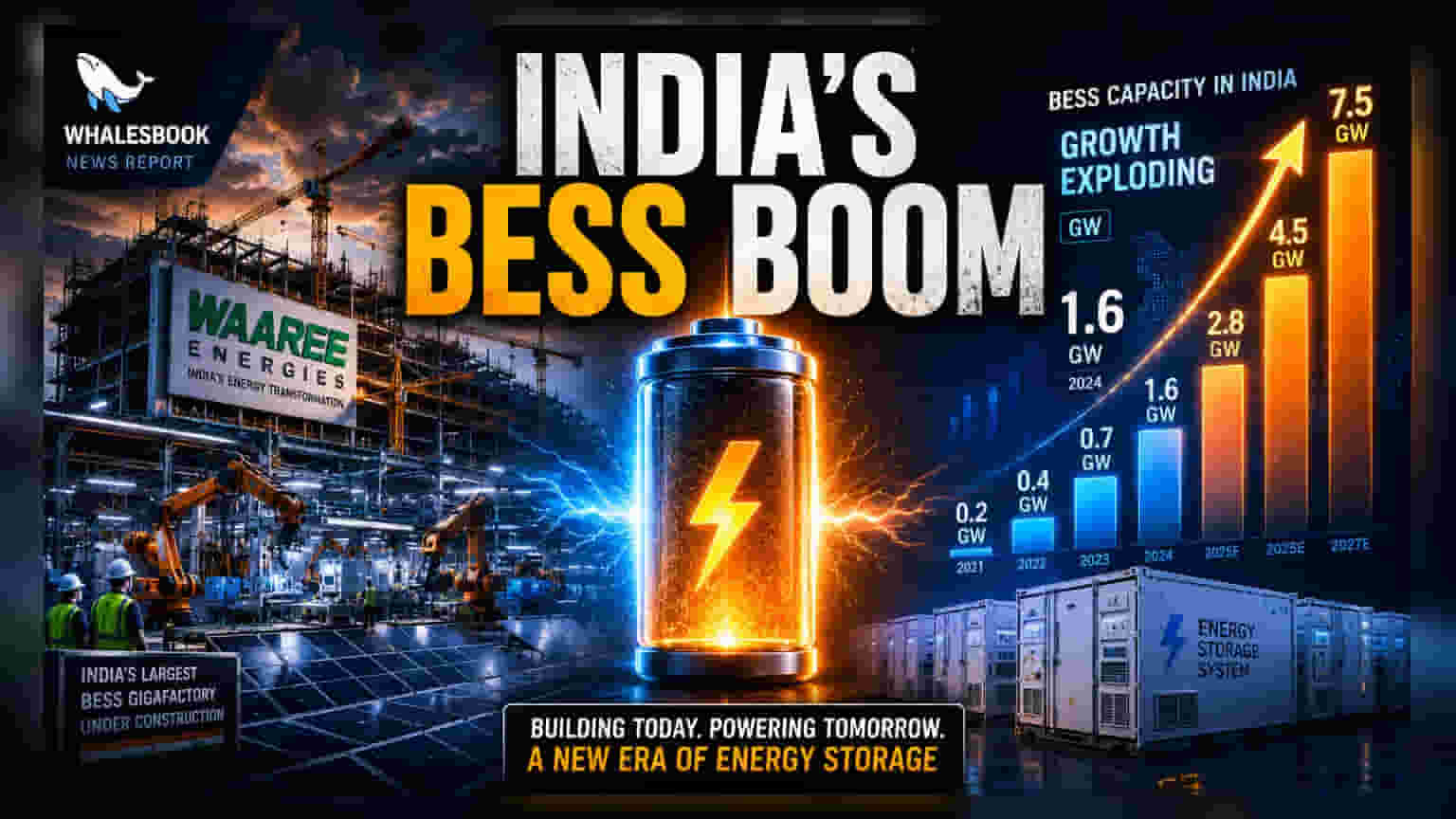
India is rapidly expanding its Battery Energy Storage Systems (BESS) sector to support renewable energy growth, with a target of 236 GWh by FY32. Major players like Waaree Energies, Pace Digitek, and Acme Solar are investing heavily in domestic manufacturing and capacity to capture this emerging energy storage pipeline.
What Happened
India is fast-tracking the adoption of Battery Energy Storage Systems (BESS) to ensure grid stability as the country increases its reliance on solar and wind energy. The Central Electricity Authority has projected that India will need 236 gigawatt-hours (GWh) of storage capacity by FY32, a massive jump from the 34.7 GWh expected by FY27. Government support, including viability gap funding and transmission charge waivers, has created an active pipeline for battery manufacturing and storage projects across the country.
Strategic Expansion by Key Players
Major companies are responding to this demand by building large-scale manufacturing and deployment capabilities. Waaree Energies is investing ₹10,000 crore to establish an integrated cell-and-pack gigafactory in Gujarat, aiming for a 20 GWh capacity by FY28. The company is set to launch the first phase of 3.5 GWh this financial year. Meanwhile, Pace Digitek is focusing on vertical integration by setting up its own container fabrication facility, which it expects will reduce import-related costs and improve operating margins. Acme Solar is utilizing its existing renewable power assets to deploy 2.3 GWh of storage, with plans to scale this to 20 GWh by 2030.
The Business Model and Revenue Drivers
These companies are employing different strategies to capture value in the energy storage space. Acme Solar is focusing on power arbitrage, where it stores electricity during low-demand periods and sells it during peak hours to earn a spread of approximately ₹6 per unit. This strategy helps maximize returns from its 5.0 GW renewable portfolio. Waaree Energies is leveraging its position as a leading solar module manufacturer to create an energy transition ecosystem, while Pace Digitek is prioritizing infrastructure efficiency to service its ₹8,855 crore energy and BESS order book.
Execution and Market Risks
The shift toward domestic BESS production carries inherent business risks. Success for these firms depends on their ability to manage complex supply chains for critical battery minerals and raw materials, which are often subject to price volatility. Additionally, the risk of project delays in such large-scale capital-intensive manufacturing is significant. Investors should also be mindful of regulatory changes, as the BESS market relies heavily on government policy support, transmission waivers, and grid-integration mandates. Competitive pressure in the sector may also impact profit margins as more players enter the market and manufacturing capacity increases nationwide.
What Investors Should Track
For those monitoring the sector, the key indicators will be the actual commissioning timelines for these new gigafactories and storage projects. Monitoring the sustainability of profit margins, especially in a sector prone to raw material price fluctuations, is essential. Furthermore, investors may watch for updates on government policy stability, order execution rates, and the ability of these companies to secure long-term utility contracts that provide predictable cash flows for their BESS assets.