

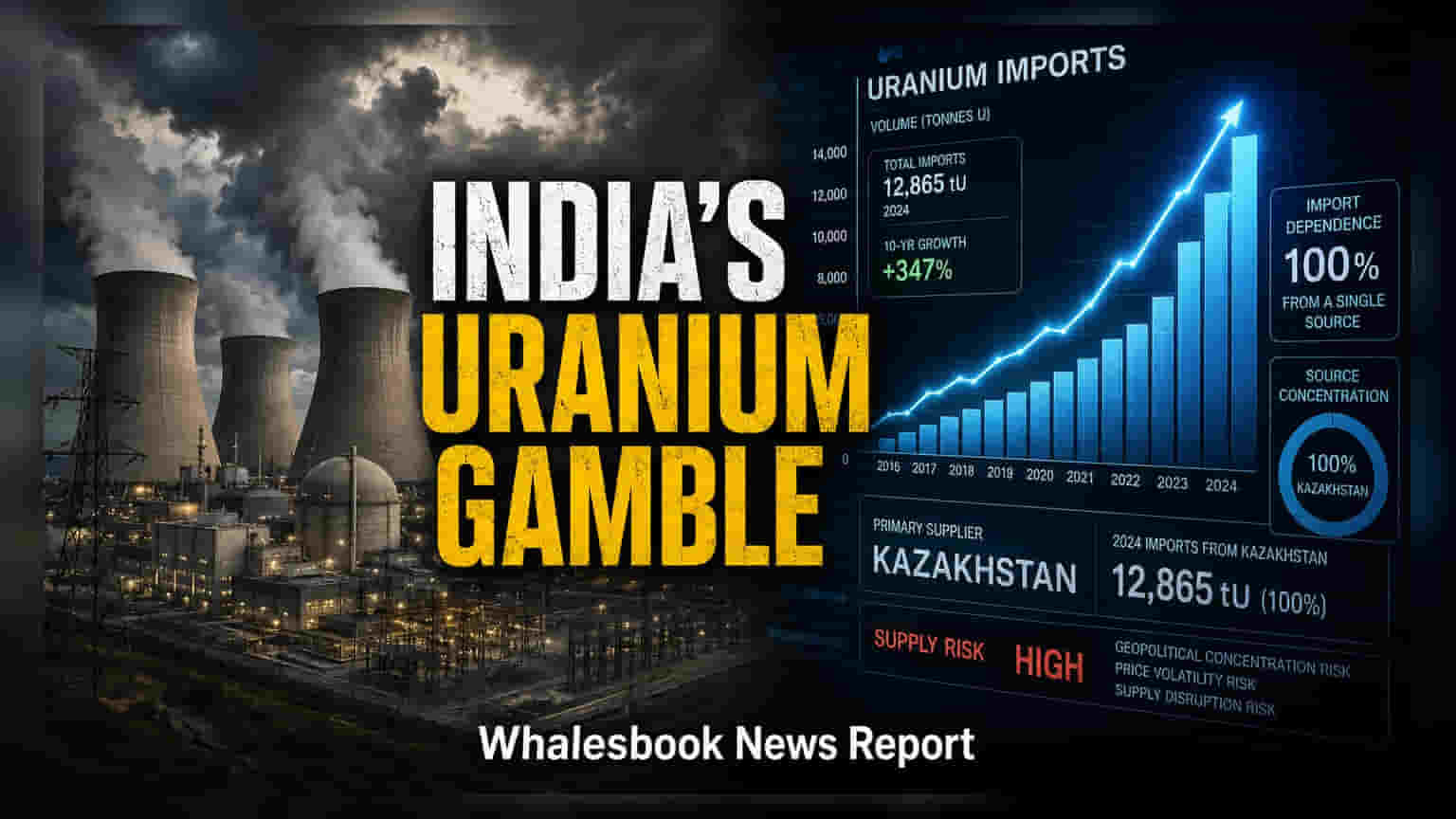
India targets 100 GW of nuclear power by 2047 to drive net-zero goals, but high import reliance poses a strategic risk. With domestic uranium meeting only 30% of current needs, securing reliable long-term fuel supplies is critical for the sector's expansion plans.
India is undertaking an ambitious expansion of its nuclear power capacity, aiming to scale from the current 8.8 GW to 100 GW by 2047. This push is a cornerstone of the nation's broader net-zero emission strategy. However, the plan relies heavily on fuel availability, and data shows that India's domestic uranium production currently meets only about 30% of its annual fuel requirements. As the country looks to expand its fleet of Pressurised Heavy Water Reactors (PHWRs), the demand for uranium is projected to climb significantly, requiring roughly 5,400 tonnes of uranium annually for new capacity alone.
Fuel Security and Geopolitical Exposure
The primary concern for investors and policymakers is the concentration of uranium supply chains. Unlike more diversified energy imports like crude oil, uranium sourcing is currently dependent on a limited number of countries, primarily Kazakhstan, Russia, Uzbekistan, and Canada. This high concentration introduces potential geopolitical and supply chain risks. Any disruption in trade relations or operational issues in these supplier nations could directly impact the operational stability of India's nuclear plants, mirroring the supply volatility often seen in the fossil fuel sector.
To manage this, the government is exploring a more proactive approach to fuel security. There is a concerted effort to diversify suppliers and secure long-term offtake agreements. Furthermore, collaborative ventures between major power utilities like NTPC and the Uranium Corporation of India (UCIL) are being explored to acquire overseas uranium assets. This move aims to give India more control over its supply chain, shifting from a pure buyer in the spot market to a stakeholder in production.
Thorium and Regulatory Reform
While the industry views India's vast thorium reserves as the ultimate path to energy independence, the commercial use of thorium is still a long-term goal. The successful achievement of first criticality at the 500 MWe Prototype Fast Breeder Reactor (PFBR) at Kalpakkam in April 2026 marks a significant technical milestone in the three-stage nuclear program. However, moving from this demonstration stage to widespread commercial deployment of thorium-based power will take time and substantial technological maturation.
Supporting this expansion is the legislative framework, including the SHANTI Act of 2025. This act was designed to reform the nuclear sector by easing liability rules and creating a pathway for private sector and foreign participation. For stakeholders in the energy sector, this regulatory shift is vital, as it allows for a more capital-efficient development model compared to the previous state-only approach. Investors should continue to track the execution timelines for new reactor projects and updates on long-term international fuel procurement deals, as these will be the primary indicators of whether the 100 GW target remains on track without compromising energy security.