

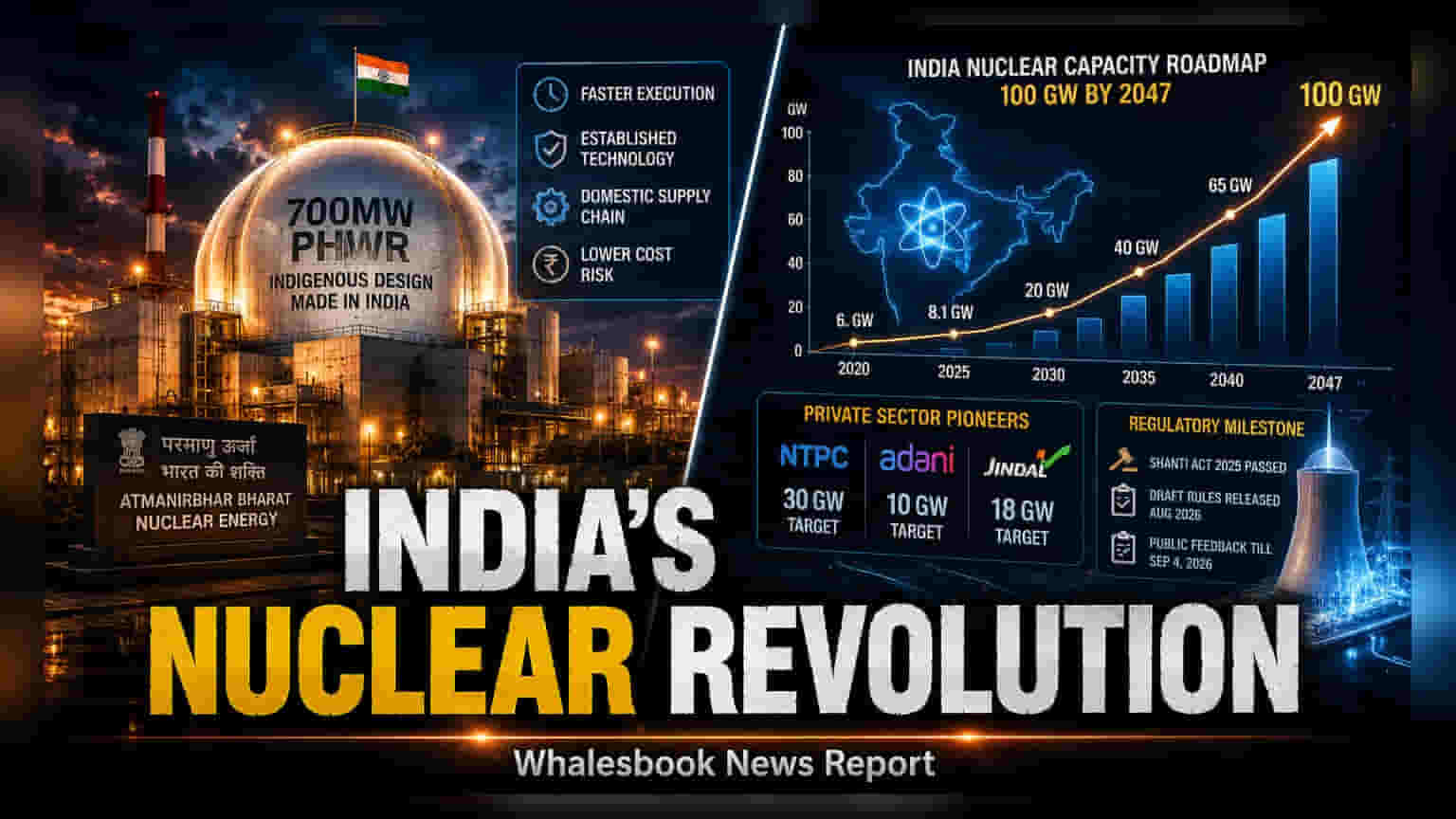
Indian utilities like NTPC, Adani, and Jindal Steel are prioritizing indigenous reactor designs to meet the nation’s 100 GW nuclear power target by 2047. Following the SHANTI Act of 2025, this strategic move aims to leverage established supply chains and avoid project delays. The next key step is the finalization of safety and liability regulations in September.
Major Indian power utilities are shifting their nuclear energy strategies, opting for domestically-designed Pressurized Heavy Water Reactors (PHWRs) to accelerate project timelines. As India aims to increase its nuclear capacity to 100 gigawatts by 2047, companies including NTPC Ltd., Adani Group, and Jindal Steel have signaled that using standardized, locally-built technology is their preferred path to kickstart private-sector participation in the atomic energy space.
Strategic Choice of Indigenous Technology
The move towards indigenous reactors is designed to bypass the common issues that have historically plagued large infrastructure projects, such as supply chain bottlenecks and extended regulatory approvals. By utilizing the 700-megawatt PHWR design, companies can rely on an established domestic supply chain and technology that is already operational within India. This approach is intended to provide greater predictability in project costs and execution timelines compared to importing foreign reactor designs, which often require complex negotiations and long-lead approvals.
For companies like NTPC, which is targeting 30 gigawatts of nuclear capacity to balance its coal-heavy portfolio, the PHWR model offers a viable way to scale operations quickly. Similarly, Jindal Steel, with an 18-gigawatt target, and Adani Group, aiming for 10 gigawatts, are viewing the domestic route as the most efficient way to align with the government's decarbonization goals.
Regulatory and Execution Risks
While the industry is preparing for this expansion following the passage of the SHANTI Act in 2025—which ended the state-controlled monopoly on nuclear power—significant regulatory work remains. The Department of Atomic Energy released draft rules in mid-August 2026 covering critical areas such as licensing, safety, waste management, and financial liability for private operators. These rules are currently open for public feedback until September 4, 2026.
For investors, the key risk remains the uncertainty regarding the final version of these regulations. The economic viability of these multi-billion-rupee projects will depend heavily on the clarity provided in the final framework regarding long-term liability and power pricing. If regulatory approval processes or construction timelines drag, companies may face cost overruns, which could pressure their balance sheets and project internal rates of return.
Furthermore, the long-term success of this expansion depends on the country’s ability to manage its uranium supply and maintain the competitiveness of nuclear electricity prices against other renewable and thermal power sources. As these utilities move from planning to actual site deployment, market participants will monitor the finalization of the SHANTI Act rules and the subsequent announcement of the first set of commercial licenses for private players.