

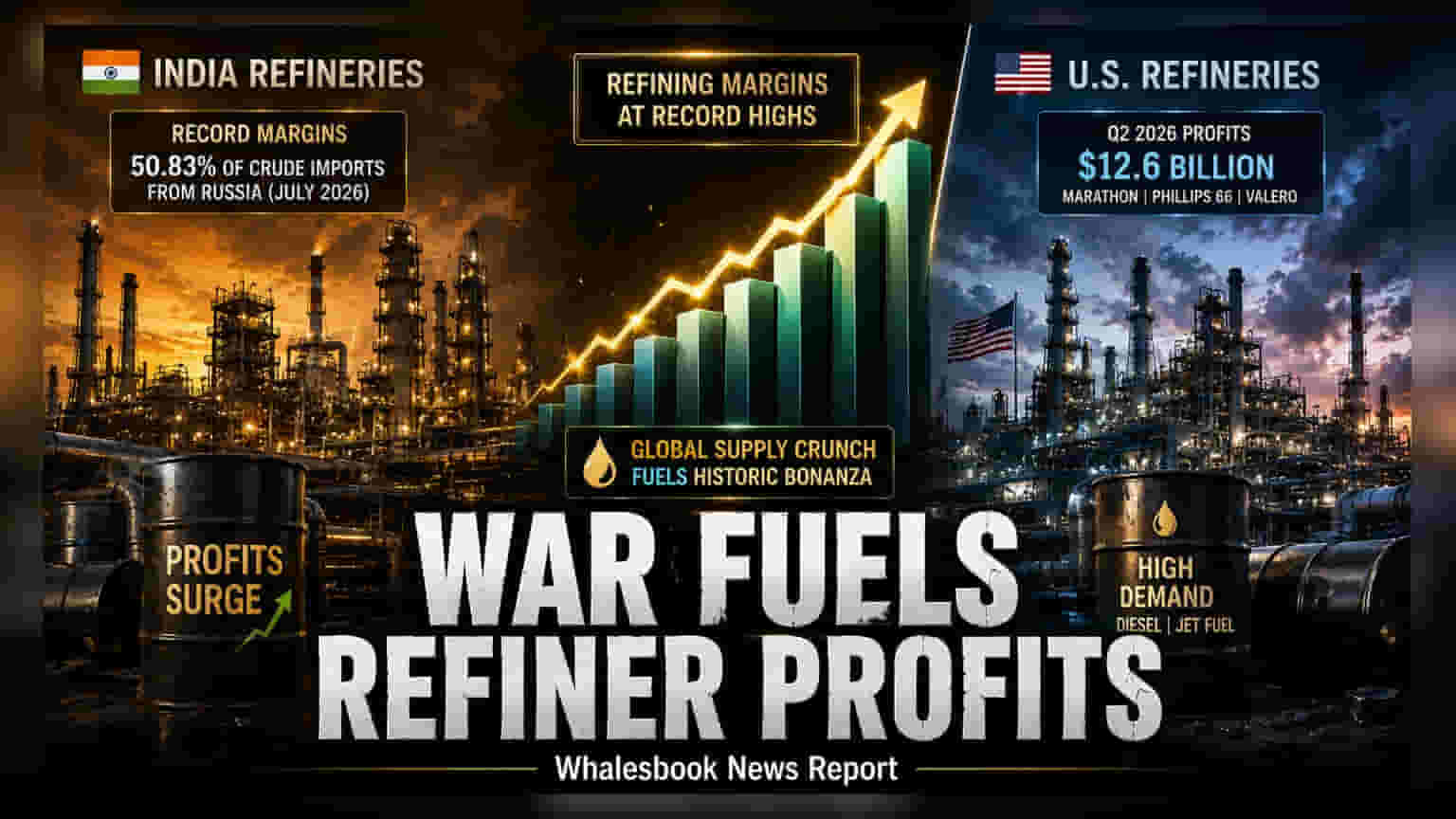
Major oil refiners in India and the US are seeing record profits as global supply disruptions tighten fuel markets. While companies are benefiting from high refining margins for diesel and jet fuel, investors should be aware of risks including potential sanctions on Russian oil imports and rising procurement costs for crude.
Global fuel supplies are facing significant pressure due to ongoing geopolitical conflicts, driving refining margins to historic highs. With crude supply disruptions linked to the war in Ukraine and instability in the Middle East, refiners in India and the United States have emerged as critical suppliers to global markets. This supply crunch has allowed these refineries to operate at high capacity and capture substantial profits, as importing nations struggle to secure sufficient barrels.
Refining Performance and Margins
The financial impact of these market conditions is visible in the recent performance of major players. US-based refiners, including Marathon Petroleum, Phillips 66, and Valero, collectively reported $12.6 billion in profits for the second quarter of 2026. This performance reflects the robust demand for refined products like diesel and jet fuel, which have seen price surges as global inventories remain below seasonal norms. In the Atlantic Basin, refining margins have reached record levels, directly supporting these strong financial results.
The Indian Context and Supply Risks
India has strategically positioned itself as a major swing supplier for the Asian region. However, this success comes with complex operational challenges. As of July 2026, India’s reliance on Russian crude oil reached a record 50.83%. While this has historically provided a cost advantage, it introduces significant regulatory uncertainty. Refiners are currently navigating the pressure of potential US sanctions, which could target entities purchasing Russian oil. Any legislative move to impose stricter tariffs or bans on these imports could disrupt the current supply chain and force companies to seek costlier alternatives from the spot market.
Market Volatility and Operational Costs
The market environment remains fragile. Brent crude prices have climbed above $90 per barrel, driven by concerns over shipping lane security in the Strait of Hormuz and ongoing infrastructure attacks in Russia. While high margins are currently supporting profitability, these are sensitive to feedstock costs. Indian refiners are already reporting higher premiums on spot purchases for Gulf crude as traditional supply contracts become harder to secure and global output remains constrained, with supply levels roughly 6.3 million barrels per day below year-ago levels.
Beyond supply chain issues, investors should also monitor the potential for government intervention. Historically, extraordinary profits in the energy sector have invited scrutiny from regulators, including the possibility of windfall taxes to manage domestic fuel prices. The sustainability of current profit levels will depend on how long these supply-demand imbalances persist and how refiners manage their crude sourcing strategies amid intensifying global sanctions and rising operational costs.