

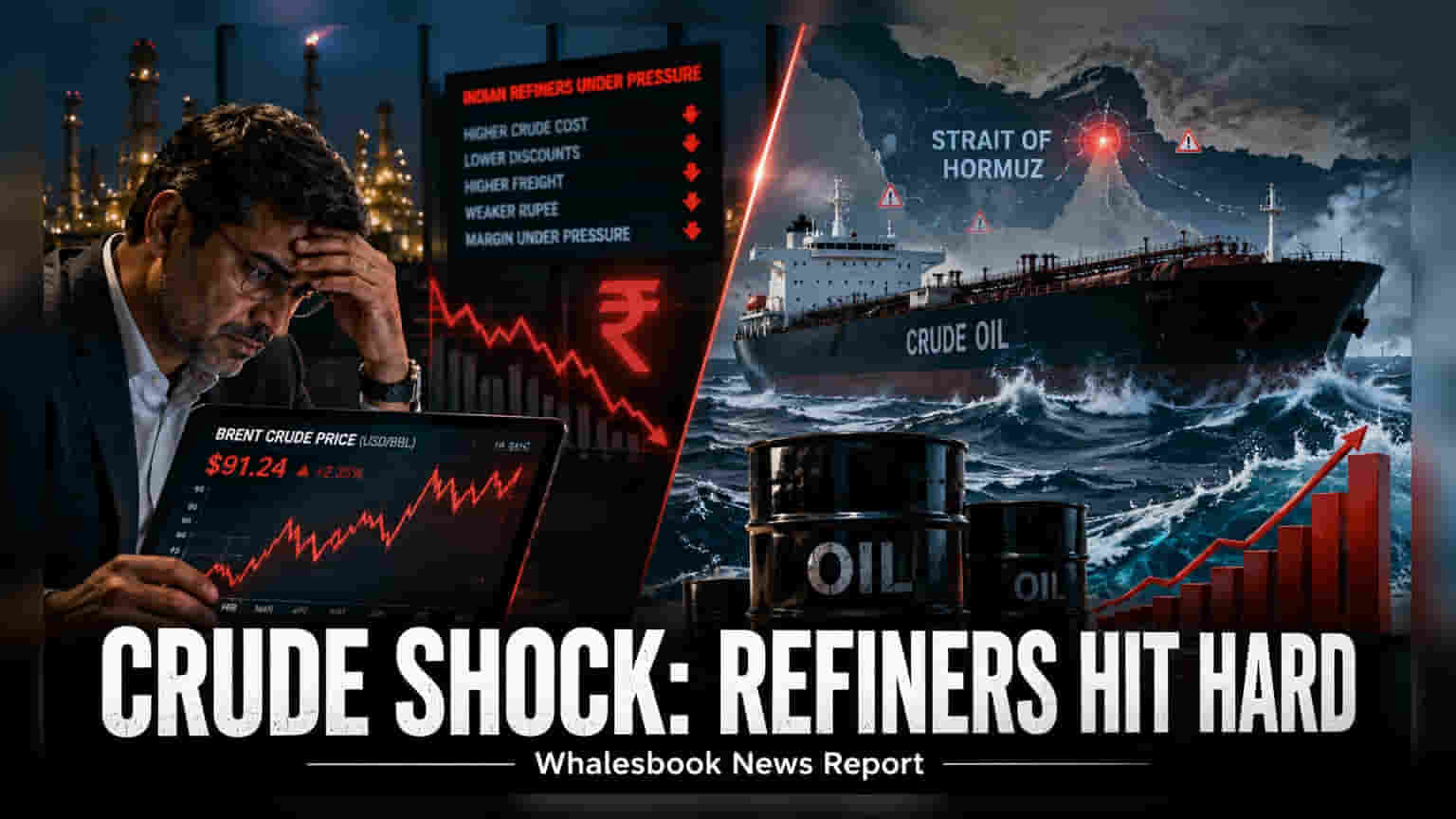
Indian oil refineries are struggling with rising crude procurement costs as Russian oil discounts fade and supply chain disruptions tighten global markets. With Brent crude over $91 per barrel and retail fuel prices regulated, investors are tracking potential pressure on marketing margins and refinery profitability for major players like HPCL and MRPL.
Indian oil refineries are currently navigating a challenging operational environment as the cost of importing crude oil surges. With Brent crude oil prices trading above $91 per barrel, domestic refiners are facing a dual challenge: higher input costs and a significant reduction in the discounts that historically helped offset global price volatility.
For years, Indian refiners relied on discounted Russian crude to maintain profitability despite fluctuating global energy markets. However, these price advantages have largely evaporated as Russian oil now trades closer to global market rates. At the same time, suppliers from the Gulf region—a traditional source for India—are commanding higher premiums for their crude. This is largely driven by logistical complexities in the Red Sea and the Strait of Hormuz, where shipping disruptions are forcing companies to adopt longer, more expensive routes to deliver cargo.
This shift is pushing companies, including state-owned refiners like Hindustan Petroleum Corporation Limited (HPCL) and Mangalore Refinery and Petrochemicals Limited (MRPL), to increase their reliance on spot market tenders. Unlike long-term term-deal contracts that offer more predictable pricing, spot market purchases expose refiners to the immediate, and often higher, market price for crude. This change in sourcing strategy creates significant uncertainty for input costs.
The most critical concern for investors in this sector remains the impact on marketing margins. In India, retail prices for petrol and diesel are largely influenced by government regulation. When crude oil procurement costs rise sharply, refiners cannot always pass these expenses on to the consumer. As a result, the difference between the cost of crude oil and the selling price of refined products—the marketing margin—often faces downward pressure. If crude prices remain elevated while retail prices stay stagnant, the profitability of these refiners can be significantly affected.
Beyond direct procurement costs, the weakening of the Indian rupee against the US dollar adds another layer of financial stress, as oil imports are paid for in dollars. This means that even if global crude prices stabilize, a depreciating rupee makes the effective cost for Indian refiners higher. As companies navigate these headwinds, the key monitorable for the coming months will be refinery utilization rates and the ability of these firms to maintain operational efficiency amidst the shifting geopolitical landscape. Investors will likely look for commentary in upcoming quarterly results regarding how much of these increased costs are being absorbed by the companies versus what is being passed through to the retail market.