

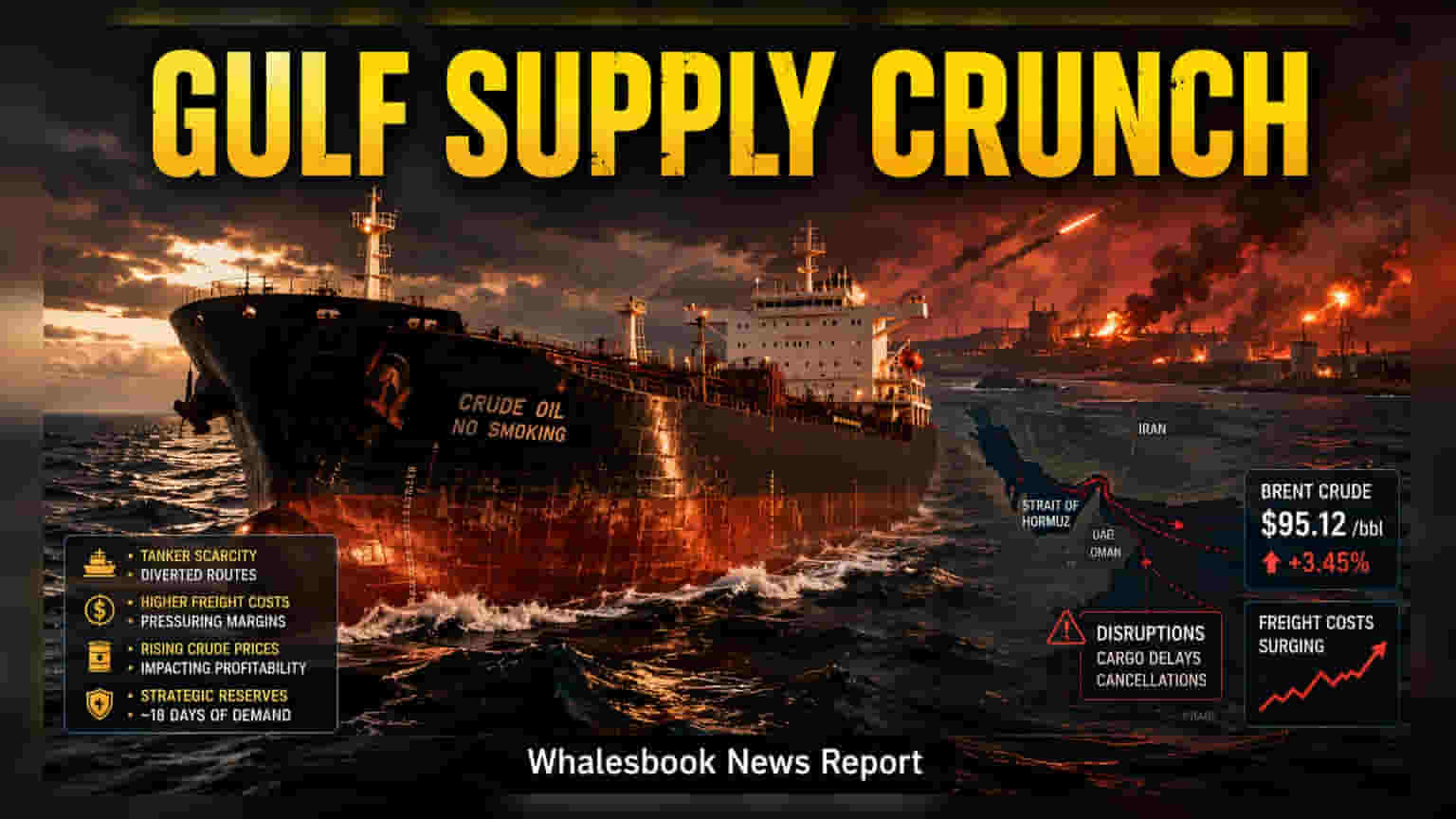
Escalating US-Iran tensions are disrupting tanker traffic in the Strait of Hormuz, forcing Indian refiners like IOCL and BPCL to manage crude supply delays. While strategic reserves are maintaining short-term supply, Brent crude prices near $95 per barrel and soaring freight costs are pressuring import bills and threatening profit margins.
The ongoing tensions between the US and Iran have led to significant disruptions in the Strait of Hormuz, a critical route for global energy supplies. As a result, Indian refiners are currently reporting cargo delays and the cancellation of some crude oil contracts. This logistical strain is forcing companies to rapidly adjust their procurement cycles to ensure their refineries continue to run without interruption.
For major state-run players like Indian Oil Corporation (IOCL) and Bharat Petroleum Corporation (BPCL), the situation presents a complex operational challenge. Refineries require a consistent flow of crude oil to operate at capacity, and the current scarcity of available tankers is creating a bottleneck. As global oil trade routes shift to avoid high-risk zones, vessels are increasingly being diverted to longer, more expensive paths. This has led to a sharp rise in freight costs, which complicates the economics of importing crude from the Gulf region.
The timing of these supply chain pressures is difficult for the sector, as global oil prices have seen a recent surge, with Brent crude trading near $95 per barrel. For investors, this combination of rising procurement costs and logistical hurdles creates a risk for profit margins. If refiners are forced to buy more oil from the spot market at higher prices, it can impact their quarterly earnings and overall financial flexibility. Furthermore, a persistently high import bill exerts downward pressure on the Indian rupee and contributes to imported inflation, which are broader macroeconomic factors the market is closely watching.
Despite the challenges, the domestic energy sector has some protection in place. India currently holds strategic petroleum reserves equivalent to approximately 18 days of demand, providing a temporary buffer against immediate shortages. Additionally, India’s current import strategy includes a heavy reliance on Russian crude, which accounted for roughly 45% of imports in August. This diversification helps reduce the immediate impact of disruptions in the Gulf, though it does not eliminate the risk of rising costs for alternative supplies.
Investors should track further developments regarding the stability of the Strait of Hormuz and the movement of global oil prices. The key to understanding the financial impact will be whether companies can absorb the higher freight and procurement costs, or if these expenses will weigh on their refining margins in the coming months. Any decision by refiners to cut production runs to manage inventory would be a critical negative signal for the sector.