

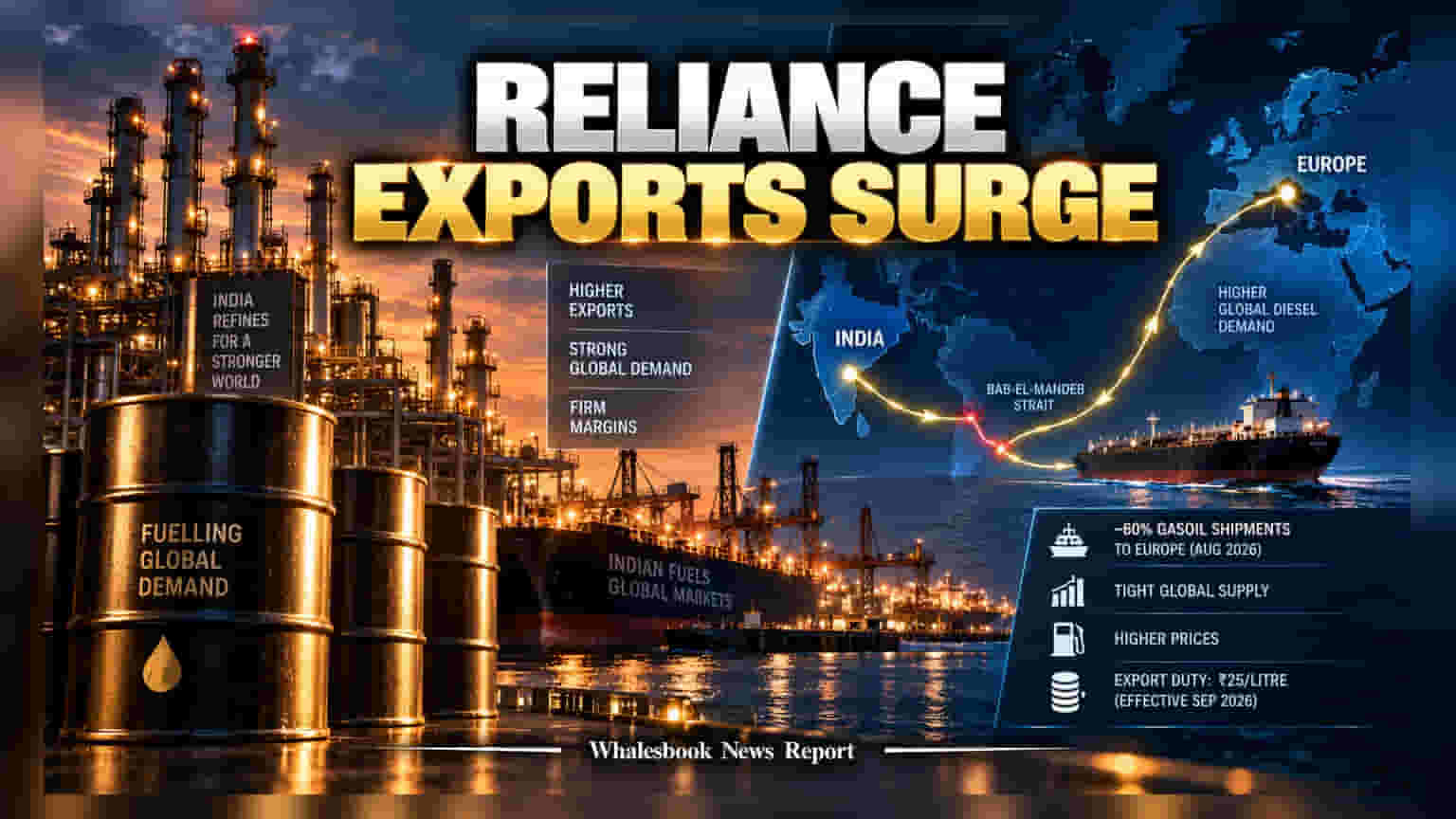
Indian refineries have captured 60% of diesel shipments heading to Europe as global supply gaps widen. While this shift offers a revenue boost, a recent hike in government export taxes to ₹25 per litre on diesel is tempering the potential profit gains for refiners.
Indian refiners have emerged as dominant suppliers to Europe in recent weeks, filling a major supply gap in global diesel markets. Following the extended closure of the 400,000 barrel-per-day Jazan refinery in Saudi Arabia and a sharp decline in Russian fuel exports, Indian companies have ramped up shipments to European ports. Data indicates that Indian refiners, including industry leaders like Reliance Industries, accounted for nearly 60% of gasoil shipments passing through the Bab-el-Mandeb Strait toward Europe during August 2026.
This shift allows domestic refiners to take advantage of higher prices in Europe, where supply remains tight. The profit margin refiners earn—often called the "crack spread"—remains elevated compared to normal levels, making these exports highly profitable. However, the financial benefit of this trend is not as straightforward as it may appear due to government policy.
Effective September 1, 2026, the Indian government increased the export duty on diesel to ₹25 per litre, while also placing a ₹1.5 per litre levy on petrol. This measure is designed to capture the windfall profits that refiners earn when they sell fuel internationally at significantly higher prices than domestic rates. For investors, this means that while revenue figures from exports may look strong, the actual profit retained by companies might be lower than what the market initially expects due to these tax burdens.
Another factor affecting the sector is the availability of raw materials. India’s crude and condensate imports fell to approximately 3.8 million barrels per day in August 2026, a notable drop from the 4.8 million barrels per day recorded a year earlier. Lower access to cheap crude can increase operating costs and potentially limit the ability of refiners to maintain high export volumes if domestic supply needs must be prioritized.
Looking ahead, investors should track several factors that could influence the profitability of these refiners. First, the sustainability of these export margins depends heavily on whether global supply disruptions persist or if other global players resume normal production. Second, geopolitical tensions in West Asia continue to pose a risk to shipping routes, which could increase transport costs and impact delivery timelines. Finally, the government's approach to the Special Additional Excise Duty (SAED) on exports remains a critical monitorable. If the government decides to adjust these duties again, it could significantly alter the profitability of the export-led business model for domestic oil companies.