

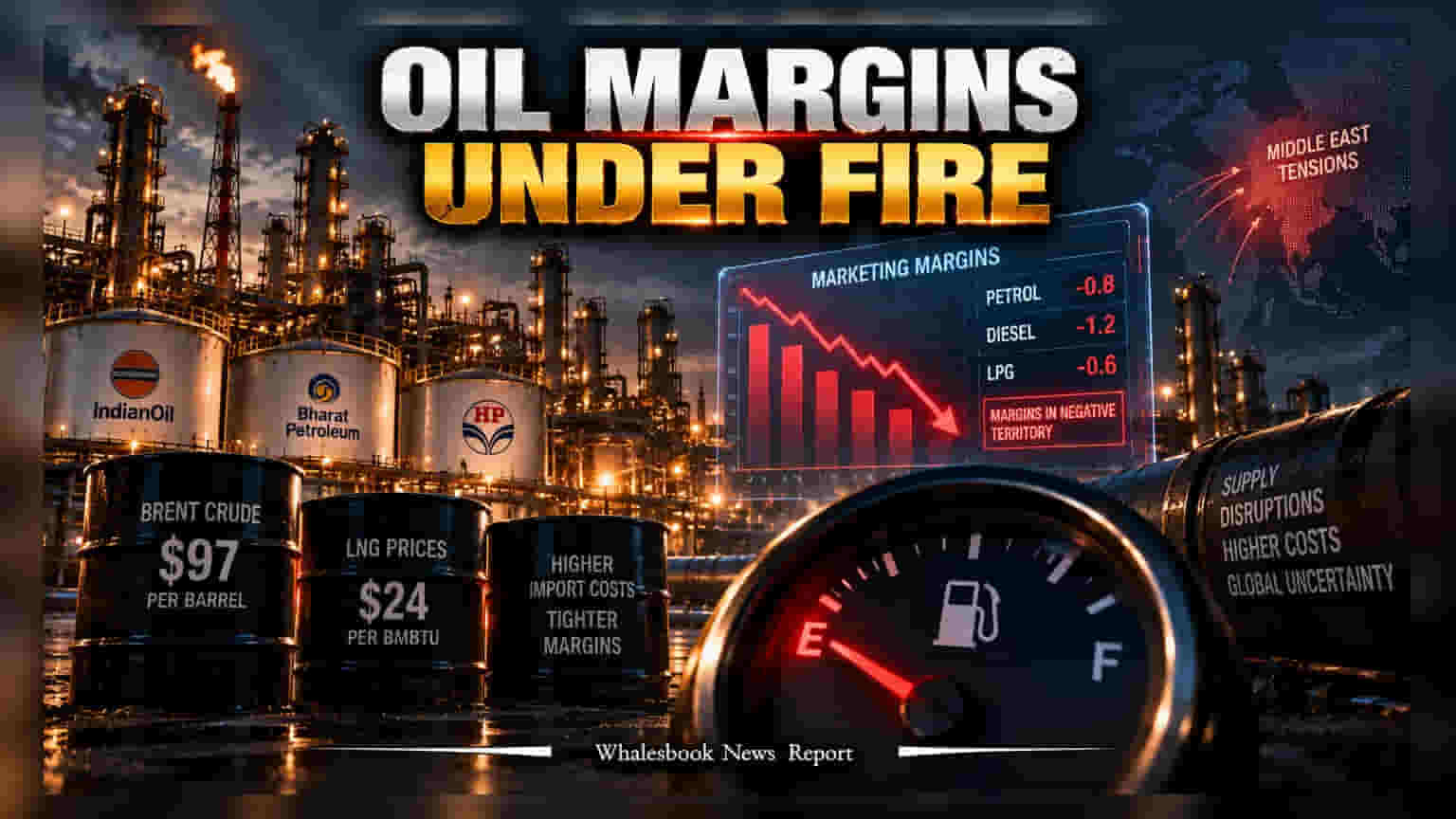
Indian Oil Marketing Companies (OMCs) are facing significant financial headwinds as Brent crude prices approach $97 per barrel and spot LNG costs surge. The mismatch between high procurement costs and stagnant retail fuel prices has led to negative marketing margins for petrol and diesel. Investors are tracking how these inflationary pressures and supply chain shifts in West Asia may impact the quarterly earnings and operational cash flow of major players like IOCL, BPCL, and HPCL.
Indian Oil Marketing Companies (OMCs) are navigating a difficult financial period as global energy prices climb, putting severe pressure on their profit margins. With Brent crude prices approaching $97 per barrel—driven largely by rising geopolitical tensions in the Middle East—the cost to import fuel has jumped significantly. This, combined with a sharp rise in spot LNG prices, is creating a challenging environment for the downstream oil sector.
Despite strong refining margins, where companies profit from converting crude oil into fuel products, the marketing side of the business is currently struggling. Petrol and diesel marketing margins have dipped into negative territory. This occurs when the cost to procure and distribute fuel exceeds the fixed price at which it is sold at the retail pump. While refining cracks for gasoline, gasoil, and jet fuel have outperformed historical averages, they are currently insufficient to bridge the financial gap created by the rising input costs.
The energy cost burden is not limited to oil. Spot LNG prices in Asia have reached $24 per MMBtu, reflecting a 60% year-on-year increase. This sharp rise is increasing costs for gas-consuming industries and adding to the overall inflationary trend in the energy sector. Furthermore, the LPG segment is facing structural supply chain challenges. With traditional supply routes from West Asia being disrupted, India has had to diversify its sourcing to include the United States. While this pivot helps maintain energy security, it brings the drawback of higher freight expenses and longer shipping durations, which effectively increases the delivered cost of energy products for the domestic market.
For investors, the core concern remains the potential impact on profitability and working capital. High and volatile input costs often lead to inventory losses and put a strain on cash flow. The financial flexibility of these companies is being tested as they balance these external cost pressures against the need for steady operational output.
The sector’s future earnings will largely depend on how these commodity costs stabilize and whether there is any change in retail fuel pricing policies. Investors may continue to monitor the geopolitical situation in West Asia, as any prolonged supply chain disruption could keep import prices elevated. The next important updates for shareholders will be the quarterly financial disclosures of major OMCs, such as Indian Oil Corporation (IOCL), Bharat Petroleum (BPCL), and Hindustan Petroleum (HPCL), which will reveal the extent of the margin impact and management's strategy to navigate these cost headwinds.