 Whalesbook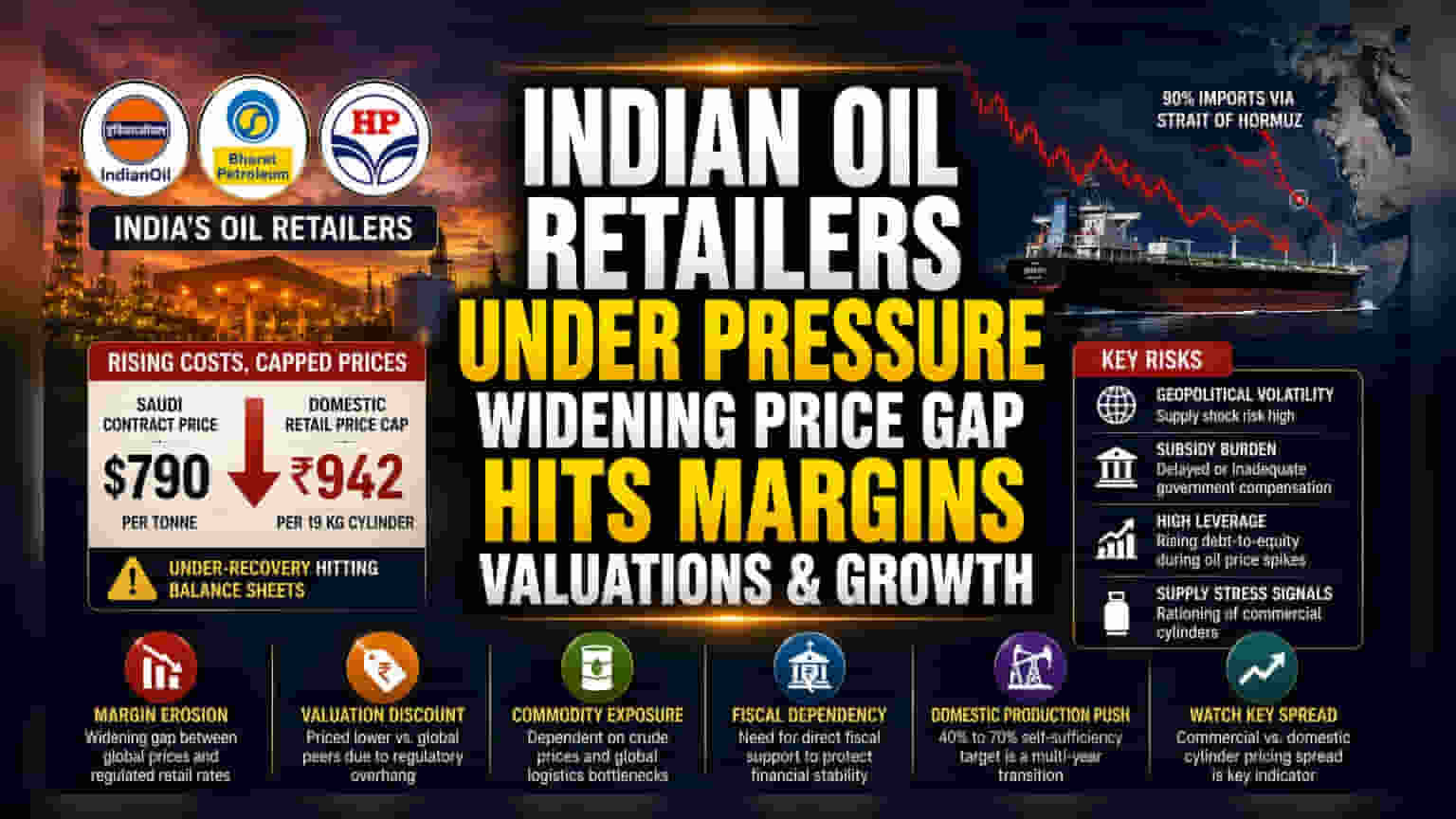


The Margin Erosion Reality
The fiscal integrity of India’s state-owned oil retailers is under increasing pressure as the disparity between international energy benchmarks and regulated domestic retail prices widens. With Saudi Contract Prices climbing to $790 per tonne, the financial burden of maintaining a Rs 942 retail price cap is falling squarely on the balance sheets of Indian Oil Corporation, Bharat Petroleum Corporation, and Hindustan Petroleum Corporation. This under-recovery mechanism effectively acts as a hidden tax on shareholder equity, forcing these firms to cross-subsidize residential energy costs while global logistics remain bottlenecked.
The Structural Valuation Trap
Investors are observing a divergence between the operational health of these firms and their stock performance. Unlike private-sector energy entities that possess the flexibility to pass through volatile input costs to end-users, these OMCs operate under a quasi-regulatory mandate that prioritizes social inflation control over bottom-line stability. Market data suggests that the prolonged period of subsidized pricing has hindered these companies from capturing the upside of the commodity bull run. When compared to global peers who operate with market-linked retail parity, Indian OMCs face significant valuation discounts, often exacerbated by the uncertainty of when—or if—the government will provide direct fiscal compensation for these systemic losses.
The Forensic Bear Case
The risk profile for these entities is currently defined by geopolitical exposure and reliance on the Strait of Hormuz. With 90% of imports traversing this volatile corridor, the risk of a supply shock is no longer a tail event but a structural probability. Management track records show a historical pattern of high debt-to-equity ratios during periods of elevated oil prices, as these companies must leverage their balance sheets to fund the gap left by delayed or insufficient government subsidies. Furthermore, the mandatory rationing of commercial cylinders serves as a signal of internal supply stress, suggesting that inventory management is becoming increasingly reactive rather than strategic. If the West Asia crisis deepens, the inability to hedge effectively against such a high import dependency will likely lead to further downward pressure on operating margins and cash flow liquidity.
Forward Guidance and Sector Outlook
Analyst sentiment remains cautious as the market awaits clarity on potential fiscal aid packages. While the government is actively incentivizing domestic production to bridge the demand gap, the transition from a 40% to a 70% self-sufficiency target remains a multi-year effort that does not resolve immediate quarterly volatility. Market participants are monitoring the spread between the 19-kg commercial cylinder pricing—which moves closer to market rates—and the stagnant domestic rates as a primary indicator of OMCs’ potential to return to historical margin ranges.