

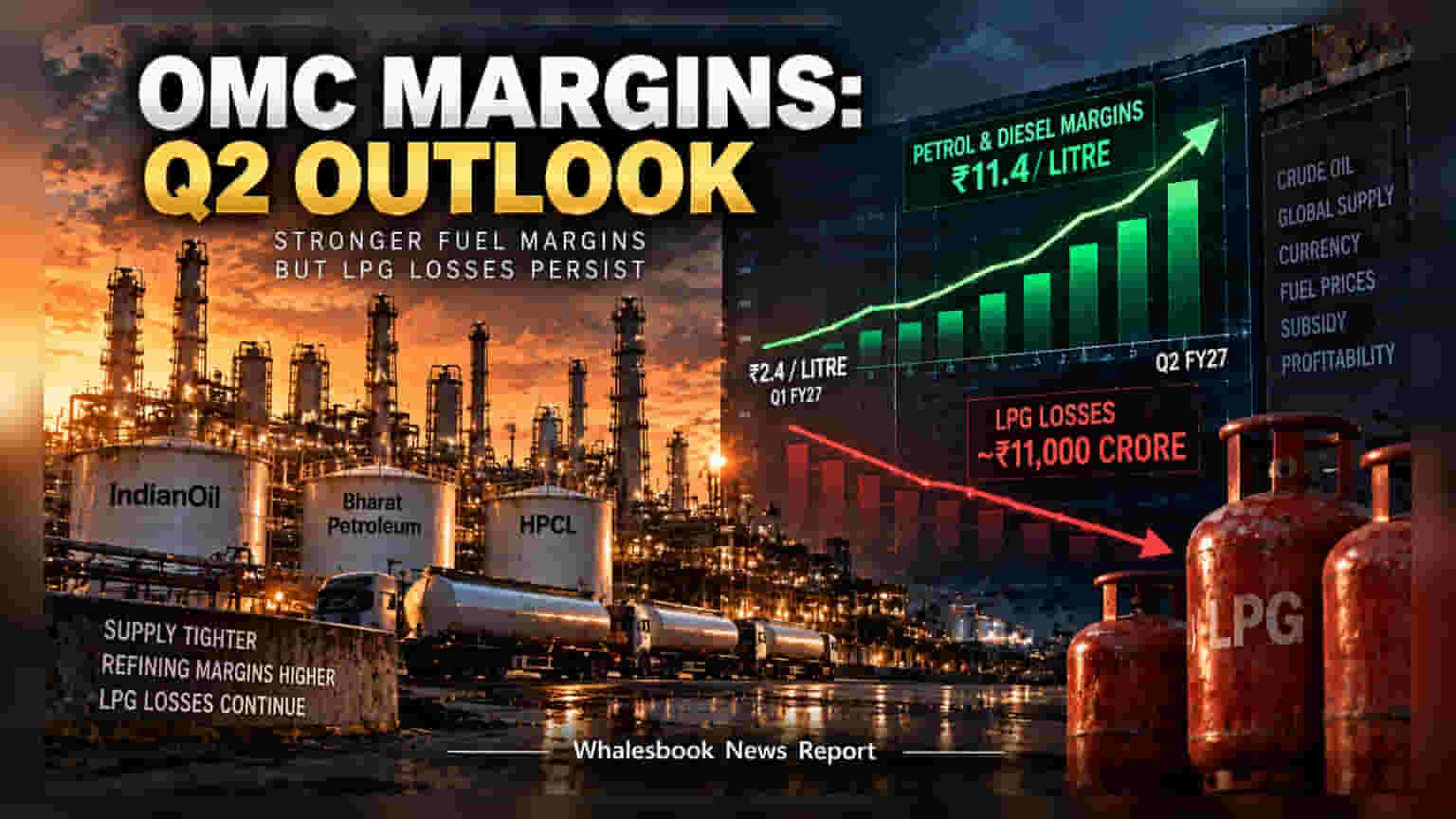
Indian oil marketing companies are set for better petrol and diesel margins in the second quarter of FY27, reaching Rs 11.4 per litre. However, persistent losses of Rs 11,000 crore from LPG sales will weigh on the final bottom line. Investors are watching how global crude oil price volatility and currency fluctuations impact these earnings.
Indian state-run oil marketing companies, including Indian Oil Corporation, Bharat Petroleum, and Hindustan Petroleum, are witnessing a recovery in fuel profitability for the second quarter of the 2027 fiscal year. Combined refining and marketing margins for petrol and diesel are expected to climb to Rs 11.4 per litre, marking a significant improvement from the previous quarter's low of Rs 2.4 per litre. This rise is primarily driven by tighter global supply chains, as refinery output has reduced worldwide.
However, investors should note that the full benefit of these improved margins will not reach the bottom line due to the ongoing burden of selling Liquefied Petroleum Gas. The companies are anticipated to absorb losses of approximately Rs 11,000 crore on LPG sales during the quarter. Although this is lower than the Rs 21,200 crore loss seen in the first quarter, it effectively drags down the net margin benefit to Rs 8.5 per litre. This disconnect between strong refining operations and the final bottom line remains a key focus area for stakeholders.
Global supply chain issues are the main supporting factor for this margin expansion. A reduction in worldwide refinery output, estimated at 4 to 5 million barrels per day compared to the previous year, has kept product prices, especially diesel, at higher levels. With diesel margins averaging $61.7 per barrel, it has provided a boost to overall refinery profits, reflected in the Singapore refining margin benchmark of $20.5 per barrel.
The profitability of these companies remains highly sensitive to global crude oil prices. Analysts estimate that to reach normalized margins under current tax rules, the landed cost of Brent crude would need to be around $95 per barrel. If government policy were to change, such as a reversal of previous excise duty cuts, this break-even level could drop to $65 per barrel. This sensitivity means that sudden jumps in global oil prices can quickly impact the fiscal arithmetic for the companies.
Beyond crude oil, other external factors influence the final results. Volatility in the Indian rupee against the dollar and rising transport costs can shift the operational costs for these firms. Because of these factors, the path to sustained profitability relies on both international oil markets and domestic regulatory decisions. For investors, the key monitorables moving forward will be the trend in crude oil prices, any changes in domestic fuel pricing strategies, and updates on LPG subsidy management. These factors will determine whether the margin recovery in petrol and diesel continues to translate into better overall financial performance in the coming quarters.