

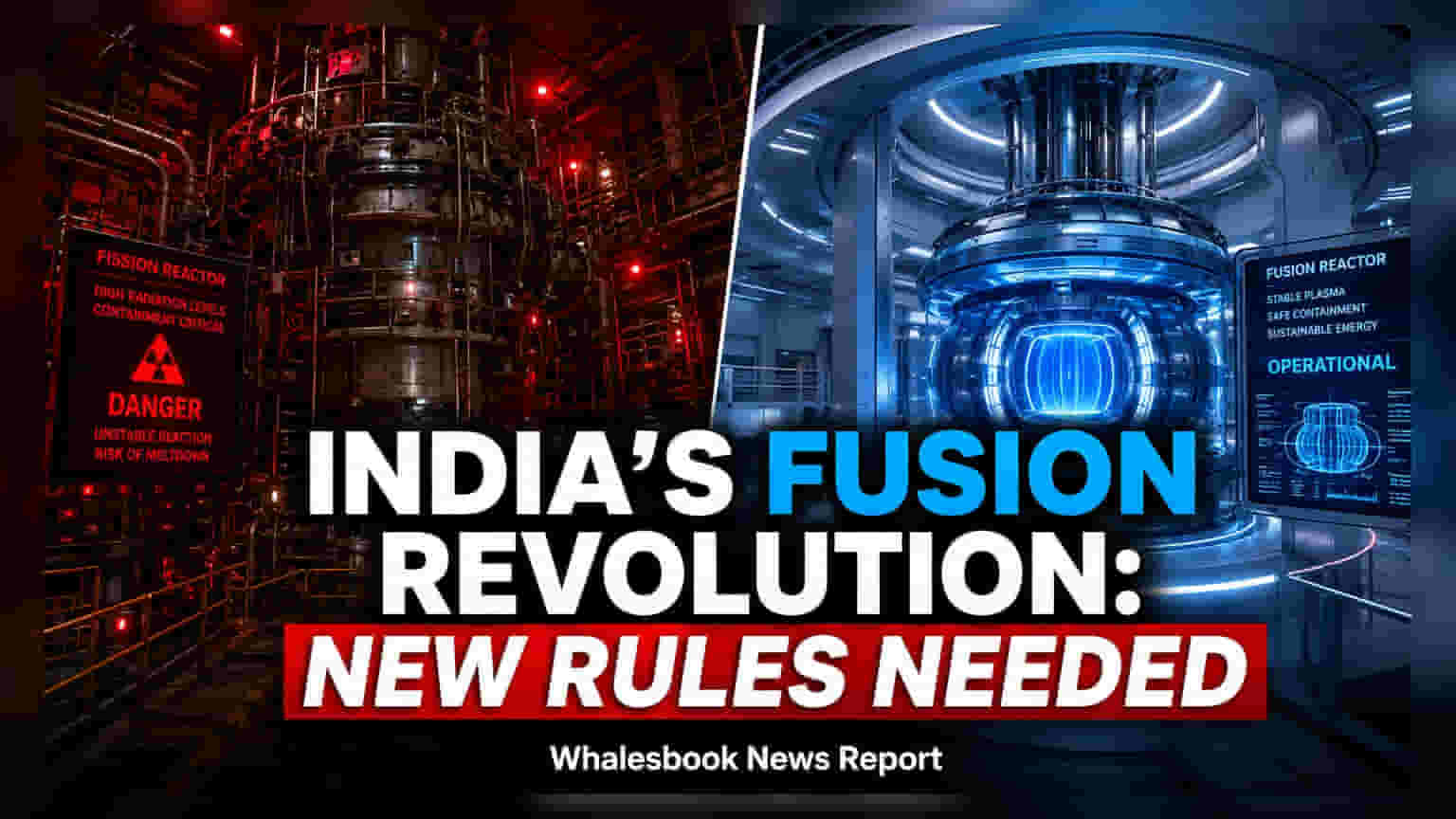
Nuclear fusion startups are requesting a new regulatory framework to distinguish their technology from conventional fission reactors. They argue that inherent safety differences make current strict licensing rules unnecessary, potentially hindering investment and material access.
Detailed Coverage
India’s emerging nuclear fusion sector is seeking a clear regulatory path to differentiate its technology from traditional fission power plants. Startups like Agnira Sanlayan Pvt. Ltd (ASPL Fusion) and Anubal Fusion have formally asked Niti Aayog to classify fusion facilities under a dedicated legal framework. These companies argue that existing atomic energy laws, updated under the SHANTI Act, continue to apply strict safety standards designed primarily for fission reactors, which handle radioactive fuel and carry inherent risks of chain reactions.
Inherent Safety and Regulatory Hurdles
The core argument from these startups is that fusion technology operates on fundamentally different physical principles. While fission involves splitting heavy atoms, which creates long-lived radioactive waste and carries meltdown risks, fusion involves combining light atoms to release energy, producing inert helium as a byproduct. Industry leaders like Prabhat Ranjan of ASPL Fusion emphasize that the large exclusion zones and stringent site requirements currently enforced for fission plants are not necessary for fusion. Startups report that these regulatory overlaps create operational friction, making it difficult to secure office space, obtain permits for research facilities, and access specialized materials that are often restricted under blanket 'nuclear' category rules.
Funding and Global Competitiveness
Beyond technical classification, the regulatory environment is significantly impacting capital flow. In 2026, Indian fusion startups raised approximately $6.8 million in funding, a figure that remains small when compared to the $1.18 billion secured by their counterparts in the United States. Founders point to the U.S. ADVANCE Act of 2024 as a benchmark, which officially recognized fusion as a distinct technology with tailored regulations. In India, public and investor confusion regarding the term 'nuclear'—often associating it with legacy disaster risks—continues to present a challenge for startups trying to scale their capital base and attract long-term investment.
Strategic Energy Security
The push for regulatory reform is also tied to India’s broader energy security goals. As the country aims for high economic growth, the industrial base requires a consistent supply of round-the-clock power. Investors like Vishesh Ranjan of Speciales Invest note that while renewables are growing, they are often intermittent, whereas fusion could provide a steady, carbon-free baseload energy source. Developing domestic fusion expertise is viewed as a strategic necessity to reduce long-term reliance on imported fuels. The next important monitorable for these companies will be whether Niti Aayog or the government initiates a formal review of the SHANTI Act to accommodate these requests, which could lower the barrier to entry and accelerate the commercialization timeline for fusion research in India.