

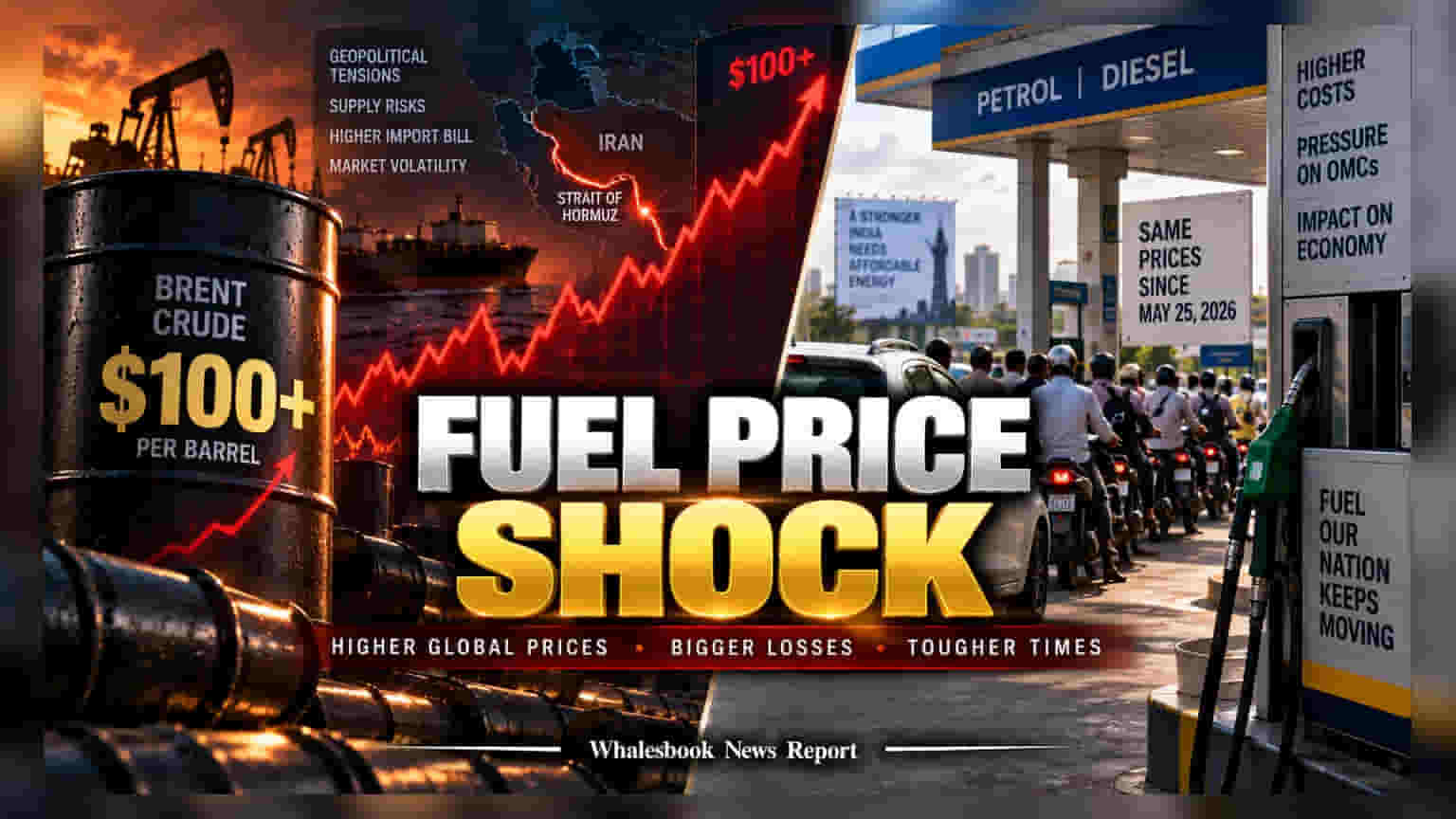
State-owned fuel retailers are absorbing losses of Rs 5 on petrol and Rs 23 on diesel per litre as Brent crude crosses $100 per barrel. With retail prices unchanged since May, this margin compression is weighing on the energy sector and adding pressure to India's import bill and inflation outlook.
Indian state-owned oil marketing companies are facing a severe financial challenge as Brent crude prices surged above the $100 per barrel mark on September 9, 2026. This is the first time global oil prices have hit this level since July 2026, creating a significant mismatch between the high cost of purchasing crude oil and the frozen retail prices at domestic petrol pumps.
Major retailers, including Indian Oil Corporation, Bharat Petroleum, and Hindustan Petroleum, are effectively buying crude at global market rates but selling petrol and diesel at prices that have not changed since May 25, 2026. This price freeze has resulted in negative marketing margins. Estimates show these companies are losing approximately Rs 5 for every litre of petrol sold and a much steeper Rs 23 for every litre of diesel sold. When retailers spend more to purchase and process fuel than they earn from selling it, their profit margins come under significant pressure.
The global price rally is largely driven by geopolitical tensions between the United States and Iran, which have sparked fears of supply disruptions in the Strait of Hormuz. Additionally, the decision by OPEC+ to keep production levels steady has tightened supply, leaving little room for price relief. Because India imports over 88% of its crude oil requirements, this global volatility directly hits the country's trade balance. Data for the April to July 2026 period shows that India's oil import bill jumped by 56.5% compared to the same period last year, reaching $63.4 billion. This surge creates a dual problem: it weakens the Indian rupee against the dollar and widens the trade deficit.
Investors are closely monitoring the impact of these high energy costs on the broader economy. Rising fuel costs often lead to higher transportation and logistics expenses, which can eventually feed into higher prices for goods and services across the country. This inflationary pressure limits the room for the Reserve Bank of India to lower interest rates, as the central bank must balance growth goals with the need to keep inflation in check. The market reaction has been cautious, with indices like the Nifty 50 and BSE Sensex touching three-month lows on September 9, 2026, reflecting concerns over corporate profitability and macroeconomic stability.
For shareholders, the primary monitorable will be how long these companies can sustain these negative margins. Historically, when under-recoveries reach such high levels, the government has either allowed retailers to raise pump prices or adjusted excise duties to share the burden. Investors will likely track upcoming management commentary or government policy announcements regarding tax cuts or pricing adjustments, as these will determine whether the profitability of these oil marketing companies improves in the coming quarters.