

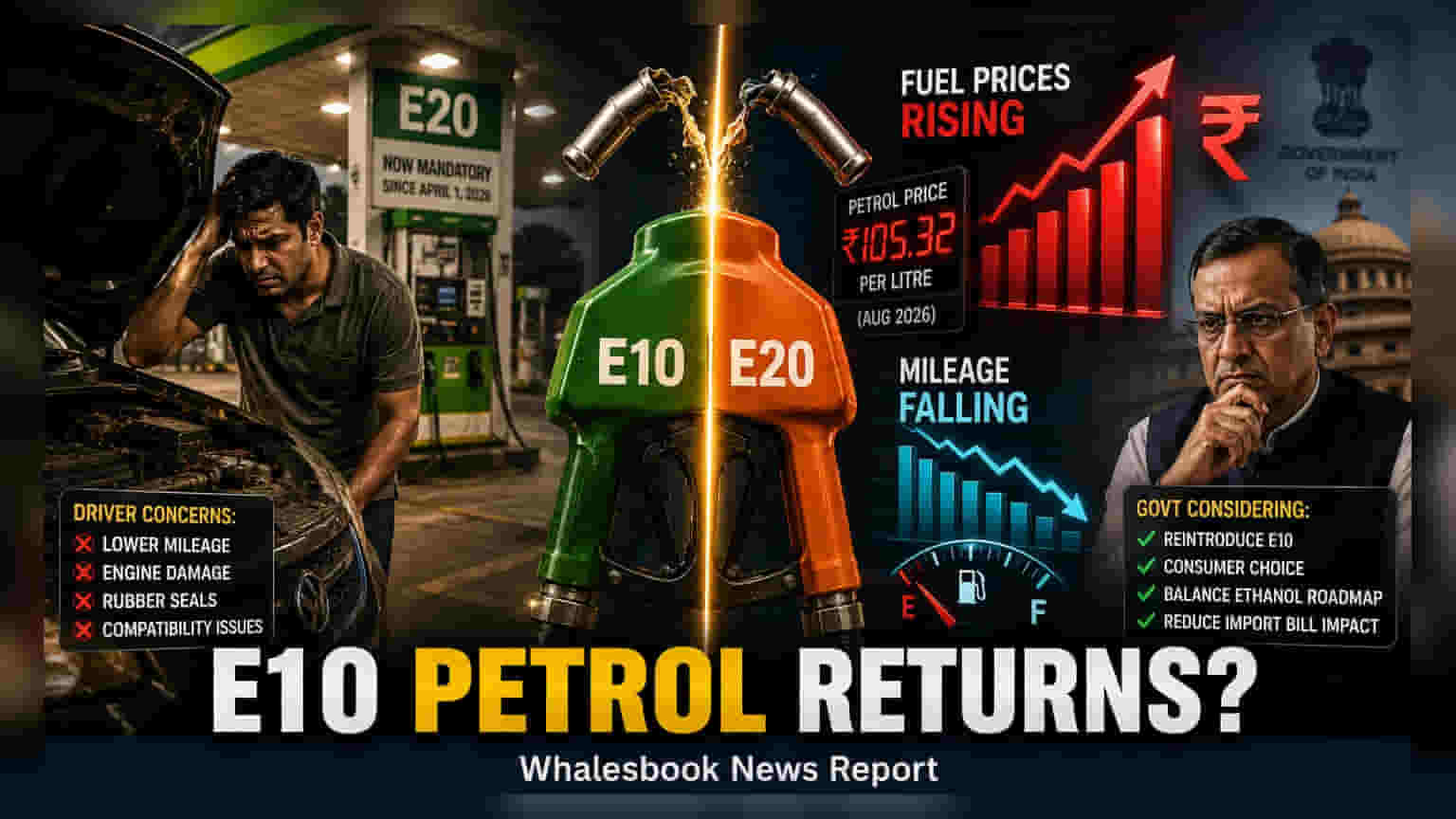
India is considering reintroducing E10 petrol alongside the current E20 mandate following reports of engine issues and poor mileage in older vehicles. For investors, this potential policy shift highlights operational challenges for oil marketing companies that would need to manage dual-fuel infrastructure, and adds uncertainty to the government's long-term ethanol-blending targets.
The Indian government has begun internal discussions regarding the potential reintroduction of E10 petrol as an optional fuel alongside the current E20 blend. This development follows a public suggestion by Chief Economic Adviser V. Anantha Nageswaran, who advocated for offering E10 to support owners of older vehicles who have expressed concerns over performance and engine compatibility with the higher ethanol blend.
Since April 1, 2026, E20 (petrol with 20% ethanol) has been the mandatory fuel across Indian retail outlets. While the government has consistently maintained that E20 is safe based on testing by the Automotive Research Association of India and other state agencies, the mandate has faced significant pushback from vehicle owners. Common complaints include reduced fuel efficiency and potential damage to rubber seals and engine components, particularly in older two-wheelers and vehicles not designed for high ethanol content.
Operational Challenges for Oil Marketing Companies
The proposal to bring back E10 is not as simple as flipping a switch, and it carries clear implications for oil marketing companies like Indian Oil Corporation, Bharat Petroleum, and Hindustan Petroleum. These companies have already invested significant capital to upgrade their infrastructure and distribution networks to support E20.
Implementing a dual-dispensing model where both E10 and E20 are available would force these companies to manage two separate streams of fuel. This involves logistics, dedicated storage tanks, and pump modifications. For investors, the key concern is whether this would lead to increased operational costs or require further spending on retail infrastructure. Furthermore, maintaining two fuel grades introduces complexity in retail management and a risk of malpractices, which are areas the oil companies and regulators would need to address.
Policy Uncertainty and Ethanol Roadmap
The broader ethanol-blending program has been a major pillar of India’s energy policy, aimed at reducing crude oil import bills and supporting the domestic sugar and grain-based distillery sectors. The government had previously outlined plans to move toward even higher blending targets, such as E27 or E30.
However, the CEA’s comments have introduced a note of caution regarding these future targets, emphasizing the need to evaluate food, land, and water usage trade-offs. If the government decides to prioritize consumer choice by reintroducing E10, it could signal a slower or more measured approach to the aggressive ethanol-blending roadmap. Investors in ethanol-producing companies may want to watch for any change in the government’s long-term blending mandates, as these targets are the primary driver of demand for their products.
What Investors Should Monitor
The next steps will depend on official government circulars and directives from the Ministry of Petroleum and Natural Gas. Investors should track any communication regarding the feasibility of dual-fuel dispensing at retail outlets. Additionally, any change in the ethanol-blending roadmap will be a critical indicator for both public sector oil companies and the sugar/distillery sector. For now, the focus remains on whether the government will confirm this policy adjustment and how it plans to mitigate the associated logistical costs.