

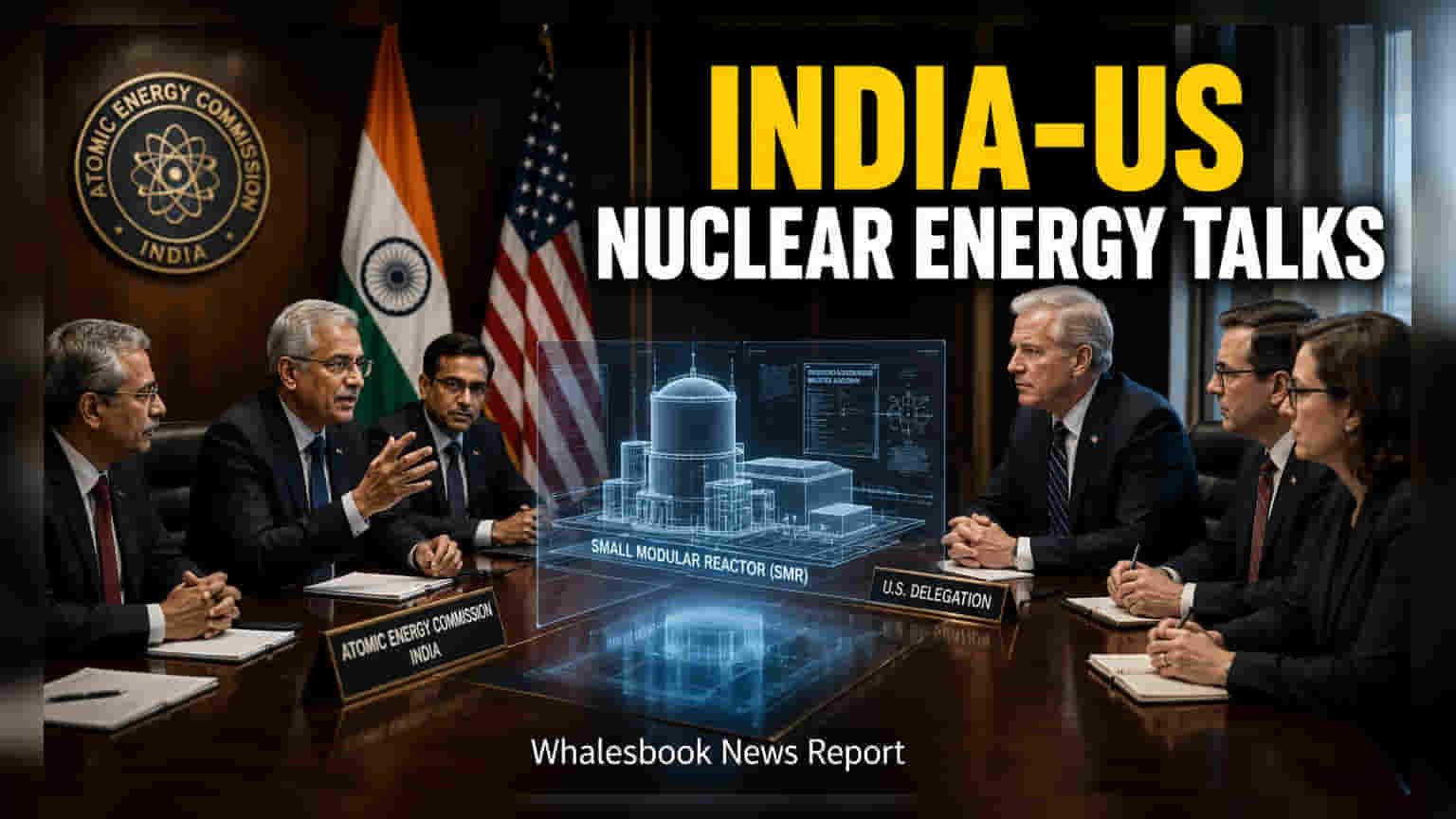
Indian and US officials met in Washington to discuss policies for small modular reactors and private sector investment. This collaboration aims to support India’s goal of reaching 100 GW of nuclear capacity by 2047, following the 2025 SHANTI Act.
Indian Atomic Energy Commission Chairman Ajit Kumar Mohanty and US Energy Secretary Chris Wright met in Washington on August 26, 2026, to strengthen bilateral cooperation in civil nuclear energy. The talks focused on creating a clear framework to encourage private sector participation, a crucial step for India to reach its ambitious target of 100 GW of nuclear power capacity by 2047.
This high-level dialogue was timed with the launch of the International Atomic Energy Agency’s ATLAS initiative. This program explores the use of small modular reactors, or SMRs, to provide power for maritime vessels and offshore energy needs. Unlike traditional, large-scale nuclear power plants, SMRs are designed to be smaller and more flexible, which could potentially lower the cost and complexity of nuclear energy projects.
For Indian investors, the key policy development is the 2025 SHANTI Act. This legislation is designed to allow private companies to enter the nuclear power sector, which was previously limited to public entities. Following the news of the government’s push and related orders from the Nuclear Power Corporation of India, shares of specialized nuclear equipment suppliers like MTAR Technologies saw a rise of 2.15% on August 26, 2026, reflecting investor optimism about potential future orders.
While this policy push is positive for the energy sector, investors should be aware of the long-term nature of nuclear projects. Unlike solar or wind power, nuclear energy involves high upfront capital spending and very long construction timelines. There are also inherent execution risks, such as potential cost overruns and the need for strict compliance with international safety and liability regulations. The 2025 SHANTI Act creates a path for private participation, but companies will still face a complex regulatory environment that is highly sensitive to both domestic policy changes and geopolitical shifts.
The next important steps for investors to monitor include how quickly the regulatory framework is finalized for private firms to start operations and the timeline for actual equipment orders from projects under the new policy. The success of these initiatives will depend on the government’s ability to balance the need for rapid capacity expansion with the strict safety and liability requirements of the global nuclear industry.