 Whalesbook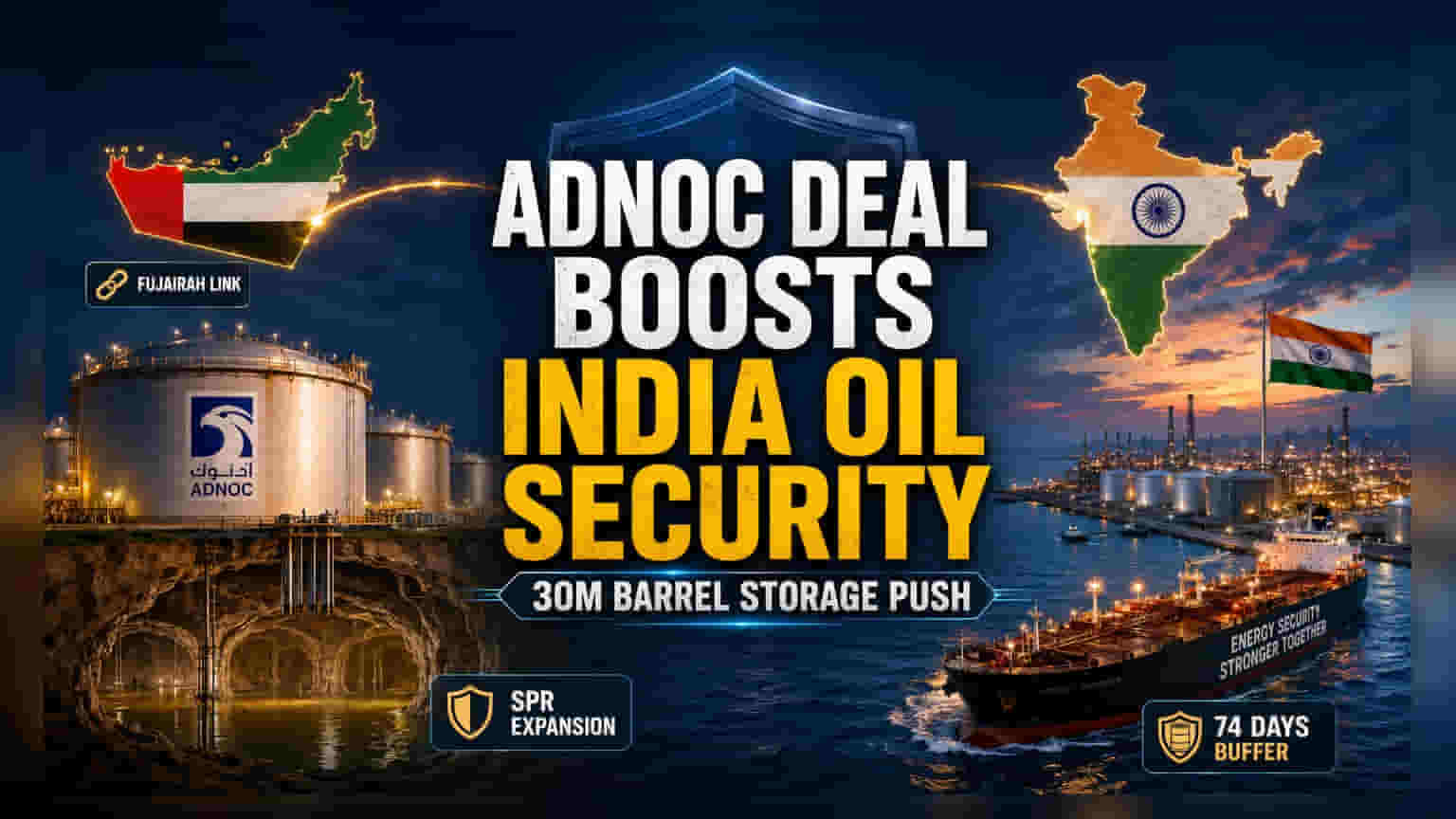


India and the UAE have formalized a strategic energy collaboration to expand crude oil storage capacity to 30 million barrels, addressing critical energy security needs amid ongoing West Asian geopolitical tensions. This expansion, leveraging ADNOC’s involvement, seeks to bolster India’s supply chain resilience through new infrastructure and cross-border storage frameworks.
The Geopolitical Insurance Policy
The formalization of energy storage agreements between the Abu Dhabi National Oil Company (ADNOC) and Indian Strategic Petroleum Reserves Limited (ISPRL) represents a critical pivot in India’s energy defense. While India currently maintains a national petroleum buffer providing approximately 74 days of security—comprising both SPR caverns and commercial refinery stocks—the recent escalation of conflicts in West Asia has intensified the necessity for a more robust, long-term supply cushion. By aiming to increase UAE-linked crude storage capacity to 30 million barrels, the partnership effectively shifts the focus from temporary stockpiling to long-term systemic resilience.
Infrastructure and Strategic Scaling
The initiative targets an ambitious expansion of existing storage, integrating facilities at Mangalore with prospective developments in Visakhapatnam and Chandikol. This tripartite geographic strategy is designed to optimize supply access across India’s eastern and western maritime corridors. Furthermore, the framework introduces a novel flexibility: the potential for crude storage at the UAE’s Fujairah hub, creating a synergistic maritime energy bridge. Unlike previous procurement-only models, these agreements move toward an integrated supply chain model, encompassing not just crude oil, but also structured collaboration on Liquefied Natural Gas (LNG) and Liquefied Petroleum Gas (LPG) to mitigate shortages in the power and fertilizer sectors.
The Forensic Bear Case: Structural Vulnerabilities
Despite the strategic optics, the reality of India’s energy security remains tempered by significant operational lag. While the government has mandated buffer requirements, ISPRL caverns have historically faced utilization gaps, often remaining partially unfilled due to procurement costs and technical maintenance cycles. Critics point out that even at full capacity, India’s SPR system covers less than ten days of national demand, leaving it heavily reliant on commercial inventories. The proposed construction of new caverns is a multi-year endeavor, meaning the current security architecture remains vulnerable to sudden maritime disruptions or severe price shocks. Furthermore, the lack of a formal, dedicated Strategic Gas Reserve—currently managed only through emergency floating buffers—remains a persistent structural weakness in the nation's energy portfolio.
The Future Outlook
The government continues to balance fiscal responsibility with the urgency of energy independence. With Phase II expansion projects in Odisha and Karnataka moving into the execution phase, the focus remains on enhancing the fluidity of crude circulation and refining emergency response protocols. As global shipping environments remain volatile, the deepening ties with Abu Dhabi serve as a critical hedge, though the ultimate efficacy of this 'insurance policy' will depend on the speed of infrastructure completion and the successful integration of non-Hormuz supply routes.