

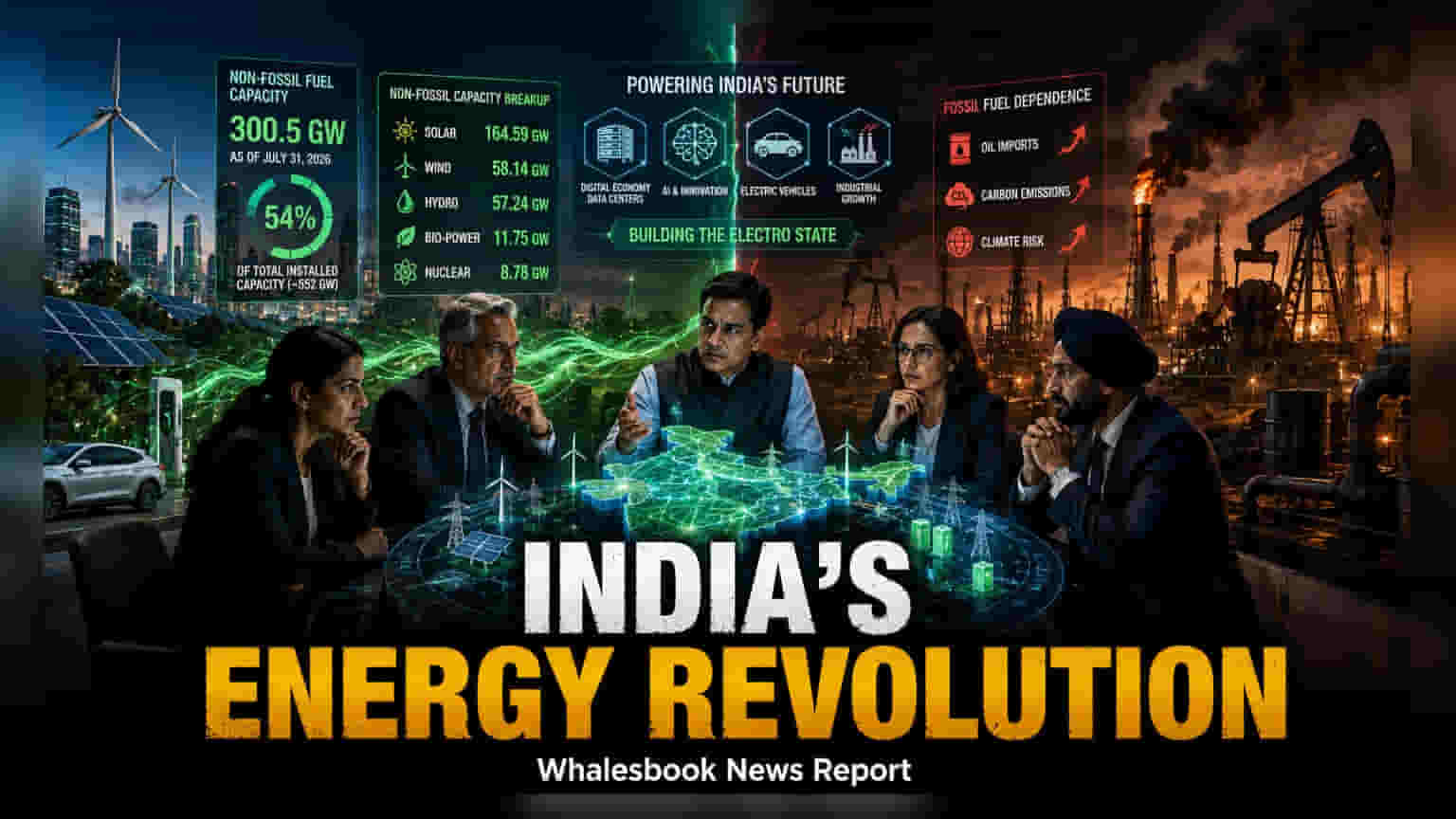
India has reached 300.5 GW in non-fossil fuel capacity, marking a major step toward transitioning into an 'electro state.' Driven by rising energy needs from AI, data centers, and EVs, this shift prioritizes round-the-clock renewable and nuclear power. For investors, this transition highlights the growing need for infrastructure, long-term capital, and energy storage solutions as the economy moves away from fossil fuel reliance.
India is undergoing a fundamental shift in its energy strategy, moving from a dependence on traditional fossil fuels toward an 'electro state' model powered by electricity. As of July 31, 2026, the country has reached a key milestone of 300.5 GW in non-fossil fuel electricity capacity. This represents over 54% of India’s total installed power capacity of approximately 552 GW, positioning the nation well to reach its target of 500 GW by 2030.
Powering the Digital Economy
The push for an electro state is driven by a surge in power demand from modern sectors such as artificial intelligence, data centers, and electric vehicles. To maintain reliability, the energy mix is expanding beyond simple solar and wind generation. The current capacity includes 164.59 GW of solar, 58.14 GW of wind, 57.24 GW of hydro, 11.75 GW of bio-power, and 8.78 GW of nuclear energy. The integration of nuclear power, bolstered by recent policy shifts like the SHANTI Act of 2025, is now seen as a vital complement to renewable energy, offering a steady supply of power that fluctuates less than weather-dependent sources.
Infrastructure and Financing Challenges
For investors, this transition involves more than just adding generation capacity. The core economic opportunity and challenge lie in the infrastructure required to distribute this power. Strengthening transmission grids and developing large-scale battery storage are essential to handle the intermittent nature of solar and wind energy.
Funding this transformation is another key monitorable. While private capital has been active in funding solar and wind projects, the demand for long-term financing remains a hurdle. Current financial markets in India often favor shorter-tenure loans, whereas massive energy projects require longer investment horizons. Future growth will likely depend on how effectively the financial system can align capital with these extended project lifecycles.
Risks and Future Monitorables
Investors should be aware of the complexities inherent in this energy transition. While the focus on renewables is high, the economy is shifting its dependency from traditional fossil fuels toward critical minerals and advanced battery technology. Managing the supply chain for these components is a strategic risk that companies in the sector will need to address.
Furthermore, industries that struggle to decarbonize quickly may face competitiveness issues due to global carbon border adjustment mechanisms, such as those implemented by the EU and UK. As India continues to integrate its grid, the most important updates to track include progress on smart grid investments, the success of round-the-clock power tenders like those by the Solar Energy Corporation of India, and the availability of long-term capital for large infrastructure projects.