

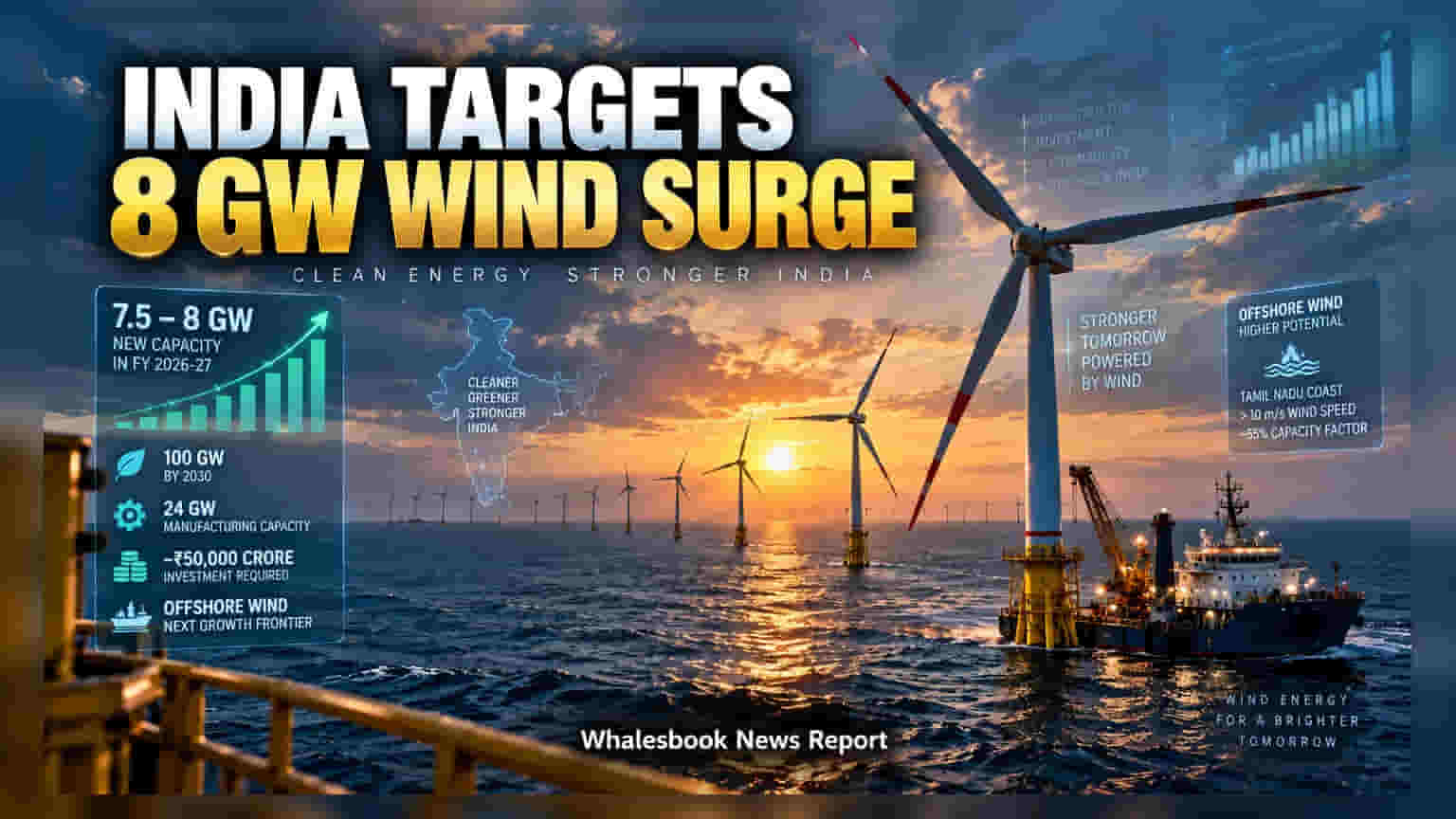
India plans to add 8 GW of wind energy capacity in fiscal year 2027, building on the 6 GW added in the current year. This growth aims to hit the 100 GW milestone by 2030, with a focus on manufacturing exports and new offshore wind projects. Investors should track how this capacity expansion impacts the order books and pricing competition among turbine manufacturers.
The Ministry of New and Renewable Energy has set a goal to add between 7.5 GW and 8 GW of new wind energy capacity by the end of the next fiscal year. This target follows a strong performance in the 2025-26 period, which saw the installation of over 6 GW. This move is part of the broader national goal to reach 100 GW of wind energy capacity by 2030, a key pillar of India's renewable energy strategy.
Manufacturing Capacity and Market Competition
A critical factor for investors is the difference between current manufacturing capacity and domestic installation demand. India currently has an annual manufacturing capacity of 24 GW, which is significantly higher than the 8 GW of new installations planned for the year. This overcapacity has turned India into a hub for wind component exports, which totaled ₹12,000 crore in the previous year. While this export strength provides a buffer, the significant gap between domestic manufacturing and local installation may lead to intense pricing competition among wind equipment makers in the home market.
Investment and Costs
The capital intensity for setting up new wind energy projects is estimated at approximately ₹7 crore per megawatt. Based on these costs, an annual installation pace of 7 GW to 8 GW requires significant capital spending, estimated at roughly ₹50,000 crore. As companies look to expand, investors may track how these firms manage their balance sheets and financing needs to support such large-scale projects.
The Shift to Offshore Projects
The government is now looking to scale up the offshore wind sector to accelerate growth. Officials have identified potential sites along the coastline of Tamil Nadu, where favorable wind speeds exceeding 10 meters per second could allow for a capacity utilization factor of roughly 55%. These levels are considered essential for making offshore wind power cost-competitive with other sources. To achieve this, the sector is leveraging technical expertise from European partners to develop the nascent offshore industry. Offshore projects generally involve higher initial capital spending compared to traditional onshore wind farms, which makes execution, technology absorption, and cost management the primary monitorables for shareholders in this space.
Looking ahead, the success of this capacity surge will depend on consistent grid connectivity, project execution timelines, and the ability of manufacturers to maintain margins despite high competition. Investors will likely watch the order inflow, the progress on initial offshore tenders, and the sustainability of export revenues as key performance indicators for the sector.