

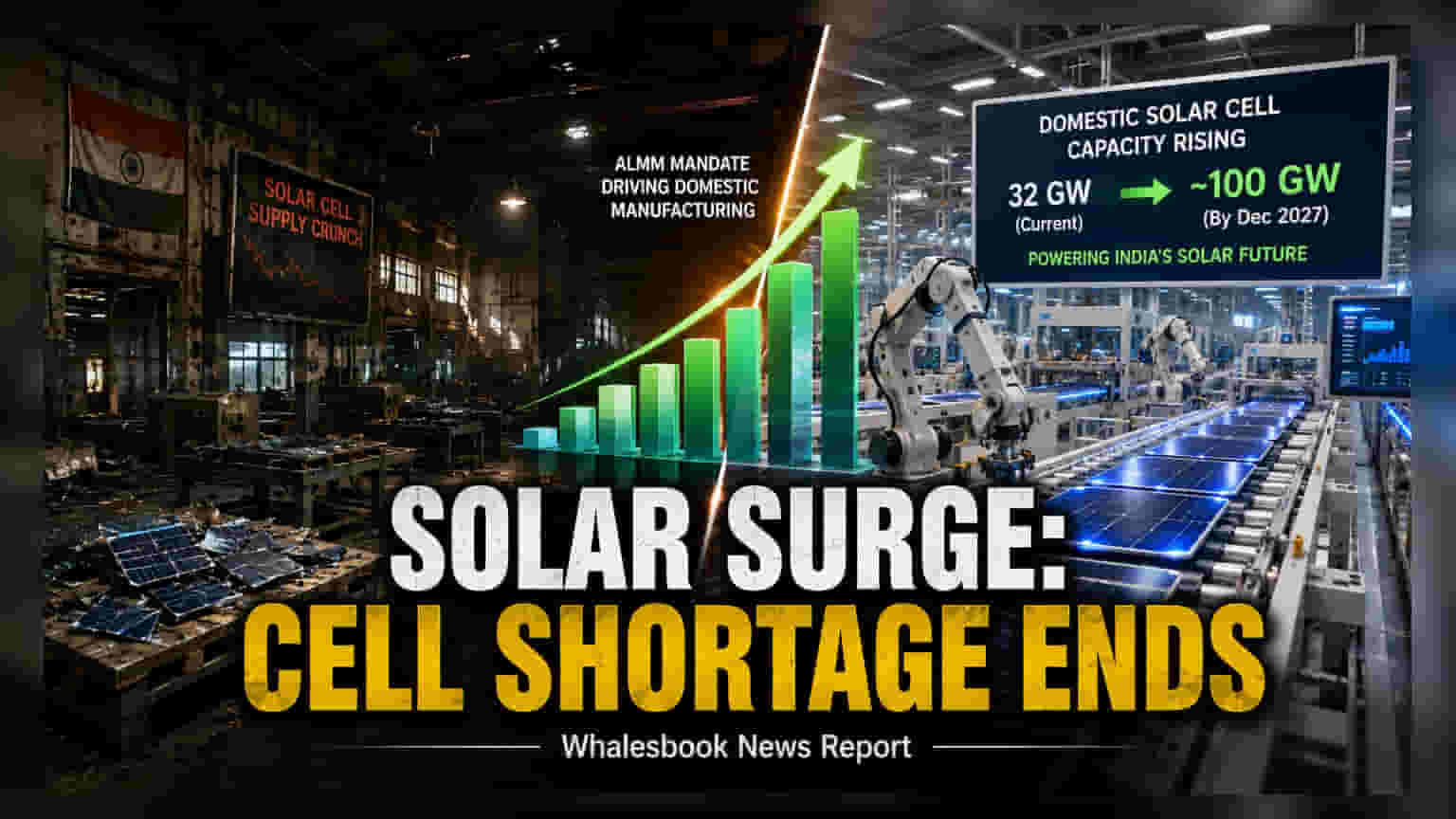
India’s solar cell manufacturing capacity is set to rise from 32 GW to 100 GW by December 2027. This expansion aims to resolve the supply gap caused by local-content mandates, allowing manufacturers to reduce reliance on imports. Investors should monitor whether this rapid growth improves profit margins or leads to overcapacity risks in the solar sector.
India is significantly scaling up its solar cell manufacturing capacity to resolve a growing supply bottleneck. Industry projections indicate that domestic capacity is on track to rise from the current 32 GW to approximately 100 GW by December 2027. This strategic expansion is a direct response to the government's Approved List of Models and Manufacturers (ALMM) mandate, which requires power developers to use domestically manufactured solar cells for government-linked projects.
Bridging the Supply Gap
For several years, India has maintained a strong position in solar module assembly, with total capacity now exceeding 200 GW. However, the production of solar cells—the core component inside these modules—has not kept pace. This mismatch created a temporary supply-demand gap, forcing many companies to rely on imported components to meet installation deadlines. Industry leaders, including representatives from the Avaada Group and Vikram Solar, have emphasized that this is a transitional phase. As companies bring new, high-capacity cell production lines online, the sector is shifting toward "backward integration," where firms manufacture both the cell and the final module in-house.
Why Integration Matters for Investors
Backward integration is becoming a key strategic move for major players such as Adani, Reliance, Premier Energies, and Waaree Energies. By producing cells domestically, these companies aim to gain better control over their supply chain and protect their profit margins from the price volatility of imported parts. However, this aggressive expansion comes with notable risks. The rapid pace of technological change in the solar industry, such as the industry-wide shift toward newer, more efficient cell technologies like TOPCon, means that manufacturers must constantly spend money on upgrading their equipment to stay relevant. Failure to keep up with these technological shifts could result in manufacturing lines becoming obsolete.
Risks and Future Monitorables
While the industry-wide capacity build-up is a positive step for domestic manufacturing, investors should remain cautious about potential overcapacity. If solar module manufacturing capacity grows faster than the actual market demand for installations, it could lead to intense competition, weaker product pricing, and lower profit margins across the sector. Additionally, although cell production is rising, India remains heavily dependent on imported raw materials like polysilicon and wafers, leaving the industry exposed to global trade and pricing fluctuations.
For investors, the critical factors to watch in the coming quarters will be the commissioning timelines for these new manufacturing factories, the actual utilization rates of the plants, and how effectively companies manage the transition to newer, more efficient solar technologies. Keeping an eye on how these companies balance their spending on expansion with their existing debt levels will also be important.