 Whalesbook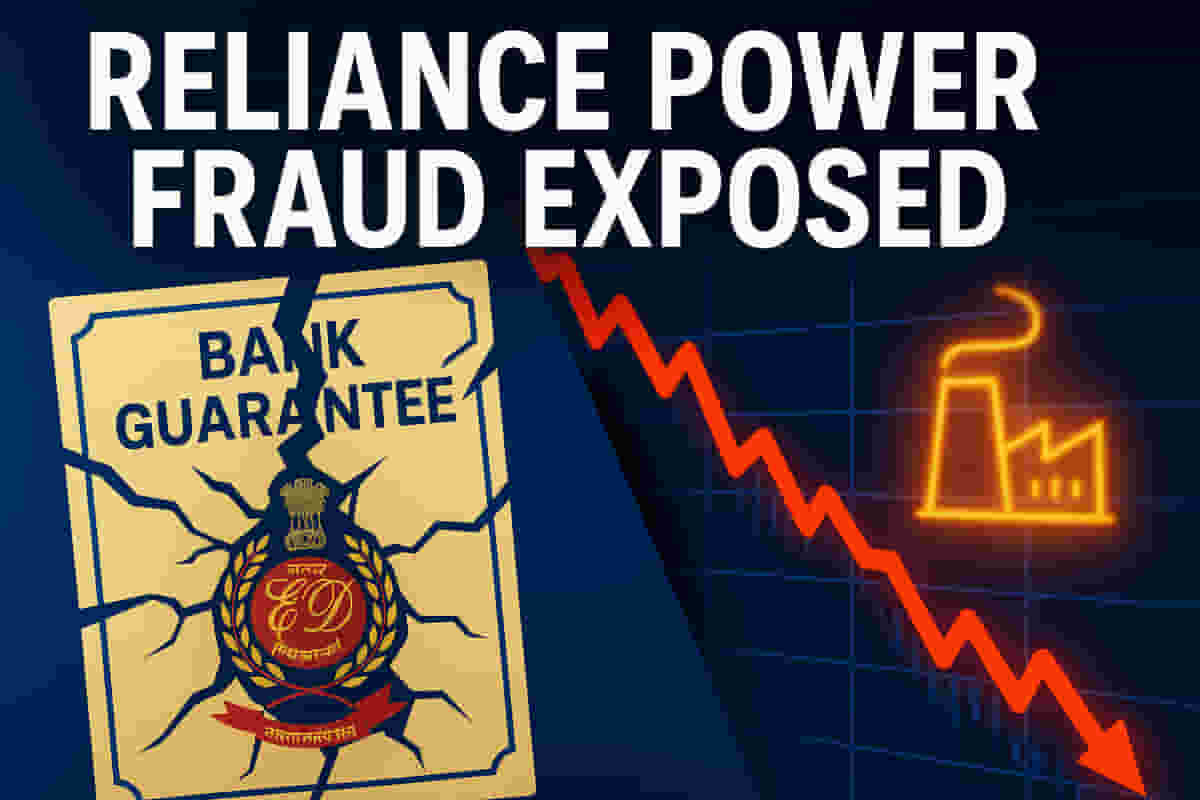
ED Probes Reliance Power for Alleged Fraud in SECI Energy Project Bid
The Enforcement Directorate (ED) has launched an investigation into Reliance Power's wholly owned subsidiary, Reliance NU BESS Limited, concerning allegations of submitting fake bank guarantees to the Solar Energy Corporation of India (SECI) for a significant energy storage project. The probe is based on FIRs filed by the SECI and Reliance NU BESS itself, highlighting a complex web of alleged financial impropriety.
Background Details
- Reliance NU BESS Limited had bid for SECI's tender to establish 1000 MW/2000 MWh standalone Battery Energy Storage System (BESS) projects.
- The tender required a bank guarantee of Rs 68.2 crore for the bid.
- Rules stipulated that foreign bank guarantees must be endorsed by their Indian branches or the State Bank of India (SBI).
Key Numbers or Data
- Total bid requirement: Rs 68.2 crore for bank guarantee.
- Alleged fraudulent bank guarantees procured from non-existent FirstRand Bank (Manila) and ACE Investment Bank Limited (Malaysia).
- Alleged funds routed: Rs 6.33 crore from Rosa Power Supply Company Limited to Biswal Tradelink.
- Alleged "fee" paid to Biswal Tradelink: Rs 5.40 crore.
- Assets attached by ED: Rs 5.15 crore.
The Fraudulent Scheme
- Investigators found that Reliance NU BESS allegedly hired shell company Biswal Tradelink Private Limited and its managing director, Partha Sarathi Biswal, to procure a fraudulent bank guarantee.
- The bank guarantees were reportedly issued by non-existent foreign bank branches.
- Endorsements from the State Bank of India were allegedly forged using a spoofed SBI email ID (s-bi.co.in, mimicking the official sbi.co.in) and fabricated documents.
- Reliance Group officials allegedly created fake work orders and invoices to disguise the transfer of Rs 6.33 crore from another group company, Rosa Power Supply Company Limited, to Biswal Tradelink under the guise of transport services.
Attempts to Salvage Bid and Shift Blame
- According to the ED, key Reliance Group officials were aware of the forged guarantee.
- When SECI detected the fraud, Reliance attempted to secure a genuine guarantee from IDBI Bank within 24 hours, but SECI refused as the deadline had passed.
- To support its L-2 bid status, Reliance NU BESS allegedly tried to obtain a fresh endorsement of the fake guarantee from an SBI branch in Kolkata, involving dummy agreements and fake municipal certificates.
- After these attempts failed, Reliance filed a complaint against Biswal Tradelink, which the ED views as an effort to shift responsibility.
ED's Findings and Action
- The ED stated that the investigation established the "connivance and malicious intentions" of the Reliance Group.
- Reliance Power's CFO, Ashok Kumar Pal, and other facilitators have been arrested and are in judicial custody.
- The ED has attached proceeds of crime worth Rs 5.15 crore.
- The case is now proceeding in the special Prevention of Money Laundering Act (PMLA) court.
Impact
This investigation casts a shadow over Reliance Power's corporate governance and adherence to regulatory standards. It could lead to further regulatory scrutiny, fines, or legal actions. For investors, it raises concerns about financial transparency and risk management within the company. The outcome at the PMLA court will be critical.
- Impact rating: 7
Difficult Terms Explained
- Enforcement Directorate (ED): India's law enforcement agency responsible for enforcing economic laws and fighting economic crime.
- SECI (Solar Energy Corporation of India): A public sector company under India's Ministry of New and Renewable Energy, focused on promoting solar energy.
- FIR (First Information Report): An official report registered by the police on receiving information about a cognizable offense.
- Bank Guarantee: A promise from a bank that the financial obligations of a client will be met. If the client fails, the bank will cover the loss.
- Shell Company: A company that exists only on paper, with no real business operations or assets, often used to hide financial activities or commit fraud.
- Spoofed Email: An email that is designed to look like it came from a legitimate sender, often used in phishing or fraud schemes.
- PMLA (Prevention of Money Laundering Act): An Indian law enacted to prevent money laundering and to provide for the forfeiture of property derived from money laundering.