

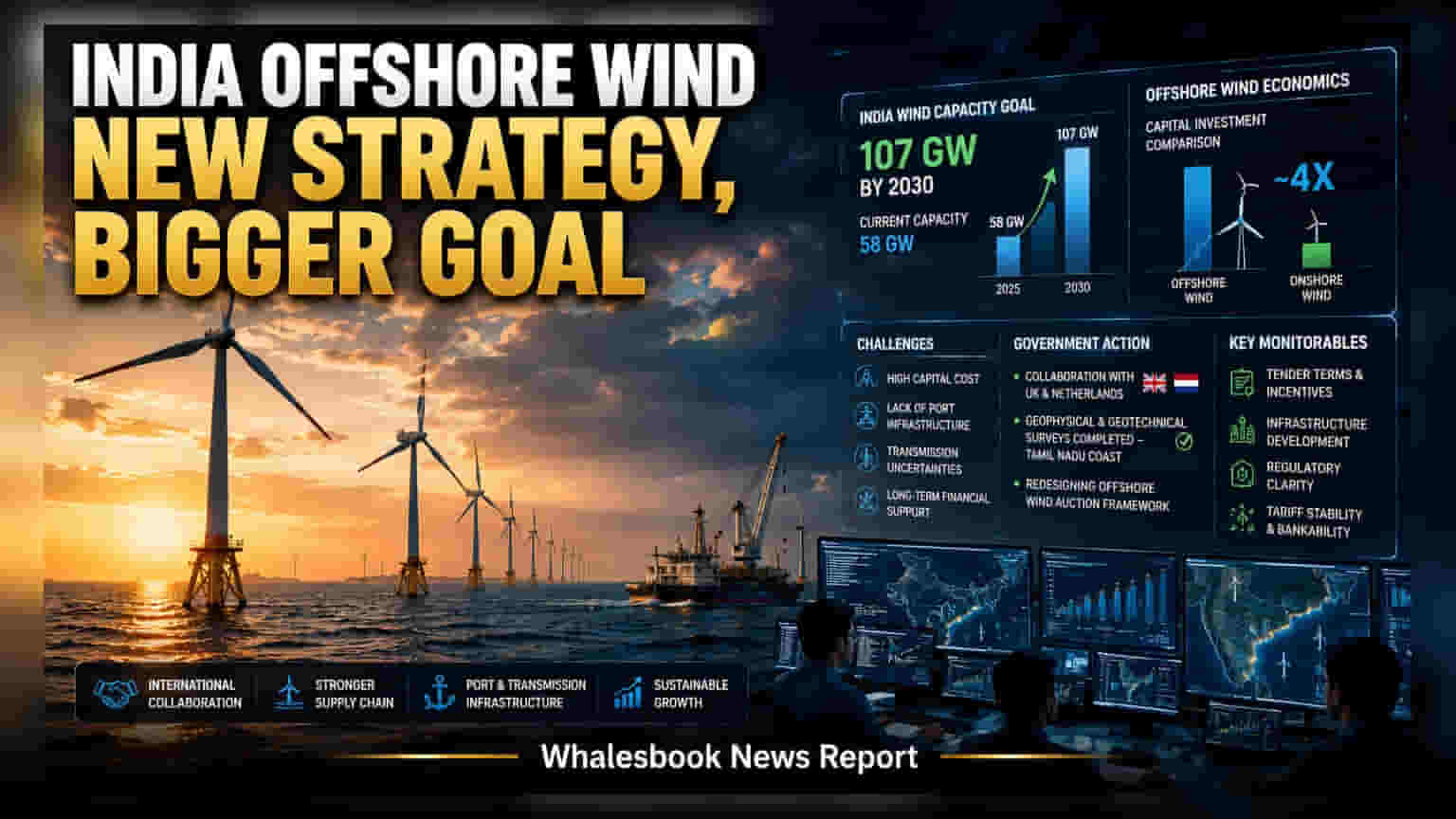
Following the cancellation of two offshore wind tenders in 2025 due to lack of interest, India is now consulting with UK and Dutch experts to refine its strategy. The government aims to resolve high capital costs and infrastructure gaps to reach its 2030 wind capacity target of 107 GW. Investors should monitor future tender terms and government policy updates for signs of improved project viability.
India is shifting its strategy to jumpstart the offshore wind energy sector after previous attempts failed to gain traction. In 2025, two major tenders—a 4 GW project off the coast of Tamil Nadu and a 500 MW project off the coast of Gujarat—were cancelled after failing to attract any bids from developers. In response, the Ministry of New and Renewable Energy has begun working with technical experts from the United Kingdom and the Netherlands to redesign the framework for future offshore wind auctions.
The core challenge lies in the economics of offshore wind, which currently requires about four times the capital investment of onshore wind alternatives. Developers have been hesitant to commit due to the high upfront costs, combined with a lack of specialized port infrastructure and uncertainties regarding long-term financial support and transmission capabilities. Without a clear path to profitability, private players have largely stayed on the sidelines despite the government's ambitions.
By engaging European experts, the government aims to better understand the technical and regulatory adjustments needed to make these projects attractive. The ministry has already completed geophysical and geotechnical surveys off the Tamil Nadu coast, which is a necessary first step to determine the suitability of the seabed for turbine foundations. These studies are designed to reduce risk for future bidders by providing clearer data on site conditions.
India has set an aggressive goal to reach 107 GW of total wind capacity by 2030, a significant jump from its current capacity of 58 GW. While the renewable energy sector has seen strong momentum in onshore wind and solar, the offshore segment remains a complex puzzle. The government views international collaboration as a vital step to securing the necessary supply chains and technical reliability that domestic developers currently lack for these deep-sea projects.
For investors and market participants, the next phase of this strategy will be critical. The primary monitorables will be the terms of the next tender announcement, specifically whether the government introduces new financial incentives or infrastructure support to offset the high capital intensity. The viability of these projects will depend heavily on the final regulatory framework, the stability of electricity tariff structures, and the speed at which the required port and transmission infrastructure is developed. Until these structural hurdles are addressed, the offshore wind sector will likely continue to face a more cautious approach from developers compared to the faster-growing onshore renewable market.