

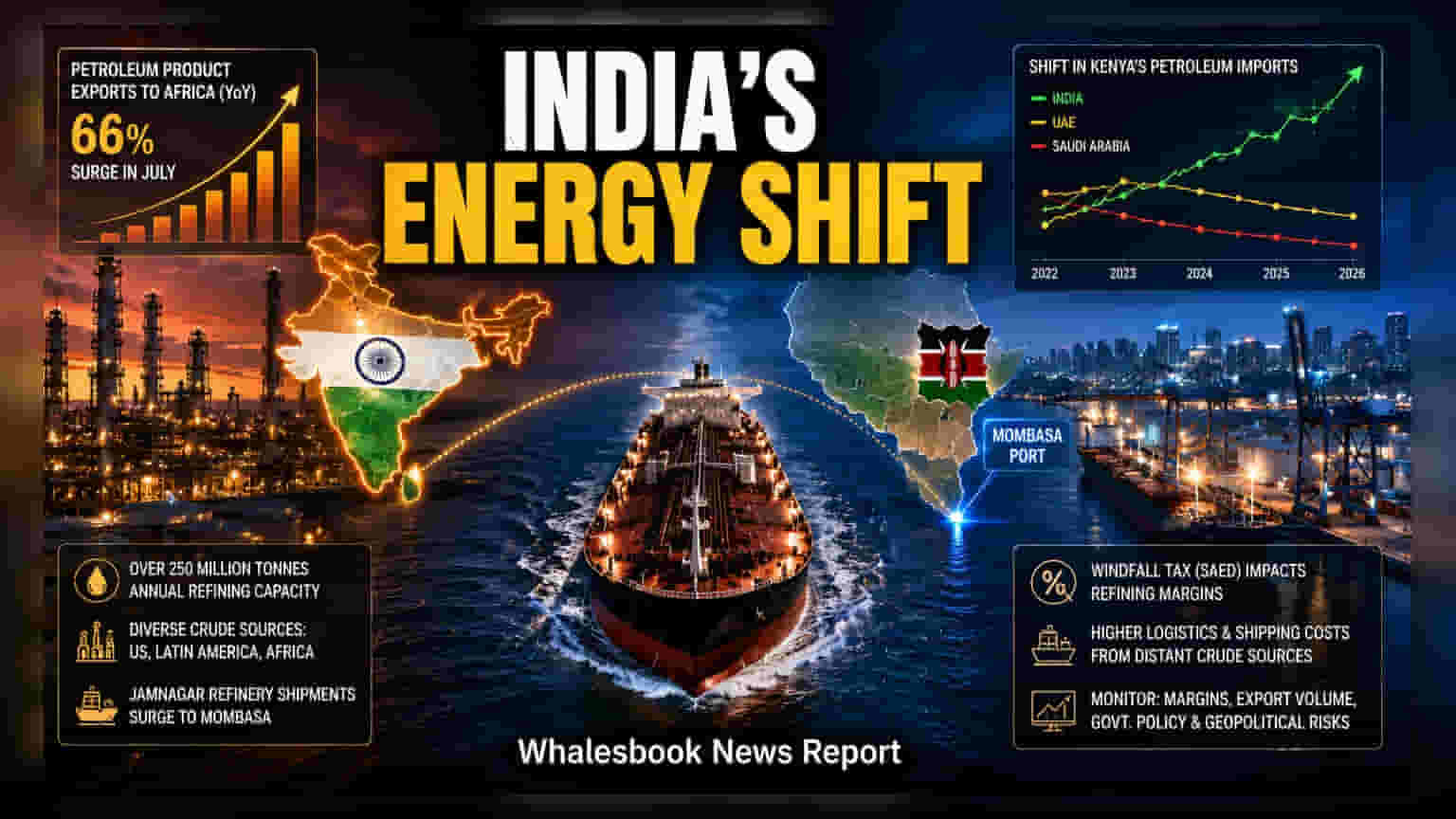
India has overtaken the UAE and Saudi Arabia as Kenya’s primary source for gasoline and diesel, fueled by changing global trade routes. While this shift boosts exports for major Indian refiners, investors should track how logistical costs and the government's windfall tax policy impact refining margins.
India has emerged as the leading petroleum supplier for Kenya, effectively replacing traditional Gulf nations like the UAE and Saudi Arabia. This significant shift in regional energy logistics follows major disruptions in global fuel-trading routes, largely triggered by the ongoing US-Iran conflict. Data from market intelligence firm Kpler indicates that Kenyan imports of Indian refined products have surged, marking a pivot in East Africa's procurement strategy.
The supply chain reorganization comes as traditional routes through the Middle East face uncertainty. As Kenya moves away from its reliance on government-backed agreements with Gulf suppliers, Indian refineries have stepped in to fill the gap. Shipments, particularly those originating from the Jamnagar complex in Gujarat, have seen a notable increase in volume destined for Mombasa. This development underscores India's expanding role as a critical refining powerhouse capable of navigating complex global trade conditions.
For Indian energy companies, particularly large-scale refiners like Reliance Industries, this expanded footprint in emerging markets serves as a strategic outlet for production. With over 250 million tonnes of annual refining capacity, India has leveraged its ability to process diverse crude oil grades—increasingly sourced from the US and Latin American markets—to ensure consistent product availability. The 66% year-on-year surge in petroleum product exports to Africa in July reflects the scale of this trade redirection.
However, this growth comes with financial and operational complexities that shareholders should monitor. While higher export volumes are positive, refining margins are not guaranteed. The Indian government’s implementation of the Special Additional Excise Duty (SAED), commonly known as the windfall tax, on diesel and aviation turbine fuel remains a key monitorable. These dynamic tax adjustments are designed to manage domestic fuel prices and supply, but they can significantly compress profit margins for refiners when export realizations fluctuate.
Furthermore, there is an inherent risk related to operational costs. Diversifying crude oil imports from more distant regions, such as the United States and Venezuela, involves higher logistics, shipping, and insurance expenses compared to the shorter transit times from the Persian Gulf. As Indian refiners take on these costs to maintain their competitive edge in East Africa, their ability to sustain profitability will depend on maintaining efficient operations and managing the impact of global crude price volatility.
The sustainability of this trade shift will likely hinge on the duration of the geopolitical tensions in the Middle East and the cost-competitiveness of Indian fuel compared to other global sources. Investors should track future quarterly results for commentary on refining margins, export volume stability, and any changes in government policy regarding fuel export taxes.