

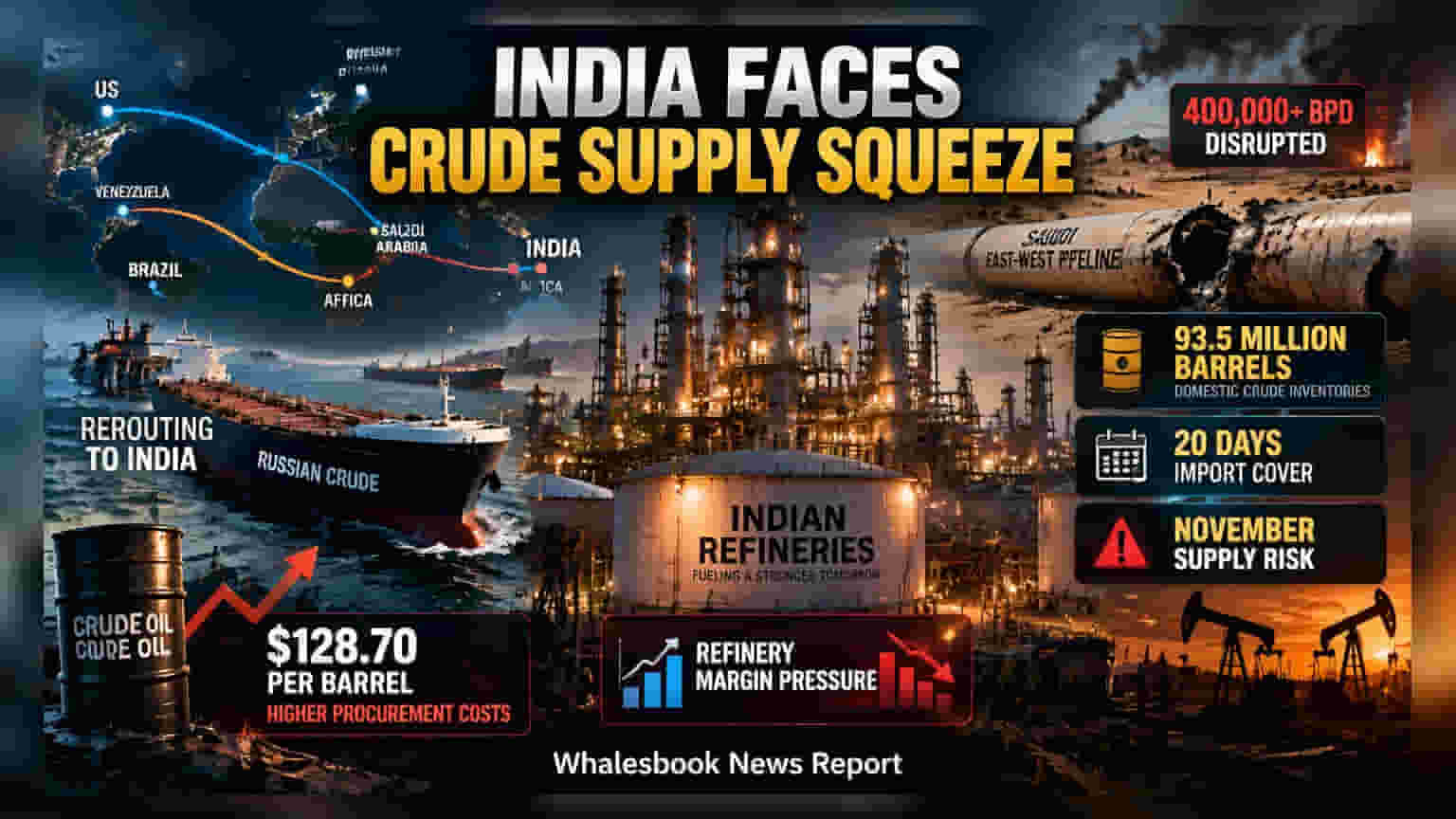
Indian oil refiners have secured supplies for September and October, but procurement for November faces uncertainty. Geopolitical tension in the Middle East and the threat of US tariffs on Russian oil are driving up costs. With crude inventories at a multi-month low, refiners face potential margin pressure as they seek replacement barrels.
Indian refiners are navigating a difficult energy environment as they prepare for November, with supply chains stretched by geopolitical conflict and regulatory pressure. While requirements for September and October are locked in, the period starting in November has created uncertainty due to a combination of Middle East infrastructure disruptions and potential US legislative action.
The cost of importing crude is on the rise, with the Indian crude oil basket reaching $128.70 per barrel by mid-September. Beyond the raw cost of oil, refiners are facing increased expenses for freight, insurance, and war-risk premiums. These higher costs to deliver oil to the refinery are putting pressure on profit margins. Keeping refining margins stable remains a challenge, as domestic fuel prices often remain rigid even when global input costs climb.
Domestic crude inventories have fallen to 93.5 million barrels, the lowest level recorded since May, providing only about 20 days of import cover. This thin buffer leaves little room for error if supply channels are blocked. The situation has been worsened by the closure of Saudi Arabia's East-West pipeline following drone attacks, which disrupted over 400,000 barrels of daily flow to India.
Adding to the procurement challenge is the potential US legislative action—the Lindsey O. Graham Sanctioning Russia and Iran Act of 2026—which could authorize heavy tariffs on countries continuing to trade for Russian oil. As India works to diversify suppliers by buying more from regions like the Americas and Africa, the potential loss of traditional supply routes or higher costs for replacements could impact financial performance.
The pressure on supply is occurring at a time when demand for crude is rising. India is bringing new refinery capacity online in Rajasthan, and Indian Oil Corporation is expanding existing plants, which will require a steady, uninterrupted supply of feedstock. The next important steps for investors to monitor include updates on the restoration of Saudi pipeline flows, the final implementation of US legislative measures, and how refiners manage procurement costs heading into the winter quarter.