

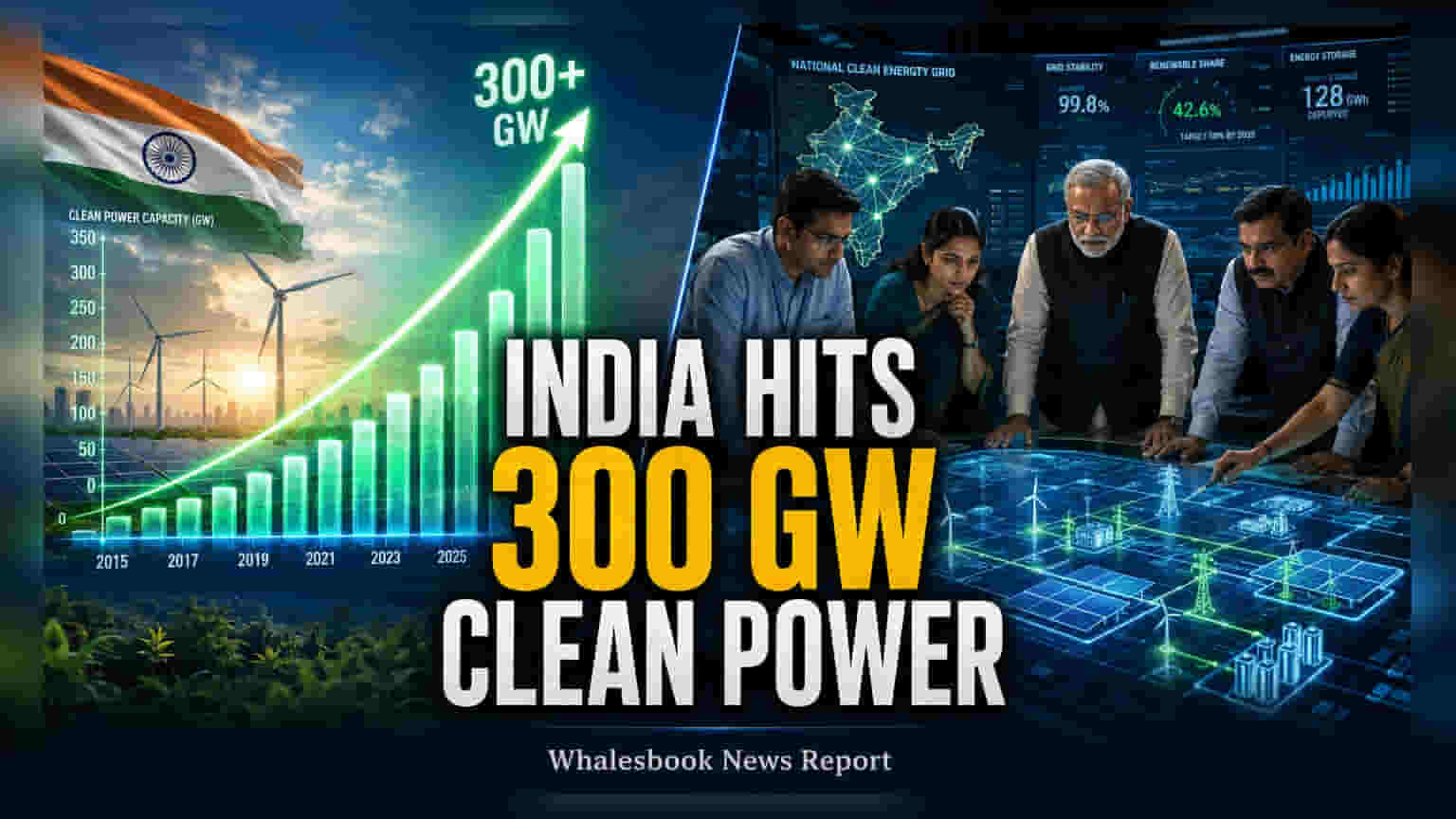
India’s non-fossil fuel power capacity has hit 297 GW, moving closer to its 300 GW milestone and the 500 GW target for 2030. The government is fast-tracking the PM Surya Ghar Muft Bijli Yojana to add rooftop solar to 5 million homes. This expansion reflects a major shift in the nation's energy mix, with significant implications for power generation companies, equipment manufacturers, and battery storage firms.
Detailed Coverage
India’s transition toward sustainable energy is picking up speed, with non-fossil fuel power capacity reaching 297 GW. This figure now accounts for more than half of the country’s total installed electricity generation capability. The government maintains its goal of reaching 500 GW by 2030, a target that serves as a cornerstone for India’s climate commitments and long-term energy security.
The current momentum is supported by the PM Surya Ghar Muft Bijli Yojana. Union Minister Pralhad Joshi confirmed that this scheme, designed to bring rooftop solar power to over 5 million households, is moving into an accelerated implementation phase over the coming weeks. By decentralizing power production, this initiative is intended to ease the load on the national grid while promoting individual energy self-sufficiency.
Future Growth Drivers and Technological Shifts
Beyond basic capacity additions, the government is shifting focus toward strengthening the resilience of the power system. Ministry officials have indicated that the next phase of development will prioritize hybrid projects—which combine different renewable sources like solar and wind—alongside advanced battery energy storage systems. These storage solutions are essential for managing the intermittent nature of solar and wind power, ensuring that electricity is available even when the sun is not shining or the wind is not blowing.
Furthermore, the government is looking at specialized infrastructure, including floating solar plants and agrivoltaics, where solar panels are installed on agricultural land to allow for dual land use. The National Green Hydrogen Mission also remains a central pillar for future energy requirements, aimed at decarbonizing industrial processes that are difficult to power with electricity alone.
Impact on the Electricity Sector
The rising demand for reliable power from emerging sectors like data centers and electric vehicles is expected to sustain investment in the renewable space. As smart manufacturing and interconnected technologies continue to expand, the need for stable, green energy will become more pronounced. This environment is creating opportunities for various participants, including renewable energy developers, equipment makers, and firms specializing in battery technology and hydrogen production.
The upcoming Bharat Renewable Energy Summit & Expo 2026, set for November, is expected to serve as a hub for these stakeholders. Investors and industry participants will likely monitor the summit for policy updates, technological collaborations, and potential capital spending announcements. The key monitorable for the industry remains the speed of project execution and the financial viability of integrating large-scale battery storage, which is critical for making renewable energy a reliable alternative to traditional power sources.