

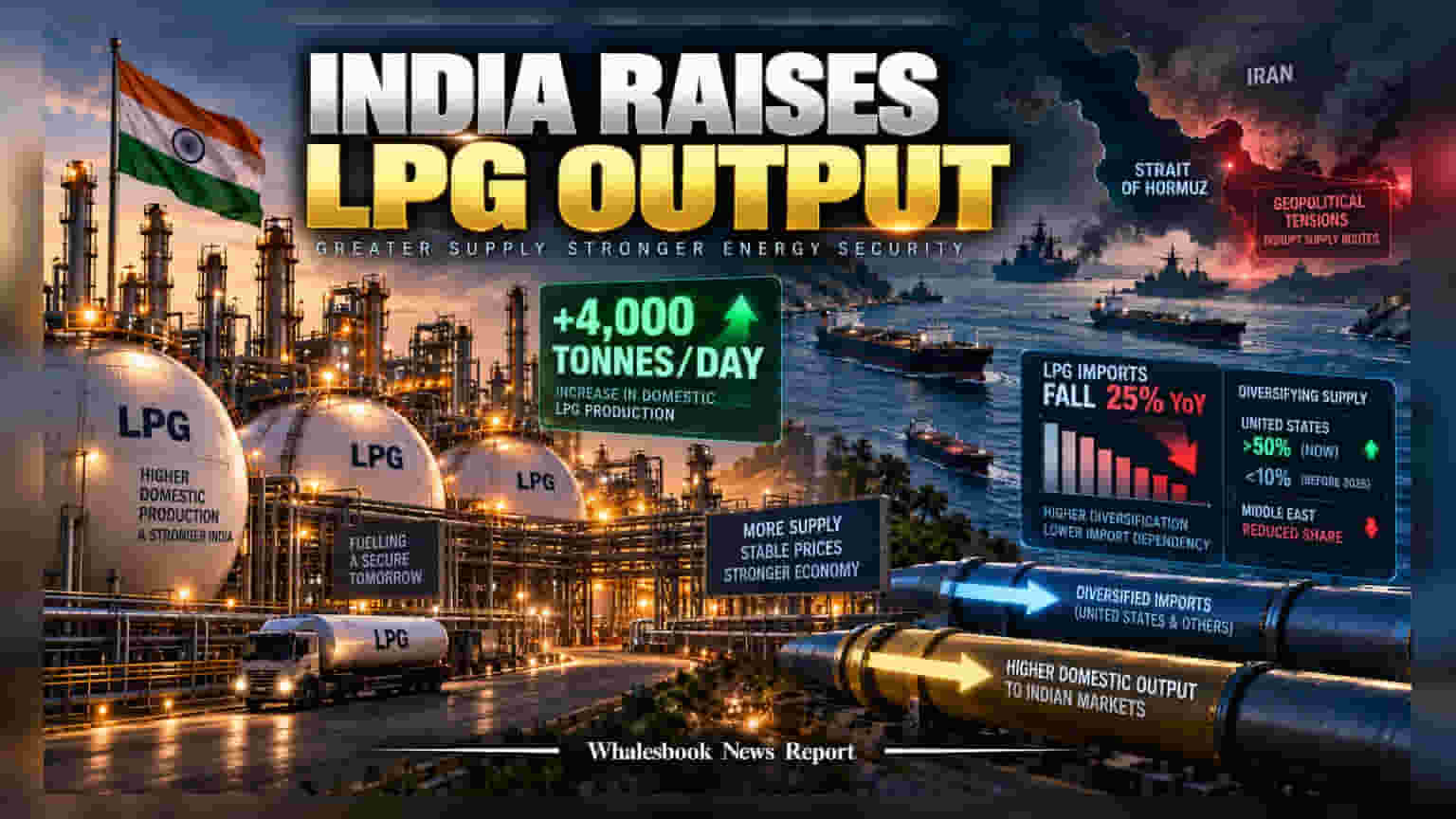
India is boosting daily domestic LPG production by approximately 4,000 tonnes to secure energy supplies amid renewed US-Iran tensions near the Strait of Hormuz. This shift aims to reduce heavy reliance on traditional shipping routes, although it raises important questions for investors regarding potential refinery margin trade-offs and operational efficiency in state-run oil companies.
India is stepping up efforts to stabilize its liquefied petroleum gas (LPG) supplies as geopolitical instability returns to the Strait of Hormuz. Domestic refiners are currently increasing production by about 4,000 metric tonnes per day, building upon base levels of 37,000 to 38,000 tonnes. This strategic adjustment follows renewed hostilities in the region, which has historically been a critical waterway for India's energy imports.
For years, the Strait of Hormuz accounted for nearly 90% of the country’s LPG imports. However, recent disruptions have forced the government and oil companies to accelerate a transition toward a more diverse import mix. A significant change is already visible in the supply chain: the United States now provides over 50% of India’s LPG imports, a sharp increase from the less than 10% share held before the conflict escalated in early 2026.
While this diversification improves energy security, it introduces new business challenges. Sourcing LPG from North America involves longer transit times and higher freight costs, which can exert pressure on the operational margins of oil marketing and refining companies. Investors may monitor how these refiners balance the government’s mandate to maximize LPG output—which can reach targets as high as 63,810 tonnes per day in peak scenarios—with the need to protect overall profitability.
There is also a historical trade-off that shareholders should watch. In previous periods of heightened production, refiners often diverted inputs away from petrochemical streams to prioritize LPG. This typically results in a drop in the production of other profitable refinery products, such as plastics and chemical raw materials, which can drag on earnings. The management of these refinery trade-offs will be a key area for investors to follow in upcoming quarterly disclosures.
On the consumption side, the market is currently adjusting to constrained availability. India’s LPG consumption fell 17% year-on-year in August 2026. The most significant decline was seen in the industrial sector, where bulk LPG consumption plummeted by roughly 80% in July. Many industrial users have opted to switch to alternative fuels such as piped natural gas, diesel, or wood pellets. This shift in demand has helped bridge the supply-demand gap, but it also reflects a degree of 'demand destruction' that could impact long-term volume growth for the sector.
The outlook for the next few months remains tied to the situation at the Strait of Hormuz. If transit issues persist, the reliance on more expensive, non-Middle Eastern sources will continue to influence input costs. Investors should track future exchange filings and management commentary for updates on refinery capacity utilization and the impact of freight costs on bottom-line margins.