 Whalesbook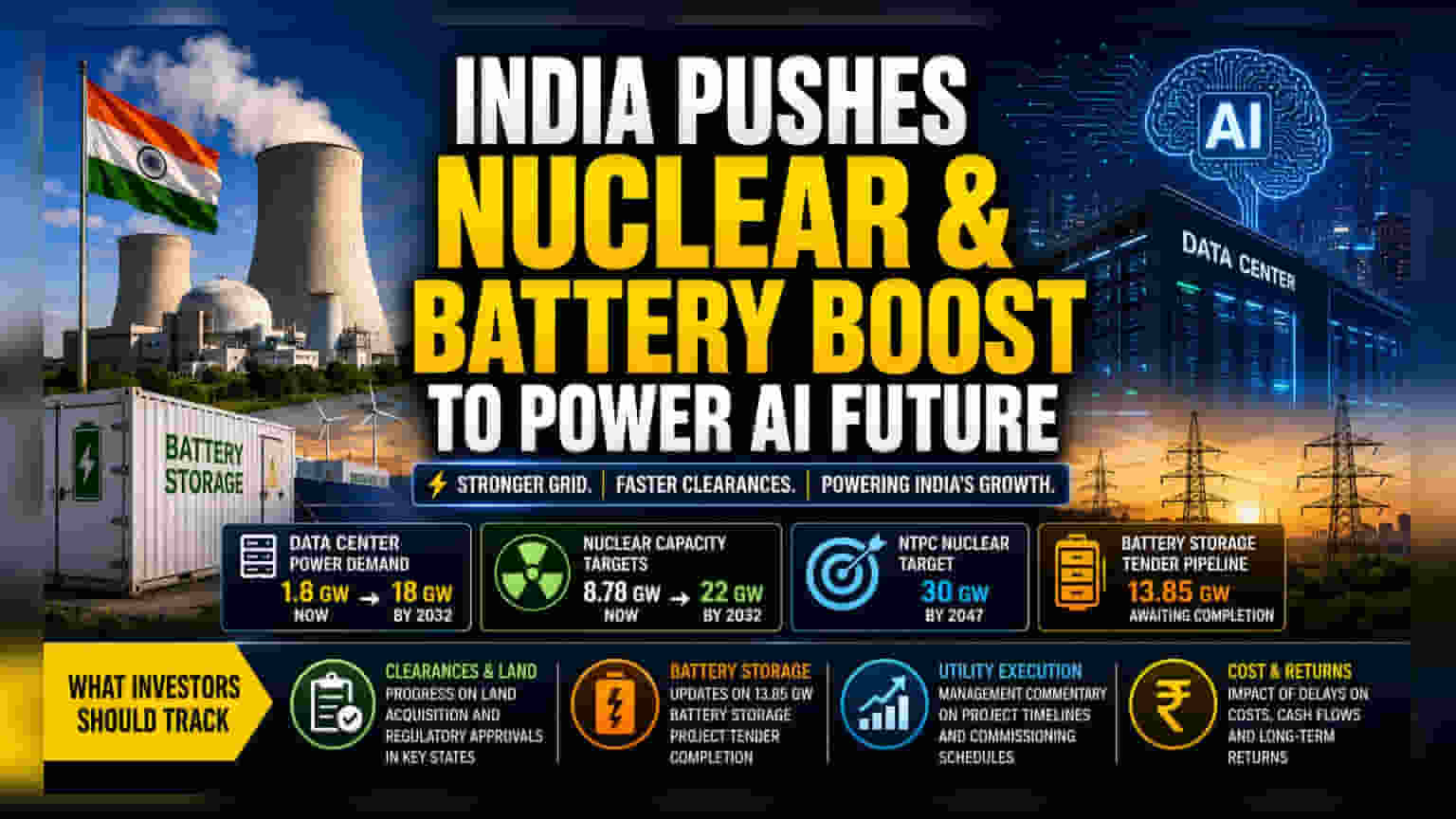


The central government is urging states to speed up approvals for nuclear plants and battery storage projects. This push aims to secure reliable electricity for India's booming AI and data center sector, where power demand is set to grow ten times by 2032.
What Happened
The central government has asked states to speed up clearances for nuclear power plants and large-scale battery storage systems. This direction was discussed at a recent Niti Aayog meeting, involving nearly 15 states and Union Territories. The main goal is to remove hurdles that have slowed down infrastructure projects, such as land allocation and water availability, which are vital for expanding India's power capacity.
Powering The AI Boom
This push for energy is directly linked to the rapid growth of data centers and artificial intelligence in India. Data centers require a steady and constant supply of electricity to operate efficiently. Currently, the power demand from these centers is estimated at around 1.8 gigawatts (GW). By 2032, this is expected to jump to 18 GW. To meet this massive need, the government is focusing on a mix of nuclear power and battery storage to ensure the grid remains stable, especially since solar and wind energy are not available 24/7.
The Execution Challenge
For investors, the most important aspect of this news is the historical difficulty in getting these large projects off the ground. The government has identified 32 potential sites for nuclear plants, but many remain stuck due to pending land and regulatory approvals. States like Andhra Pradesh, Madhya Pradesh, Uttar Pradesh, and others are in focus to clear these bottlenecks. Similarly, battery storage projects, which are essential for storing renewable energy, are facing delays in several states, including Maharashtra and Telangana. The challenge for companies and the government is to translate these plans into actual operational assets on the ground, which requires navigating complex land and environmental clearances.
What It Means For Energy Companies
The push impacts major players in the Indian energy sector. Companies like NTPC are working toward significant expansion goals, with a target of 30 GW of nuclear power capacity by 2047. Meanwhile, the Nuclear Power Corporation of India Limited (NPCIL) is aiming to reach 22 GW by 2032, up from the current 8.78 GW. These targets require immense capital spending and smooth project execution. If the states can expedite clearances, it could help these companies meet their growth targets. However, any continued delay in land acquisition or water allocation could impact the timeline of these projects and the cash flow of the companies involved.
What Investors Should Track
Investors may monitor a few key developments in the coming quarters. First, track the progress of land acquisition and regulatory clearances in the states identified by the government. Second, watch for any updates on the 13.85 GW battery storage project tender, which has been awaiting completion. Third, pay attention to management commentary from major power utilities regarding their project commissioning timelines. Successful and timely execution is critical, as delays can lead to cost increases and affect the long-term return on investment for large energy projects.