

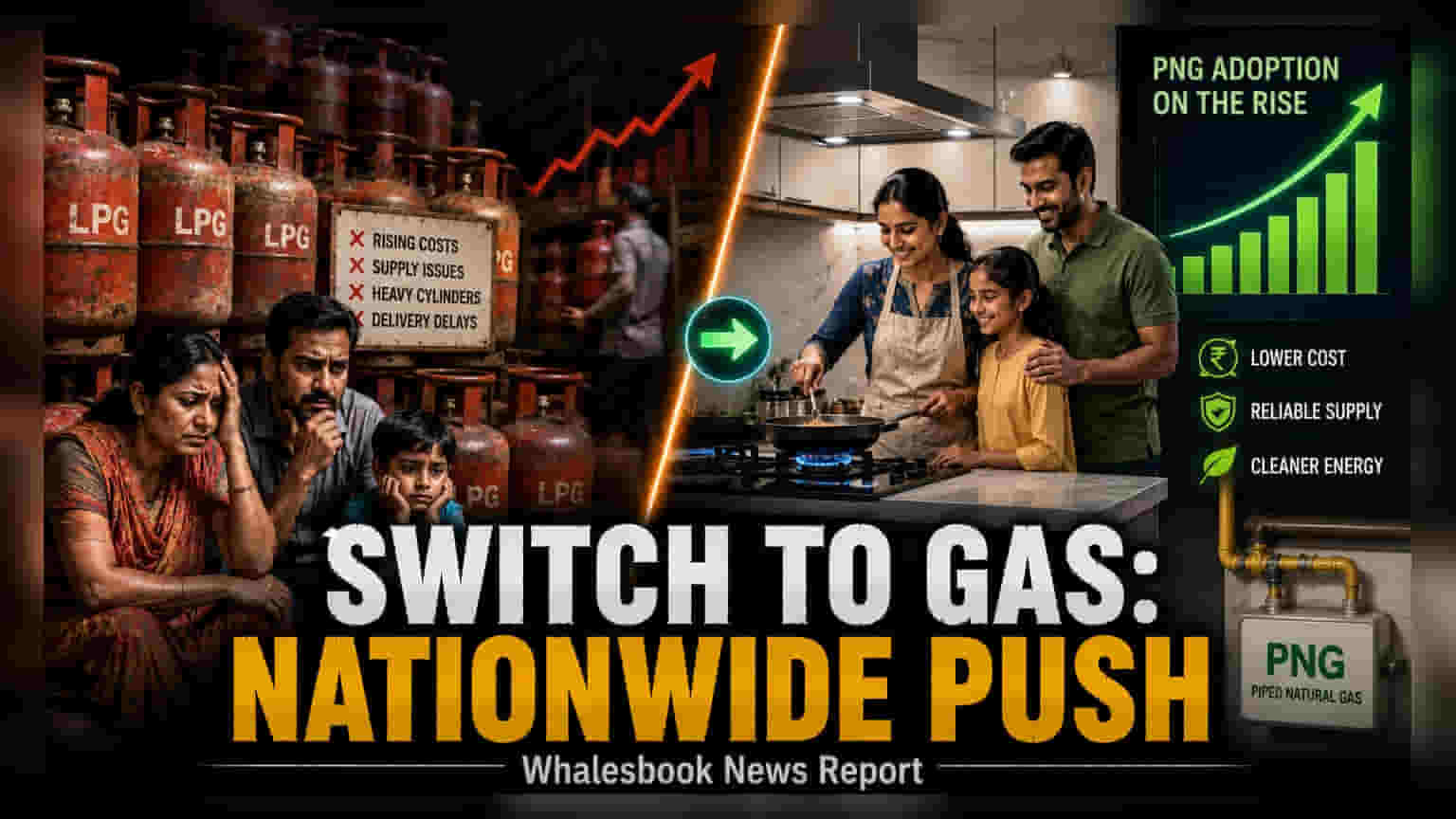
The Petroleum Ministry is accelerating the transition from LPG to Piped Natural Gas (PNG) by ordering states to appoint nodal officers. Starting September 1, 2026, City Gas Distribution companies will receive 200 SCM of lower-cost domestic gas for every new connection. This move is designed to shorten the project payback period from 10 years to 3 years and improve financial returns for gas distributors.
The Ministry of Petroleum and Natural Gas has launched a fresh effort to accelerate the transition from Liquefied Petroleum Gas (LPG) cylinders to Piped Natural Gas (PNG). On August 21, 2026, the government directed state governments and Union Territories to appoint district-level nodal officers to coordinate this transition. This move is aimed at improving energy security and reducing the logistical burden of transporting LPG cylinders.
To make this transition financially attractive for City Gas Distribution (CGD) companies, the government is introducing an incentive scheme starting September 1, 2026. Under this plan, gas distributors will receive 200 standard cubic metres (SCM) of additional, lower-cost Administered Price Mechanism (APM) gas for every new, active domestic PNG connection. Because APM gas is significantly cheaper than the market-priced Liquefied Natural Gas (LNG) that companies often have to buy, this allocation helps widen profit margins. Industry estimates suggest this incentive could reduce the payback period for building new connection infrastructure from approximately 10 years down to about 3 years.
This policy shift is also a strategic move to insulate the domestic economy from global energy volatility. Earlier in 2026, disruptions in international shipping routes caused concerns regarding India's heavy reliance on imported LPG, much of which travels through vulnerable chokepoints in the Middle East. By promoting PNG, which relies more on domestically produced gas, the government aims to create a more resilient energy supply for households. Major players in this space, such as Indraprastha Gas Limited (IGL), Mahanagar Gas Limited (MGL), and Gujarat Gas Limited, are expected to be key participants in this expansion.
However, the success of this transition faces several real-world operational challenges. Historically, the expansion of city gas networks has been slowed by difficulties in obtaining Right-of-Way (RoW) clearances from local authorities, which are required to lay pipes under roads and streets. Furthermore, consumer adoption remains a hurdle. Switching from a familiar LPG cylinder system to a piped connection involves changing habits and paying security deposits, which may not be appealing to all households, especially when LPG supplies are stable.
Investors should monitor how effectively the new district-level nodal officers resolve these clearance issues. While the APM gas incentive provides a clear financial boost, the long-term benefit for CGD companies will depend on their ability to execute large-scale network rollouts and sustain growth in new connections despite these operational risks. The impact of this policy on company margins will likely be a key detail to watch in upcoming quarterly financial updates.