

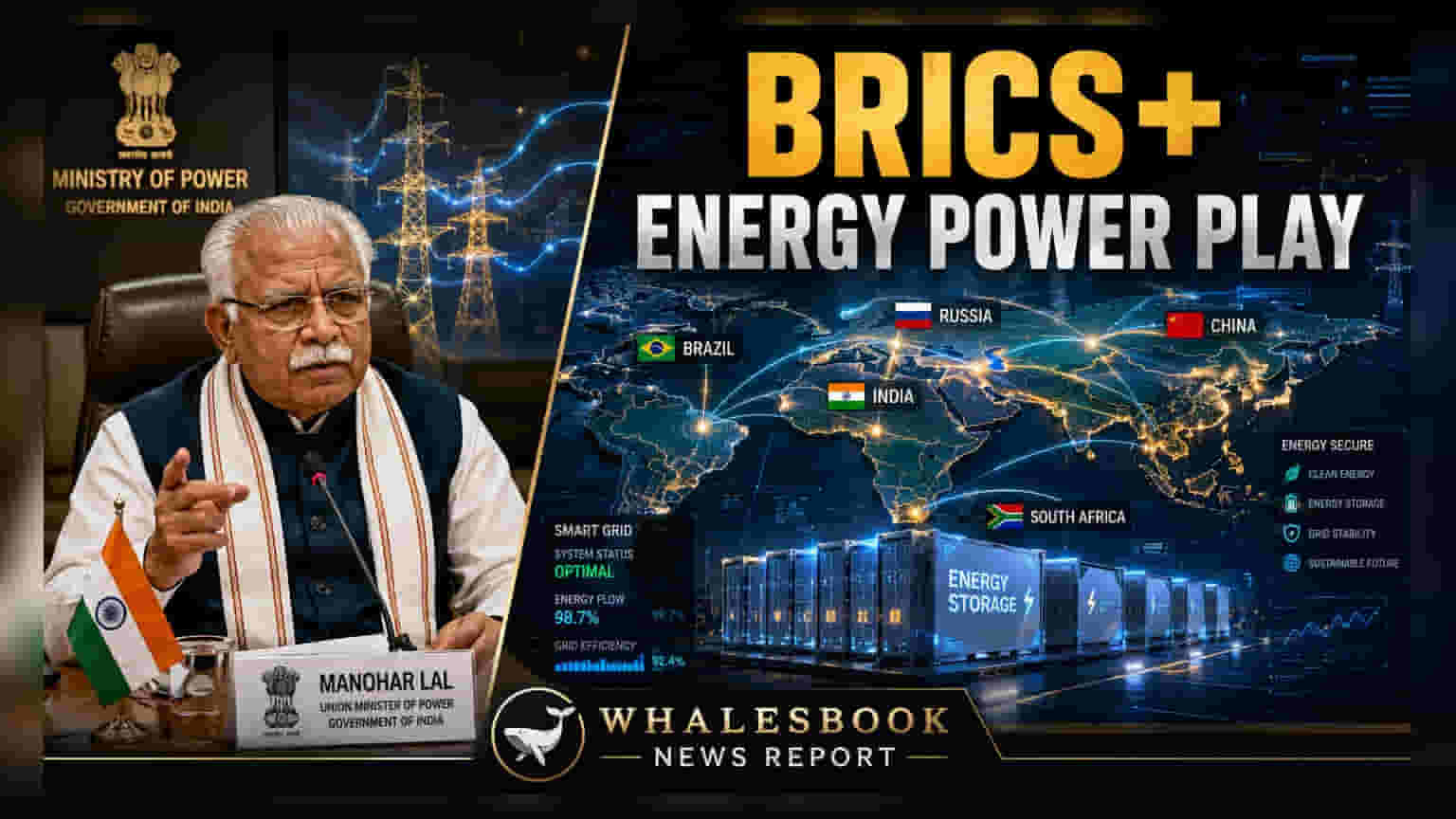
India has launched a BRICS Digital Centre for Smart Grids to bolster energy security. The initiative aims to diversify supply chains and reduce heavy dependence on Chinese green technology components. Investors should monitor how this diplomatic shift influences domestic manufacturing and long-term energy import costs.
India has concluded the 11th BRICS Energy Ministers’ Meeting, marking a strategic shift in how the nation manages its energy supply chain. A key outcome of the forum was the launch of the BRICS Digital Centre of Excellence for Smart Grids and Energy Storage. This move is part of a broader effort to strengthen infrastructure resilience and promote technology sharing among member nations.
Strategic Shift Toward Supply Chain Resilience
For the Indian energy sector, this development is more than just a diplomatic milestone. Currently, India faces a significant challenge regarding its heavy reliance on Chinese imports for critical green technology components, including solar modules and battery storage systems. By pushing for a BRICS-wide focus on supply chain resilience, India is attempting to create a framework that favors open-source protocols and international standards, such as those promoted by the International Solar Alliance. The goal is to establish a system that is less dependent on proprietary Chinese networks, which could eventually benefit domestic manufacturers by creating a more diversified market for green energy equipment.
Energy Targets and Infrastructure Growth
India continues to scale its energy capabilities, with total installed capacity now exceeding 540 gigawatts. Of this, more than half comes from non-fossil fuel sources, with solar energy contributing over 154 gigawatts. The government has set ambitious targets for the coming decades, including reaching 400 gigawatt-hours of energy storage capacity by 2032 and expanding nuclear power to 100 gigawatts by 2047. These targets require consistent capital spending and reliable access to high-quality technology, making the diversification of import sources a critical factor for project execution and long-term profit margins.
Balancing Geopolitics and Trade
The expansion of BRICS to include major energy exporters like Saudi Arabia, the UAE, Russia, and Iran provides India with a strategic opportunity to negotiate better hydrocarbon contracts. By leveraging these partnerships, New Delhi aims to create a buffer against global price volatility, which often impacts the cost structures of Indian manufacturing and utility companies.
However, changing established trade dynamics with China remains a complex task. Investors may monitor whether this diplomatic pivot leads to tangible changes in import costs or if domestic companies can successfully scale their local manufacturing capabilities to replace imported alternatives. The success of these initiatives will depend heavily on the ability to translate these BRICS-level agreements into operational realities, such as reduced costs for green energy projects and improved grid efficiency. Monitoring the progress of the Digital Centre of Excellence and any resulting shifts in procurement patterns will be important for understanding the future landscape of the Indian energy sector.