

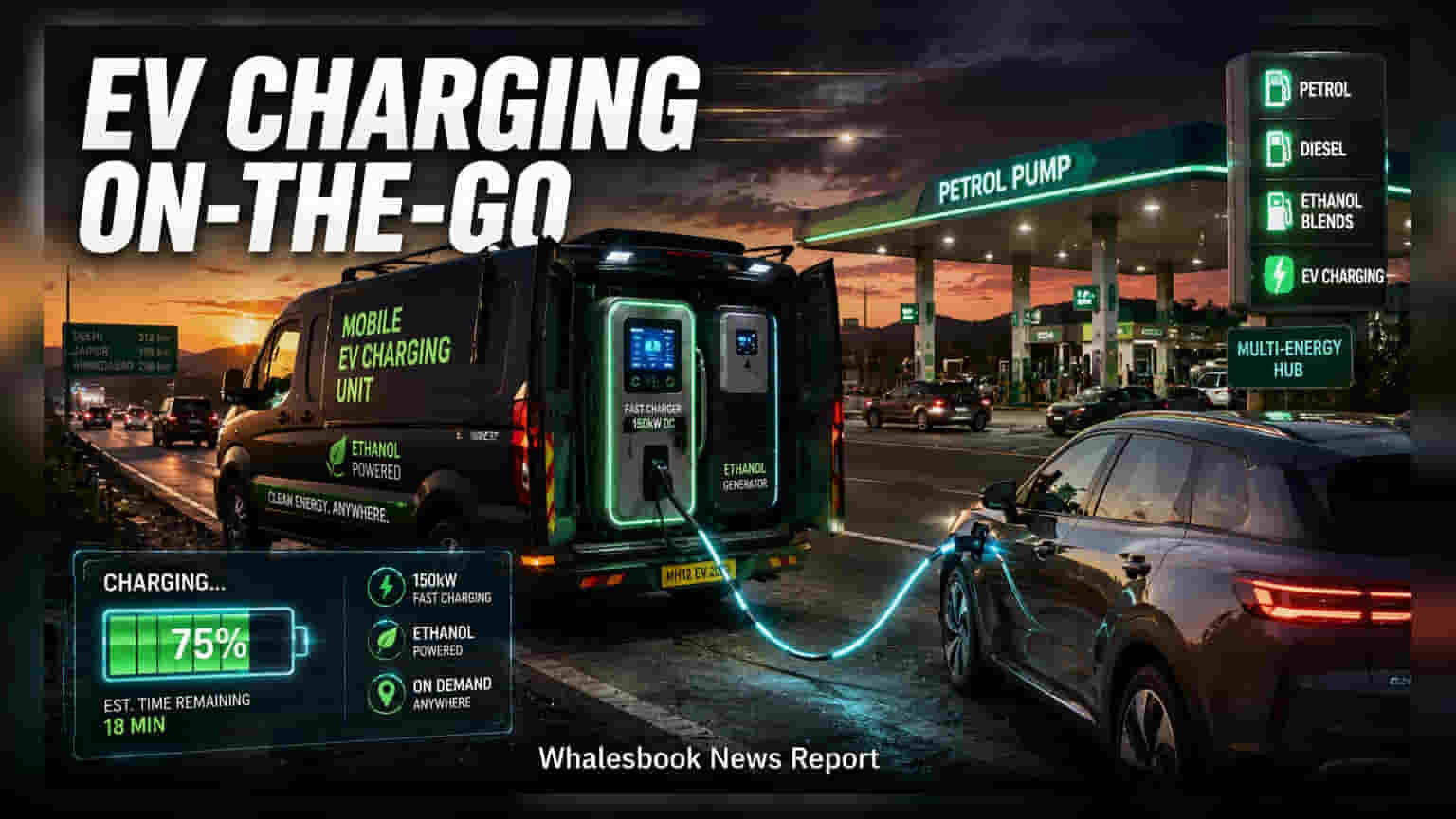
Experts are suggesting the use of mobile, ethanol-powered EV charging units at existing petrol pumps to tackle range anxiety. This shift aims to make long-distance electric travel more reliable as the nation’s charging network continues to scale. Investors may track how oil marketing companies and infrastructure providers adapt their assets to this multi-energy model.
To address the persistent challenge of range anxiety for electric vehicle users on Indian highways, experts have proposed the deployment of mobile, ethanol-powered charging units. While India’s public charging network has reached 52,718 stations as of July 2026, fixed infrastructure still faces challenges regarding grid connectivity and land availability, particularly in remote or high-traffic highway stretches. The proposal suggests using mobile charging units, equipped with high-capacity fast chargers powered by ethanol generators, to provide on-demand support at existing petrol stations.
Turning Petrol Pumps Into Energy Hubs
The core of this proposal lies in repurposing India’s vast network of petrol pumps. By stationing mobile charging fleets at these established locations, operators can transform them into multi-energy hubs. This approach allows these sites to serve as flexible service points that can offer conventional fuel, ethanol blends, and emergency mobile charging without requiring massive, immediate upgrades to the local electricity grid. This strategy is distinct from the traditional model of building permanent, fixed-location charging stations, which often requires significant time and complex land acquisition processes.
Strategic Industry Shifts
The infrastructure landscape is already seeing signs of consolidation. In a recent development, Hyundai Motor India and Jio-bp announced a strategic partnership in late August 2026 to integrate their charging networks, providing access to over 37,000 charge points through a unified app. This highlights an industry-wide trend where companies are focusing on network accessibility and service integration rather than just the number of physical chargers. For companies involved in fuel retail and infrastructure, the shift toward a multi-energy model—where a single site provides multiple fueling options—is becoming a key focus area.
Risks and Monitorables
While the model offers a flexible solution, investors should remain aware of potential risks. The technology required for mobile storage and high-speed charging involves significant upfront capital spending. Additionally, the regulatory environment for off-grid energy delivery and mobile fuel-based power generation is still evolving. There is also the challenge of ensuring service reliability; current network uptime at fixed stations remains a concern for many EV owners, and adding a mobile layer introduces new operational complexities. Moving forward, the effectiveness of this approach will depend on how quickly oil marketing companies and independent energy providers can operationalize these mobile fleets and whether the economics can remain sustainable compared to fixed-grid infrastructure. Investors may monitor pilot projects and policy updates regarding mobile energy delivery as indicators of sector progress.