 Whalesbook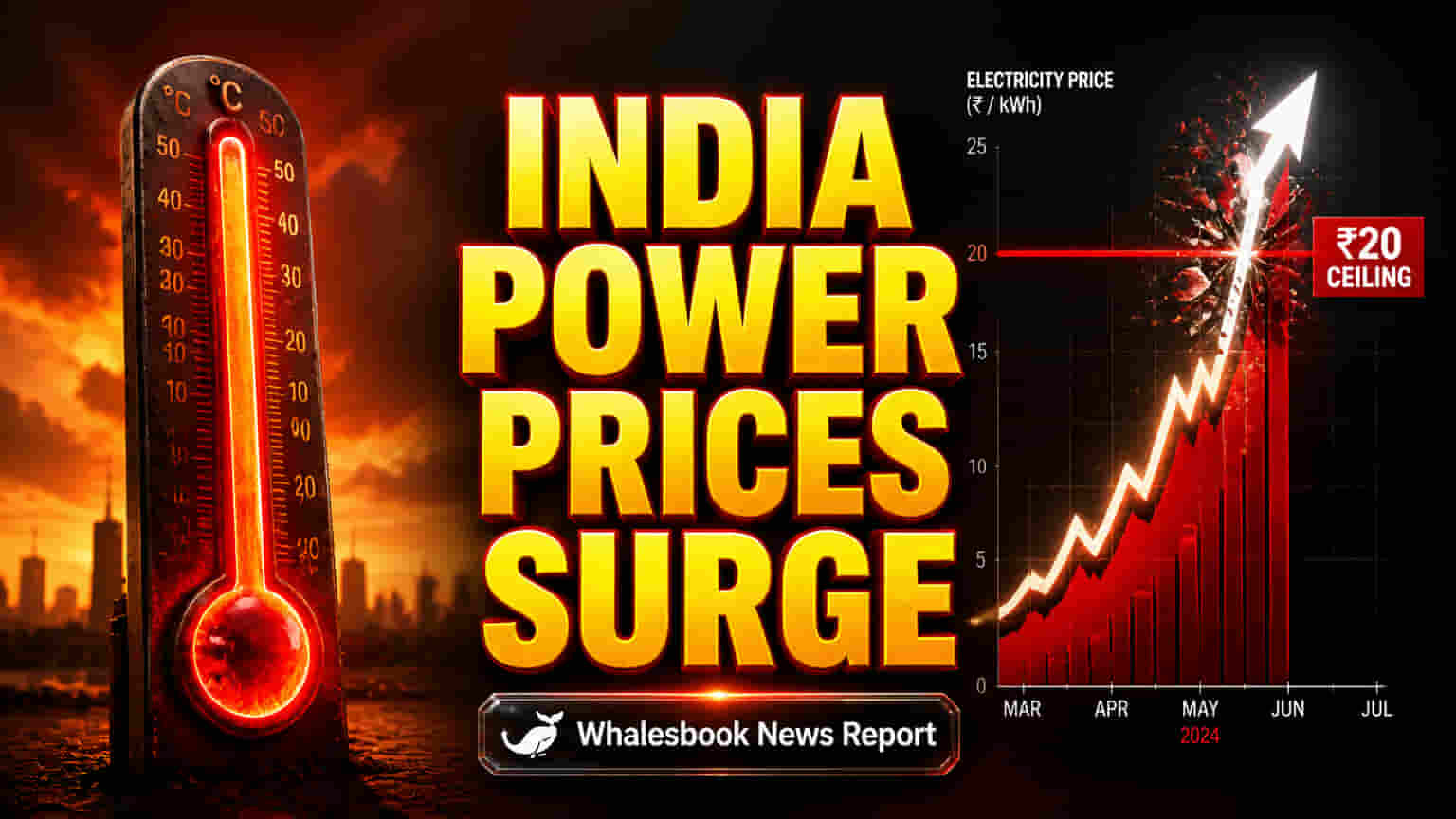


Heatwave Drives Power Prices to Cap
India's power market is seeing elevated tariffs, especially on the High-Price Day-Ahead Market (HP-DAM), due to a severe demand-supply imbalance worsened by extreme weather. This puts significant strain on the electricity grid, forcing it to rely on more expensive power sources to meet peak demand.
IEX Faces Market Stress
The Indian Energy Exchange (IEX), a major platform for electricity trading, is at the center of this demand surge. While increased activity boosts trading volumes, the HP-DAM segment repeatedly hitting its price cap signals underlying market stress. IEX's valuation reflects growth expectations that now face practical limits from generation costs and price caps. In April, the HP-DAM averaged ₹19.6 per unit, a stark contrast to the standard day-ahead segment's ₹5.3 per unit, showing how specialized segments absorb costs for extreme demand.
Grid Under Pressure
India's power grid is struggling with record demand, reaching 256 GW on April 25th due to a widespread heatwave. This pressure forces greater reliance on expensive power sources, including imported coal, gas plants, and battery storage, especially during non-solar hours when renewable energy is low. Volatile global prices for thermal coal and natural gas increase operating costs, driving tariffs toward their limits. The ₹10 per unit cap on the standard day-ahead market prevents these higher-cost generators from competing, necessitating the HP-DAM, which is now also capping out at ₹20.
Demand Spikes Are Becoming More Persistent
While India typically sees high demand and price spikes in summer, the HP-DAM has consistently hit its highest tariffs this year. This sustained capping across multiple days is a strong indicator of grid stress. Public discussion about power availability during heatwaves has grown, reflecting concerns about the grid's ability to manage demand swings without extremely high costs.
Market Risks and Cost Concerns
Hitting price caps on high-cost generation segments creates significant market risks. Reliance on imported coal and gas exposes the sector to global price swings and geopolitical issues, leading to uncertain costs for distributors already facing financial challenges. Battery storage provides flexibility but its high investment and operational costs may not fully cover the long-term burden of meeting peak demand. The HP-DAM capping out repeatedly questions its effectiveness if demand outpaces affordable supply. A ₹10 cap on the standard day-ahead market could discourage investment in cheaper generation, forcing the system to depend on expensive peak power. This reliance on costly imported fuel adds systemic risk, even for dominant platforms like IEX.
Outlook: Balancing Demand and Supply
Electricity demand in India is projected to continue growing due to economic expansion and population increases. Meeting this sustained demand requires substantial investment in baseload capacity and peak management solutions. Regulators are focusing on grid modernization, renewable energy integration, and advanced energy storage to ensure reliable supply and stable prices. While IEX holds a dominant market position, analysts note concerns over regulatory uncertainty and vulnerability to cost pressures from volatile fuel prices and extreme weather. The sector's future depends on balancing cost-effective supply with escalating demand.