 Whalesbook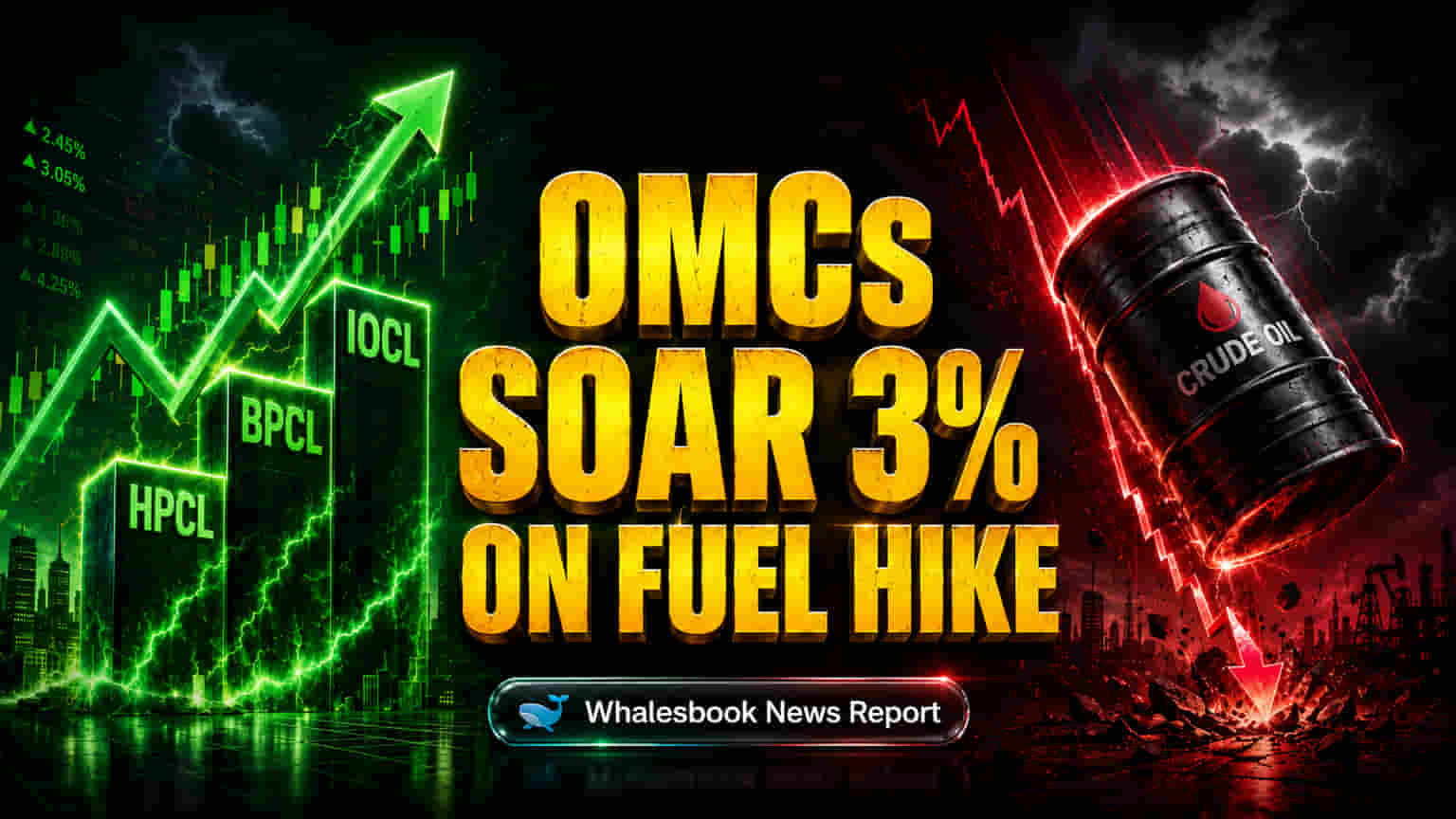


Fuel Price Hikes Offer Brief Relief
State oil companies like Indian Oil Corporation (IOCL), Bharat Petroleum Corporation (BPCL), and Hindustan Petroleum Corporation (HPCL) saw shares recover from earlier losses on Tuesday, May 19. This rise coincided with easing geopolitical tensions in the Middle East, which led to lower global crude oil prices. However, analysts note these price increases are a catch-up measure rather than a sustainable boost, as significant losses continue to pressure the sector.
Price Increases and Market Reaction
On Tuesday, May 19, shares of IOCL and HPCL traded higher, gaining 2.24% and 2.15% respectively, while BPCL saw a minor pullback of 2.67%. This movement occurred as the government implemented a second fuel price increase within seven days. The broader market sentiment also contributed, with the Nifty 50 index rising 0.4% to 23,734 and the BSE Sensex adding 0.5% to 75,656. Despite the gains, margin problems persist. Reports indicate that the recent price increases are insufficient to fully compensate for losses from elevated crude oil prices, estimated at around Rs 15.6 per litre for petrol and over Rs 22 per litre for diesel, even after prior excise duty reductions. This suggests the current stock performance may be a temporary reaction to reduced risk, not a fundamental improvement.
Valuation, Geopolitics, and Energy Transition
Valuation Metrics
State oil companies like IOCL, BPCL, and HPCL currently trade at low Price-to-Earnings (P/E) ratios, with IOCL around 5.54, BPCL around 5.71, and HPCL around 4.24. These figures are significantly below the industry P/E of approximately 14.25, indicating they might be undervalued but also reflecting market concerns about their future earnings stability and the volatile nature of their business model, heavily dependent on government policy and global commodity prices.
Geopolitical Context & Crude Oil Volatility
The recent easing of tensions between the US and Iran provided temporary relief to global crude oil prices, which have been elevated, with Brent crude hovering above $100 per barrel. Reports placed the Indian crude basket near $114 per barrel, a significant increase from previous levels. Historically, geopolitical events in the Middle East have had a pronounced impact on India, a nation that imports nearly 85% of its oil requirements. However, recent analyses suggest current geopolitical events may have a comparatively smaller impact on oil prices than historical crises due to diversified global supply and reduced regional reliance. Nevertheless, India remains vulnerable to price volatility and shipping risks.
The Energy Transition
Beyond immediate price issues, state oil companies face a long-term challenge from the global shift towards renewable energy. India is rapidly expanding its non-fossil fuel-based installed capacity, targeting 60% by 2035 and 500 GW by 2030. While this transition offers new opportunities in areas like green hydrogen and biofuels for companies like IOCL, it signifies a gradual decline in the dominance of fossil fuels, impacting the core business model of these traditional energy providers.
Analyst Concerns: Persistent Losses and Downgrades
Persistent Losses and Margin Squeeze
The main concern for investors is the continued losses faced by state oil companies. Analysts estimate that the recent Rs 3 per litre price hike is far from sufficient to offset daily losses, which could amount to nearly Rs 500 crore at current crude prices. Experts suggest that these companies might require a price increase of 15-20% to return to previous profitability levels. This persistent margin squeeze is worsened by the government balancing inflation control and company viability. The market expects future price adjustments to be gradual to avoid significant inflation.
Analyst Sentiment and Downgrades
Analyst sentiment has turned cautious, leading to downgrades. Ambit Institutional Equities, for instance, downgraded HPCL, BPCL, and IOC shares to 'Sell', slashing target prices by up to 57% due to sustained high crude prices and perceived limited government support. These downgrades highlight concerns about profitability and potential further margin cuts if high crude prices continue. While HPCL recorded a net loss in FY23, and its ROE has been volatile, the broader issue affects all state oil companies.
Regulatory and Political Risk
State oil companies operate under significant government influence. The government's policy on fuel pricing is critical; a history of price freezes to cushion consumers from global volatility has led to substantial financial strain on these state-run entities. While recent price hikes provide partial relief, they are often insufficient to fully cover costs, forcing companies to absorb losses. The timing and magnitude of future price adjustments remain subject to political considerations, creating an unpredictable operating environment.
Outlook Remains Challenging
Brokerage firms like Nomura estimate that a Rs 15-20 per litre fuel price increase is needed for state oil companies to stop losing money. With Brent crude prices staying high and Middle East risks unresolved, the path ahead for these companies is challenging. Their ability to manage these pressures will depend on the government allowing larger price increases, refining margin gains, and diversification into new energy areas.