

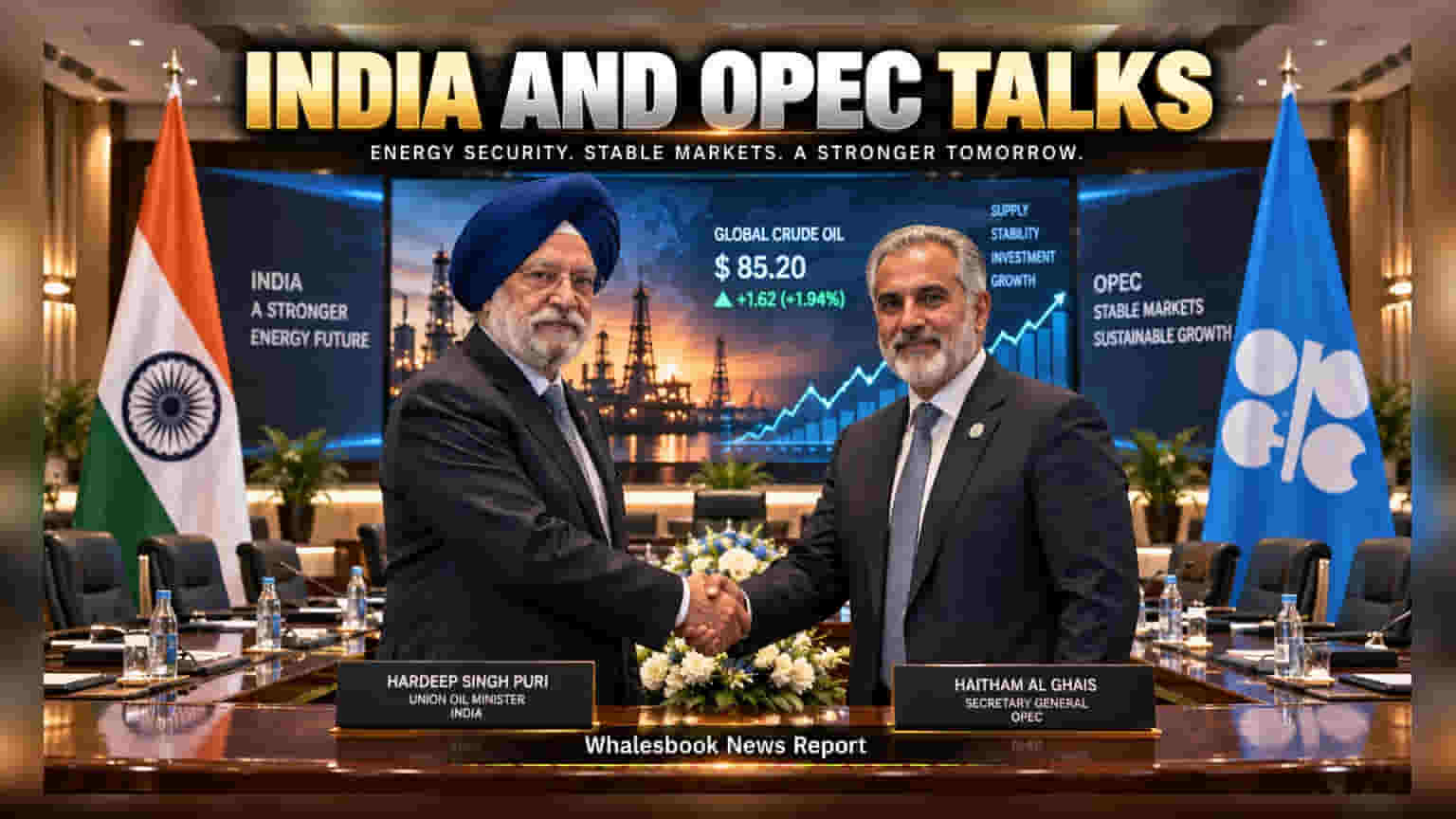
Union Oil Minister Hardeep Singh Puri and OPEC's Haitham Al Ghais met to discuss crude oil price stability and energy security. For investors, stable oil prices are critical as they influence national inflation and the profitability of energy-reliant companies. The meeting aimed to ensure reliable supply chains to support India's growing industrial energy requirements.
Union Oil Minister Hardeep Singh Puri met with OPEC Secretary General Haitham Al Ghais in New Delhi this week for the seventh OPEC-India Energy Dialogue. The discussion centered on fostering a balanced global energy market, a factor that is central to India's economic health. As India continues to be one of the largest growth engines for global energy demand, both sides evaluated market outlooks to better align their supply and investment strategies.
For investors, energy prices serve as a major macroeconomic variable that influences the entire Indian economy. Since India relies on imports for approximately 85% of its crude oil requirements, high or volatile global oil prices directly increase the country's import bill. This can put pressure on inflation and the rupee, which in turn affects the broader market sentiment. When crude oil prices are stable, it helps manage the country's fiscal deficit and provides a predictable cost environment for industries ranging from transport and logistics to chemical manufacturing.
Oil Marketing Companies such as Indian Oil Corporation (IOCL), Bharat Petroleum (BPCL), and Hindustan Petroleum (HPCL) are particularly sensitive to these energy dialogues. While these companies often face challenges in passing on higher crude costs to consumers, stable prices help them maintain better inventory margins and more predictable profitability. On the other hand, upstream entities like ONGC and Oil India also monitor these international discussions, as global crude prices have a direct impact on their revenue realizations and profit margins.
Beyond immediate price dynamics, the focus on long-term investment is significant. Consistent investment in oil production is needed to prevent supply shocks that could disrupt industrial growth. The dialogue signaled a commitment from both parties to synchronize policy approaches, aimed at mitigating the risks of global market volatility. For market followers, the important factor to track is global supply fluctuations and any geopolitical developments that could influence the cost of energy imports, as these will continue to impact India's fiscal position and corporate margins in the upcoming quarters. The next round of high-level meetings is scheduled for Vienna, continuing the institutional collaboration between India and OPEC.