

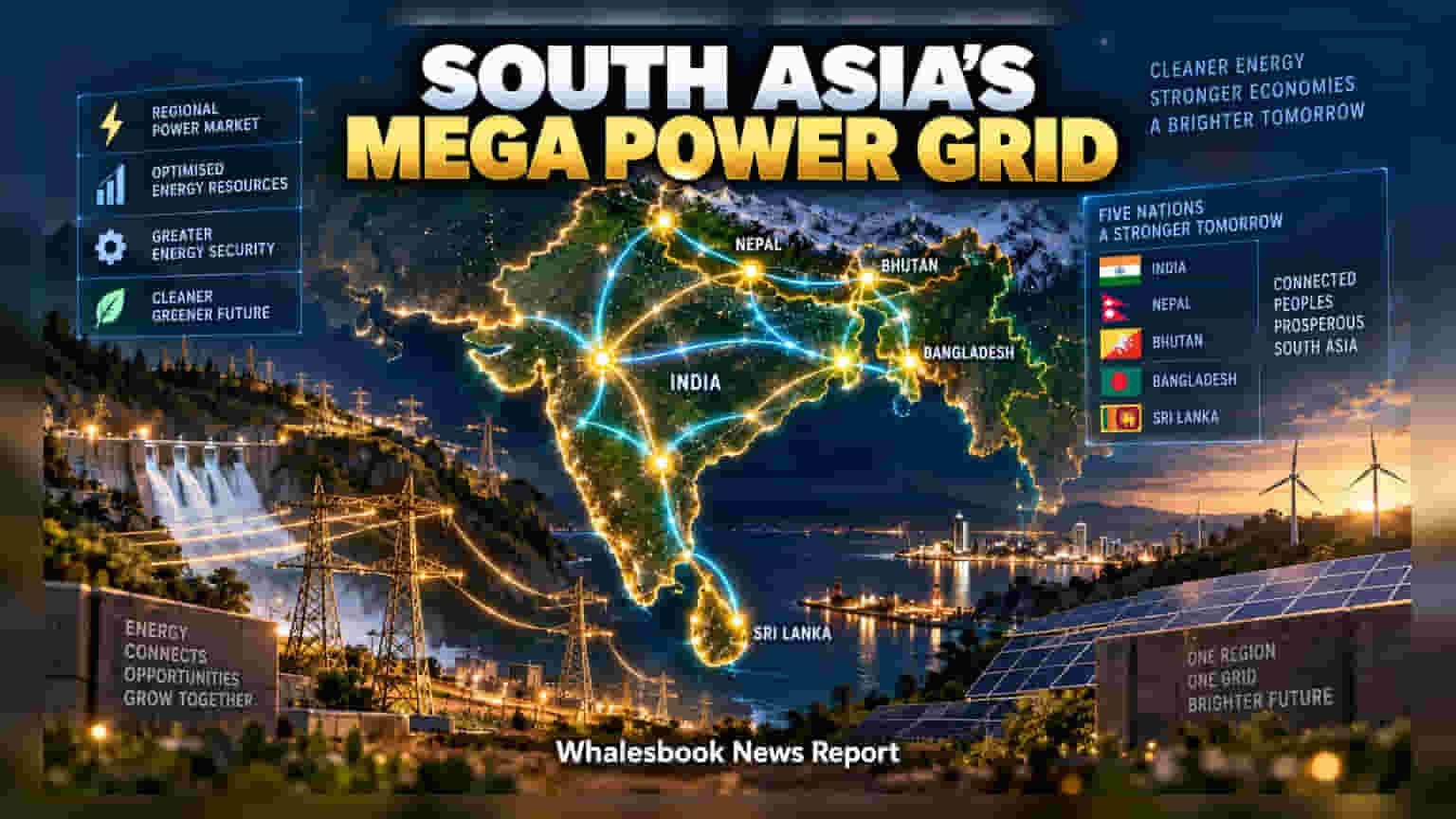
India, Nepal, Bhutan, Bangladesh, and Sri Lanka are launching a study to create a regional power market by December 2026. This initiative aims to improve grid stability and resource sharing. While the move signals long-term demand for power infrastructure, investors should track geopolitical risks and cross-border payment challenges.
The South Asia Forum for Infrastructure Regulation has initiated a plan to create a unified regional power market. Five nations—India, Nepal, Bhutan, Bangladesh, and Sri Lanka—are working together to draft a master plan for regional electricity transmission. The goal is to move away from current two-way power agreements to a single, interconnected market that allows for smoother energy trading across borders. The study for this initiative is expected to be completed by December 2026.
The core idea behind this project is to better balance energy resources in the region. Some countries, like Bhutan and Nepal, have large amounts of hydropower potential that remain unused. In contrast, India and Bangladesh rely more on coal and renewable energy. By connecting these grids, the region hopes to trade surplus energy during peak demand times, which could help prevent power outages and reduce the need for countries to build expensive electricity storage facilities.
For investors, this regional integration suggests a long-term demand for infrastructure investment in transmission lines and grid technology. Companies such as the Power Grid Corporation of India (PGCIL) are typically at the center of such transmission projects. Additionally, large power generators like NTPC and NHPC, which already engage in cross-border power trading, may see new opportunities if the regional market becomes more formal and efficient. This initiative aligns with India’s broader One Sun One World One Grid vision, which seeks to share renewable energy globally to manage the irregular nature of solar and wind power.
However, the project carries significant execution and operational risks that investors should understand. Geopolitical tensions in the region can often create delays in infrastructure projects. Furthermore, cross-border energy trade depends on the economic stability of the participating nations. Payment delays or regulatory differences between countries, such as those seen in recent economic reports regarding Sri Lanka or Bangladesh, can create financial pressure for companies involved in cross-border power projects.
The success of this initiative will depend on how these nations align their regulatory and policy frameworks to allow seamless power movement. Investors may track the progress of the transmission master plan as it nears the December 2026 deadline, as well as any official updates on funding and implementation agreements.