 Whalesbook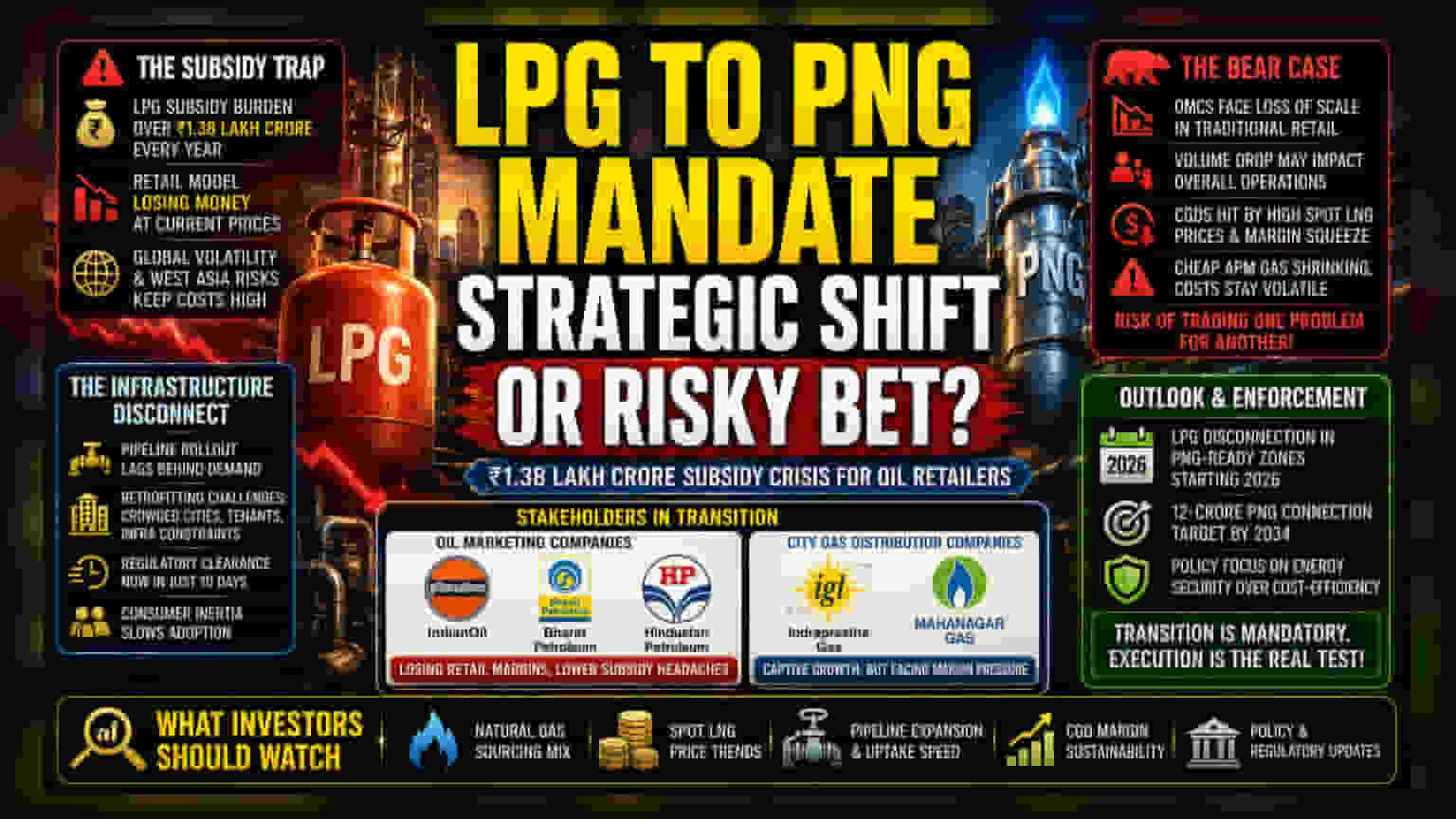


State-run oil marketers face massive fiscal pressure, losing ₹690 per LPG cylinder. The government is forcing an urban transition to Piped Natural Gas to curb import dependency and spiraling subsidy costs.
The Subsidy Trap and Fiscal Strain
State-owned Oil Marketing Companies (OMCs) are navigating a precarious fiscal environment where the traditional LPG retail model has become a primary driver of bottom-line erosion. The decision to accelerate the migration to Piped Natural Gas (PNG) is less a choice and more a strategic necessity to contain an annual subsidy deficit potentially exceeding ₹1.38 lakh crore. With global energy volatility linked to West Asia, the economic logic of maintaining a sprawling, logistics-heavy LPG supply chain is collapsing. State retailers like Indian Oil Corporation, Bharat Petroleum, and Hindustan Petroleum are currently forced to subsidize cylinders to a degree that renders the retail pricing mechanism unsustainable against current import parity costs.
The Infrastructure Disconnect
While the directive to switch is clear, the implementation remains tethered to the pace of urban pipeline rollout. City Gas Distribution (CGD) entities, such as Indraprastha Gas and Mahanagar Gas, are effectively being handed a captive market. However, the transition is hitting significant localized friction. The logistical hurdle of retrofitting existing high-density residential clusters is exacerbated by consumer inertia, tenant-owner conflicts, and the physical constraints of urban infrastructure. While the government has streamlined regulatory approvals for pipeline expansion to a 10-day window, the fundamental challenge remains: moving from a flexible, portable fuel source to a static utility model requires a cultural and physical shift that current deployment speeds struggle to match.
The Forensic Bear Case: Structural Risks
Investors should maintain a cynical outlook toward the immediate profitability impact of this transition. The pivot involves two distinct risks. First, OMCs face a direct loss of scale in their traditional downstream operations, potentially impacting the high-volume retail network that sustains their wider operations. Second, CGD companies, while enjoying state-mandated growth, are navigating their own margin compression. The sector's recent derating underscores a broader market skepticism; as government-allocated cheap domestic gas (APM) supplies shrink, CGD firms are forced to purchase volatile, high-priced spot LNG to meet mandatory demand. If the cost of these inputs continues to rise, the forced migration could inadvertently trade a subsidy problem at the OMC level for a margin-squeeze crisis at the distribution level.
Regulatory Enforcement and Future Outlook
The 2026 mandate for LPG disconnection in PNG-ready zones acts as a blunt instrument to bypass consumer hesitation. By linking household gas supply to regulatory compliance, the government is attempting to force a market transformation that economics alone has failed to trigger. Forward-looking guidance suggests an aggressive pursuit of the 12-crore connection target by 2034, but market participants are closely watching the gas sourcing mix for distribution companies. The durability of these firms will depend on their ability to manage input costs in an era where energy security has superseded cost-efficiency as the primary policy driver.