

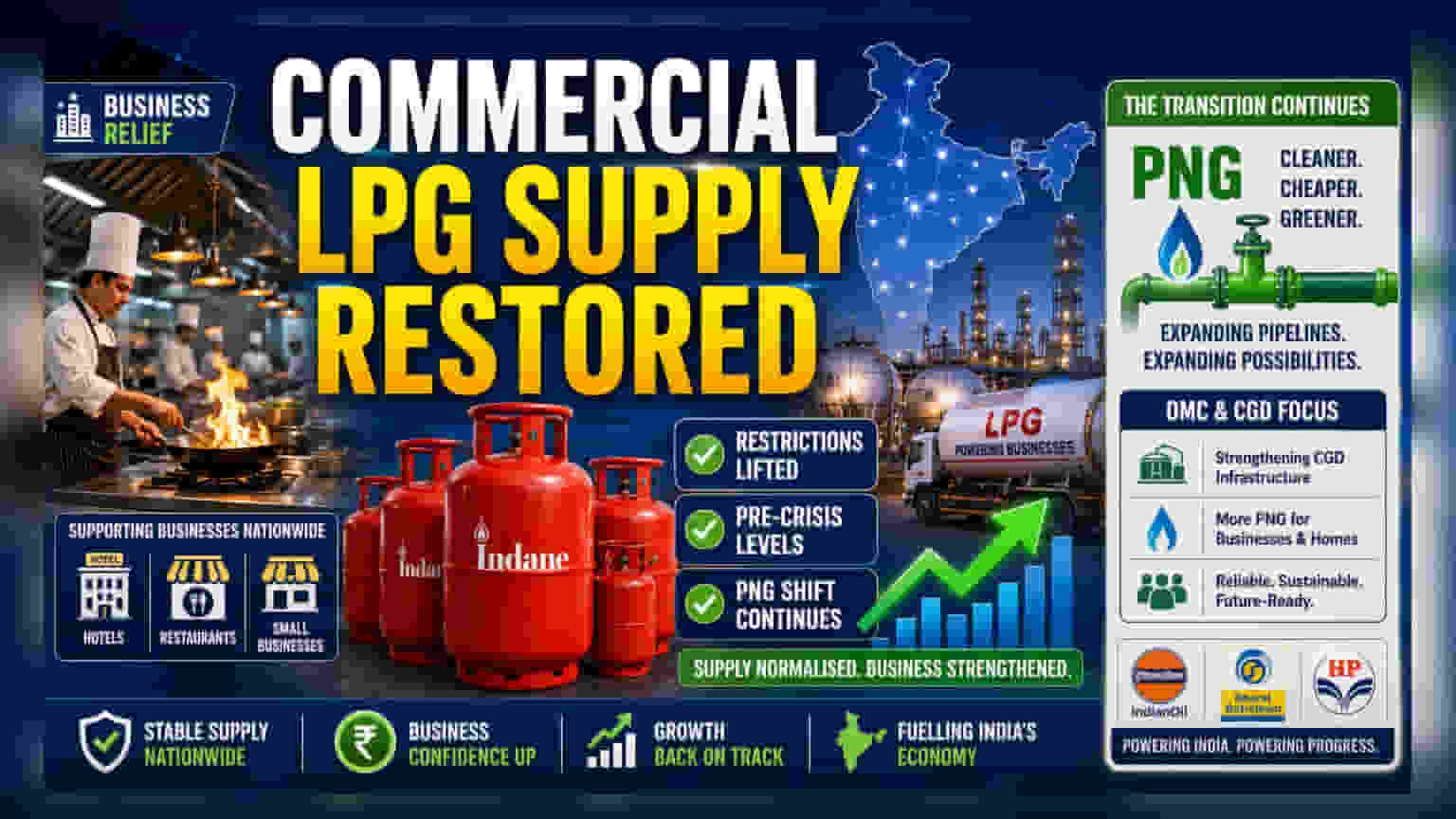
India has withdrawn restrictions on commercial LPG supplies, easing pressure on the hospitality sector after the reopening of critical shipping routes in West Asia. This move restores fuel availability for restaurants and hotels, while the government continues to encourage a shift toward Piped Natural Gas (PNG) for long-term energy security.
What Happened
On June 25, 2026, the Ministry of Petroleum and Natural Gas announced the removal of all restrictions on the supply of Non-Domestic Packed LPG. These curbs were initially implemented earlier this year under the Essential Commodities Act to prioritize household cooking gas during the supply chain disruption caused by the West Asia conflict and the closure of the Strait of Hormuz. With shipping routes now stabilizing, the government has directed oil marketing companies to restore supply to pre-crisis levels for commercial users, including hotels, restaurants, and small businesses.
Why It Matters For Business
For the hospitality sector, this normalization provides much-needed relief. In the preceding months, businesses had faced severe fuel shortages, which forced many establishments to rationalize menus, reduce operating hours, or temporarily suspend services. The lifting of these restrictions allows restaurants and hotels to resume normal operations without the burden of supply caps that had hindered food preparation and increased input costs. For the broader market, this signifies a return to stability for an industry that relies heavily on consistent and affordable energy.
The OMC And CGD Context
Public sector Oil Marketing Companies (OMCs) like Indian Oil Corporation (IOCL), Bharat Petroleum Corporation (BPCL), and Hindustan Petroleum Corporation (HPCL) have been under significant pressure to manage LPG under-recoveries and maintain supply chain stability throughout the crisis. The normalization of commercial LPG availability allows these companies to return to standard distribution models, though they continue to navigate volatile global energy prices.
Concurrently, the government remains committed to its long-term strategy of shifting commercial and domestic consumers to Piped Natural Gas (PNG). City Gas Distribution (CGD) entities, such as Indraprastha Gas Limited (IGL), Mahanagar Gas Limited (MGL), and Gujarat Gas, are actively rolling out incentives to encourage this transition. While commercial LPG supply has resumed, the strategic push for PNG infrastructure remains a key priority to reduce dependency on imported cylinder-based fuels, which remain vulnerable to geopolitical logistics risks.
What Investors Should Track
Investors should monitor the ongoing transition to PNG in urban centers, as this shift directly impacts the volume growth prospects of CGD companies. While the immediate supply crisis has been resolved, the government’s focus on energy diversification and the potential for long-term policy adjustments to encourage PNG adoption will remain relevant. Additionally, OMCs' margin performance in the coming quarters will depend on their ability to manage input costs in a post-conflict global energy environment and the evolving subsidy structure for domestic LPG.