 Whalesbook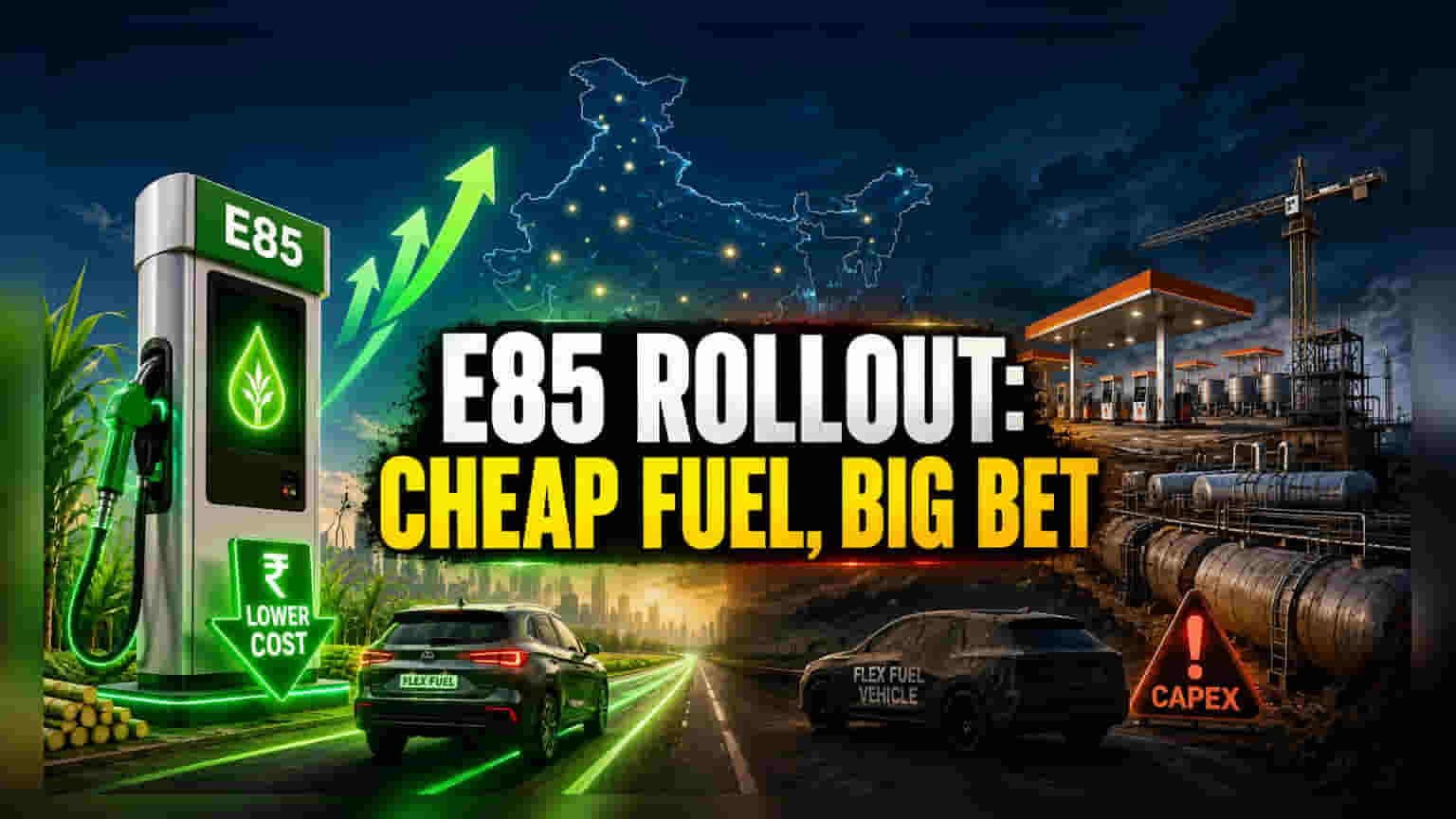


The Economic Mechanics of the E85 Pivot
The introduction of E85 fuel is a strategic response to the physical limitations of biofuels. Because ethanol possesses lower energy density than conventional petrol, the government’s decision to offer a Rs 20-per-litre discount functions as a subsidy to equalize the cost-per-kilometer for the end consumer. By bridging this price gap, policymakers aim to bypass the initial hesitation of vehicle owners, effectively creating a direct correlation between policy-mandated pricing and market-led adoption of flex-fuel vehicles.
Infrastructure and the Scale Challenge
The rollout targets a rapid expansion to 500 stations by the end of 2026, scaling to 5,000 locations nationwide by 2027. This aggressive timeline represents a significant logistical departure from existing E20 infrastructure. While Indian Oil Corporation has already laid the groundwork with hundreds of E100-capable outlets, the move to E85 requires specialized underground storage and advanced dispensing controls to mitigate the corrosive properties of higher ethanol blends. This capex-heavy pivot places the immediate financial burden on state-run oil marketing companies, who must balance these investments against volatile marketing margins and existing supply chain imbalances across different states.
The Analytical Deep Dive: Valuations and Sector Trends
Automakers are positioning themselves to capitalize on this shift. Maruti Suzuki, which recently reported a market share of 43.1%, currently trades at a price-to-earnings (P/E) ratio of approximately 28x. This valuation remains in a fair range, reflecting a cautious investor sentiment that weighs its capacity-led recovery against the potential for future margin compression. Simultaneously, Hero MotoCorp trades at a more attractive P/E multiple of roughly 16.9x. Analysts often highlight Hero’s robust return on capital employed—frequently exceeding 49%—as evidence of operational efficiency, even as the company faces a complex transition toward premiumization and flex-fuel compatibility in its two-wheeler portfolio.
The Forensic Bear Case: Structural Risks
Despite the government's optimism, the E85 initiative faces significant hurdles that could derail long-term profitability for stakeholders. The current ethanol sector is characterized by structural overcapacity, where production potential—approaching 2,000 crore litres—far outstrips the current fuel-based demand. This mismatch creates regional supply chain inefficiencies, where surplus ethanol in states like Maharashtra cannot be easily redistributed to deficit areas, potentially leading to realized price volatility. Furthermore, the reliance on high-water-use crops like sugarcane for feedstock raises ongoing environmental and food security concerns. Critics argue that until the infrastructure for second-generation ethanol—derived from agricultural residues—becomes mainstream, the program may remain vulnerable to resource competition and fluctuating raw material costs.
Future Outlook
Market expectations suggest that the success of the E85 rollout hinges on the synergy between fuel affordability and flex-fuel vehicle availability. If policymakers can maintain the Rs 20 discount while scaling the dispensing network, industry participants anticipate a transformational shift in domestic fuel dynamics. However, institutional observers remain focused on the ability of state-run entities to absorb the necessary capital expenditure without compromising their long-term balance sheets.