 Whalesbook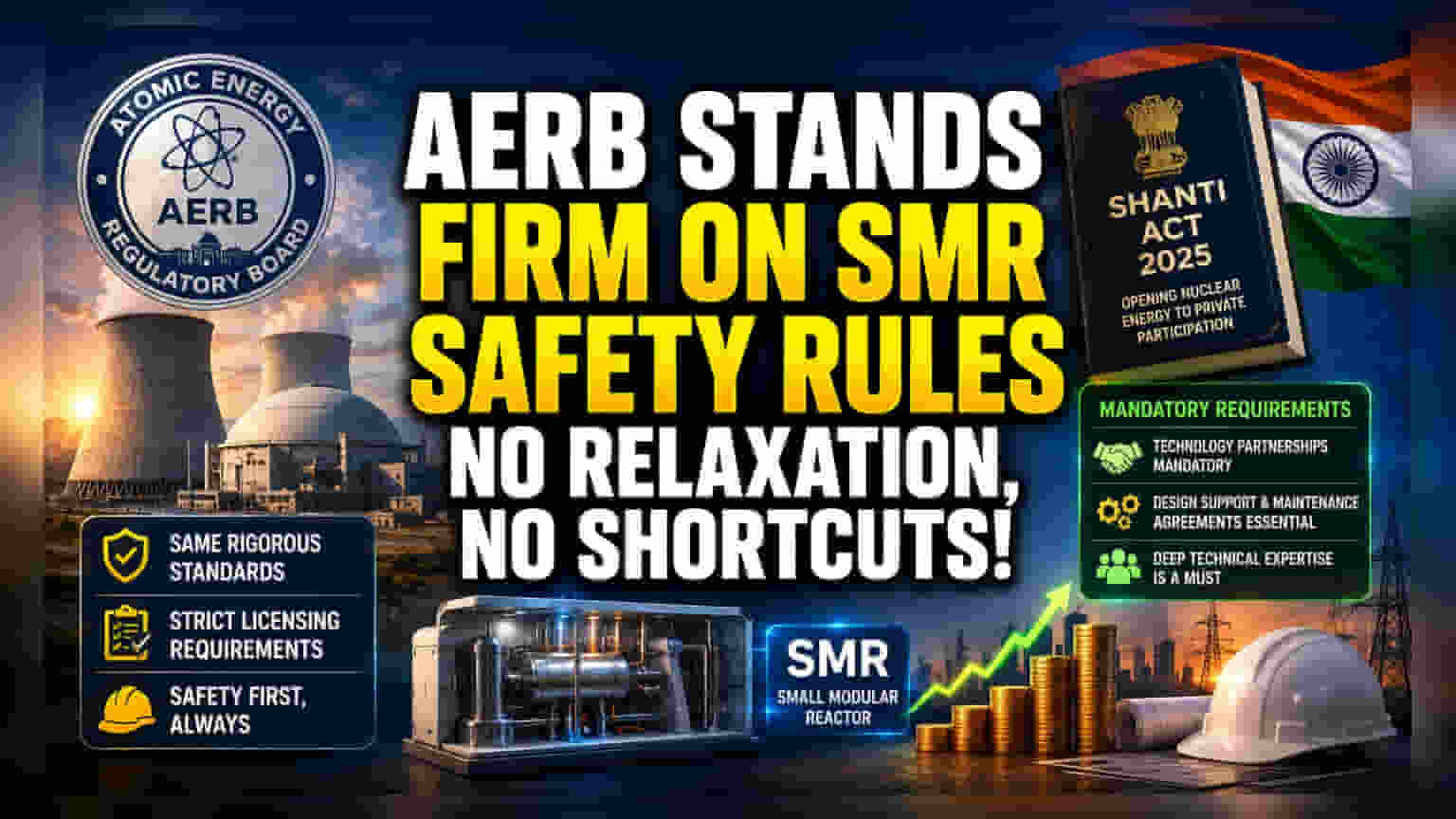
India’s nuclear watchdog, the AERB, will maintain strict safety and licensing standards for Small Modular Reactors (SMRs), treating them the same as large nuclear power plants. For investors, this decision means that new private companies entering the nuclear space under the SHANTI Act 2025 will face the same regulatory hurdles, costs, and timelines as traditional power projects. This keeps the barrier to entry high but ensures safety standards remain robust.
What Happened
The Atomic Energy Regulatory Board (AERB), India's primary nuclear safety watchdog, has confirmed that it will not relax licensing and safety protocols for Small Modular Reactors (SMRs). Despite these reactors being touted for their advanced and modular design, the regulator has decided to apply the same rigorous framework used for large-scale conventional nuclear power plants. This development is significant as the government actively seeks to integrate private participation into the nuclear energy sector under the Sustainable Harnessing and Advancement of Nuclear Energy for Transforming India (SHANTI) Act, 2025.
Why This Matters For Investors
The decision directly impacts the financial and operational roadmap for companies looking to enter the civil nuclear sector. While the SHANTI Act 2025 was designed to open the door for private firms to build and operate nuclear projects, the AERB’s insistence on uniform safety standards means that these companies cannot expect a faster or cheaper regulatory path simply because their reactors are smaller or technologically more advanced.
For investors, this adds a layer of capital expenditure and execution risk. Operating a nuclear plant is a highly specialized business that requires extensive safety documentation, rigorous inspections, and compliance with strict standards. New private entrants will need to factor in the cost of long-term regulatory compliance and the possibility of longer timelines before a project becomes operational, which could delay revenue generation.
The Requirement for Tech Expertise
A critical part of the regulator's stance is the requirement for new entrants to have deep technical support. Since most domestic private companies lack direct experience in running nuclear facilities, the AERB has made design support and maintenance agreements with experienced technology providers a mandatory condition for granting licenses. This means private players cannot go it alone; they must partner with established entities, either foreign or domestic, that possess the necessary expertise to manage complex nuclear technology. Investors should watch how these companies structure their partnerships, as these agreements will be essential for satisfying the regulator and securing necessary permits.
How Investors May Read This
This regulatory firmness is a trade-off between speed and safety. By refusing to create a 'lighter' regulatory path for SMRs, the AERB is prioritizing safety, which is essential to prevent accidents that could set back the entire nuclear sector for decades. While this may disappoint some who hoped for a rapid, low-cost boom in private nuclear energy, it provides a stable and reliable environment for long-term investments. Companies that can navigate these strict requirements and secure strong technology partnerships may eventually gain a competitive advantage in the energy market, provided they have the financial strength to endure the initial period of high compliance and project costs.
What Investors Should Track
Investors should monitor a few key indicators as the industry takes its first steps under the new legislative framework. First, look for announcements regarding collaborations between private companies and established nuclear technology providers, as these partnerships are now a prerequisite for license approval. Second, follow the timeline of initial projects, as the speed at which these companies move through the AERB’s licensing process will be a major test of the regulatory framework's efficiency. Finally, keep an eye on capital spending updates from companies signaling interest in the nuclear sector, as the strict safety requirements may necessitate higher-than-expected investment in infrastructure and technical support.

