

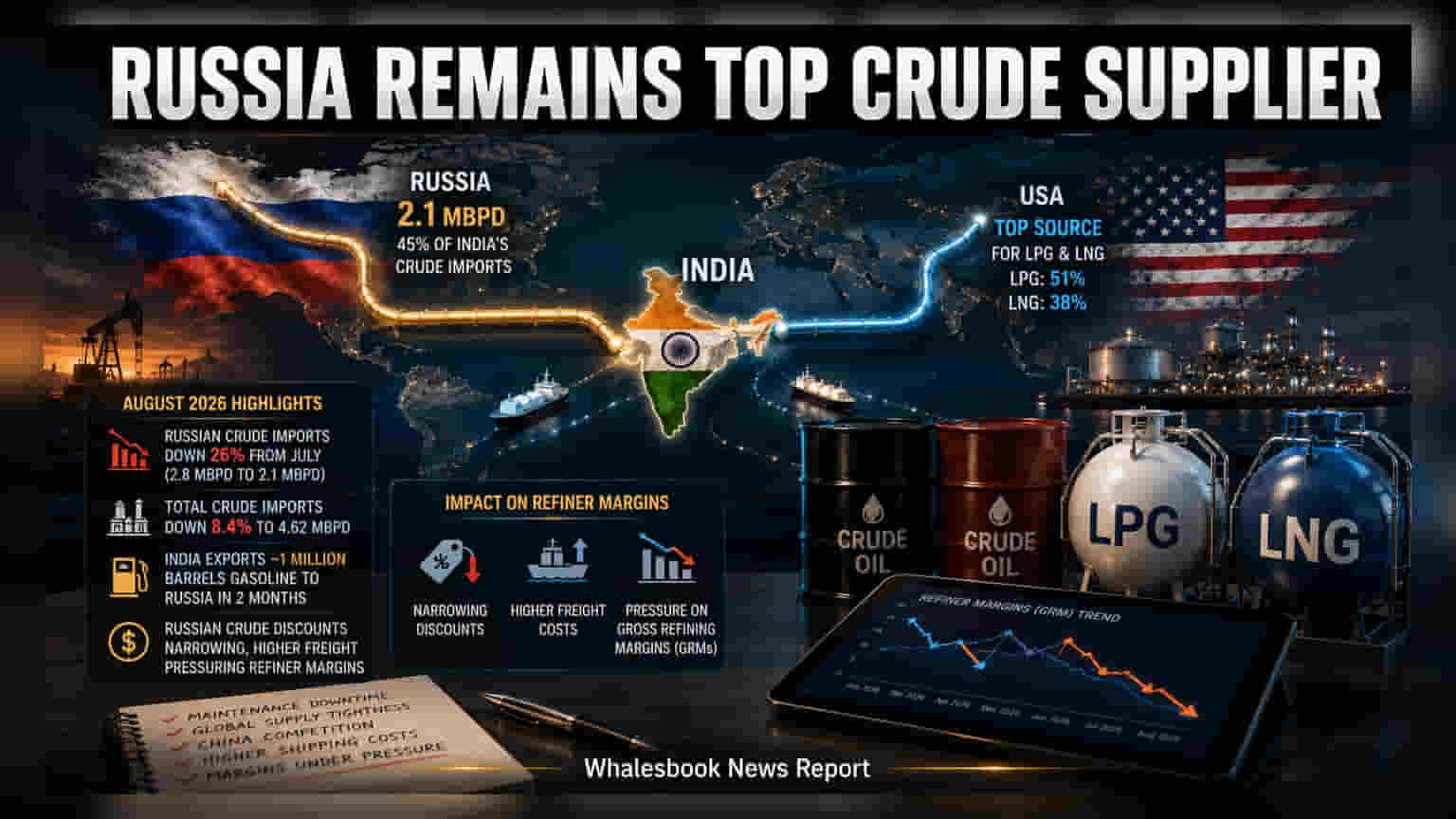
India’s crude imports from Russia fell to 2.1 million barrels per day in August, a 26% drop from July highs. Despite this, Russia retains its top supplier status, providing 45% of India’s intake. The shift highlights changing logistics and narrowing price discounts, factors that investors should watch as they impact the profit margins of domestic oil refiners.
India’s reliance on Russian crude oil remained high in August 2026, even as import volumes contracted significantly. Data shows that Russia supplied 2.1 million barrels per day (mbpd) during the month, representing 45% of India's total crude imports. While this keeps Russia in the top position, it marks a notable 26% decline from the record 2.8 mbpd recorded in July.
Several factors contributed to this slowdown. Indian refineries, which are the core consumers of this crude, underwent scheduled maintenance during the period. Furthermore, global availability of Russian crude tightened, and competition from other major importers, such as China, increased. Total Indian crude imports across all sources also fell, sliding 8.4% to 4.62 mbpd compared to the previous month.
The Shift to Reciprocal Trade
Beyond just purchasing crude, the energy relationship between India and Russia has evolved into a two-way flow. Russia has faced challenges with its internal refinery infrastructure due to external conflicts, impacting its domestic fuel supply. In response, Indian refineries, including the Vadinar refinery operated by Nayara Energy, have exported gasoline back to Russia. Over the last two months, India has sent approximately 1 million barrels of gasoline to help stabilize the Russian domestic market. This dynamic shows how Indian refiners are playing a more active role in the global energy supply chain beyond their traditional function of processing crude.
Impact on Refiner Margins
For investors monitoring the oil sector, the primary takeaway lies in the changing economics of crude imports. In the past, Indian refiners benefited from deep discounts on Russian crude, which helped them maintain strong profit margins, often measured as Gross Refining Margins (GRMs). Recently, these discounts have begun to narrow, with some Russian cargoes trading closer to global Brent crude prices.
When these discounts shrink, the cost advantage for Indian refiners reduces. Additionally, the complexity of energy logistics remains high. Tensions in key shipping regions have led to longer transit routes and higher insurance premiums. These additional freight costs add to the overall landed price of crude, putting further pressure on the profitability of refining companies. Investors should track these variables—discount levels, freight costs, and overall GRMs—as they are the main drivers of quarterly earnings for major refining players like Reliance Industries, Indian Oil Corporation, BPCL, and HPCL.
The Role of the United States
While Russia dominates crude, the United States has become the primary source for India’s processed gas needs. In August, the US accounted for 51% of India’s LPG imports and 38% of its LNG intake. This diversification is a strategic move for India, ensuring a steady supply of gas even as crude oil dynamics fluctuate. The next key monitorable for market participants will be whether the narrowing of Russian crude discounts continues and how this trend influences the upcoming quarterly financial results for India’s oil and gas sector.