

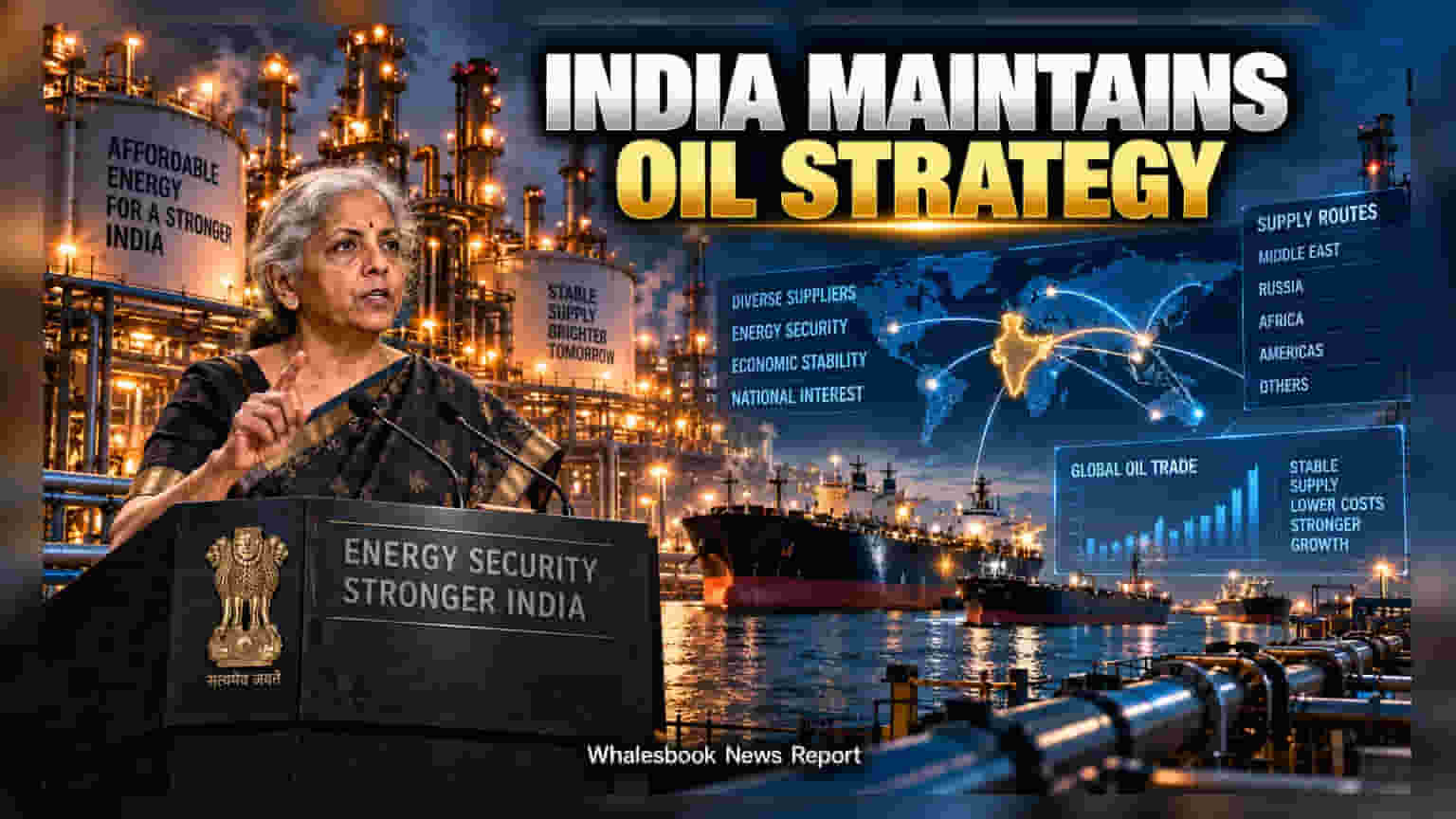
Finance Minister Nirmala Sitharaman has confirmed that India will continue to purchase crude oil based on economic viability, resisting external pressure to limit specific suppliers. The government cited technical refinery limits and the need for affordable energy as key factors. This policy helps shield Indian consumers and businesses from global supply shocks and price volatility.
The Indian government has made it clear that its crude oil import strategy will remain focused on national interest, rejecting external calls to restrict purchases from specific nations. Finance Minister Nirmala Sitharaman stated that New Delhi prioritizes affordable and reliable energy for its large population, ensuring that procurement decisions remain based on economic necessity rather than geopolitical pressure.
A major reason behind this decision lies in the technical structure of Indian refineries. Refineries owned by companies like Indian Oil Corporation, Bharat Petroleum, Hindustan Petroleum, and private players like Reliance Industries are designed to process specific grades of crude oil. These plants have complex units optimized for heavy or high-sulfur crude, which come from specific regions. Switching suppliers overnight would require these refineries to change their internal processing methods, which is not only expensive but could also cause significant production delays, leading to potential fuel shortages.
For investors, the ability to source crude efficiently is vital. India is one of the world's largest importers of oil, and the cost of this import is a major factor in the country’s trade balance and inflation levels. If India were forced to rely on a smaller pool of suppliers, it could lead to higher input costs for oil marketing companies. This, in turn, would create pressure on profit margins and could lead to higher retail fuel prices. By maintaining a flexible procurement strategy, the government aims to keep import bills in check and reduce the risk of sudden price spikes.
The Finance Minister also pointed out that the global energy market is currently tight, with supply issues in the Gulf region causing concern. Any sudden change in buying patterns by a massive importer like India would likely disrupt global supply chains and lead to higher crude prices worldwide. Maintaining diverse supply routes serves as a cushion against this volatility.
Moving forward, investors and market observers should track global crude oil prices, particularly the cost of the Indian basket of crude. Additionally, the profitability of state-run oil marketing companies and the government's stance on fuel pricing remain key areas to monitor, as these are directly influenced by the cost of imported oil and refining margins.