

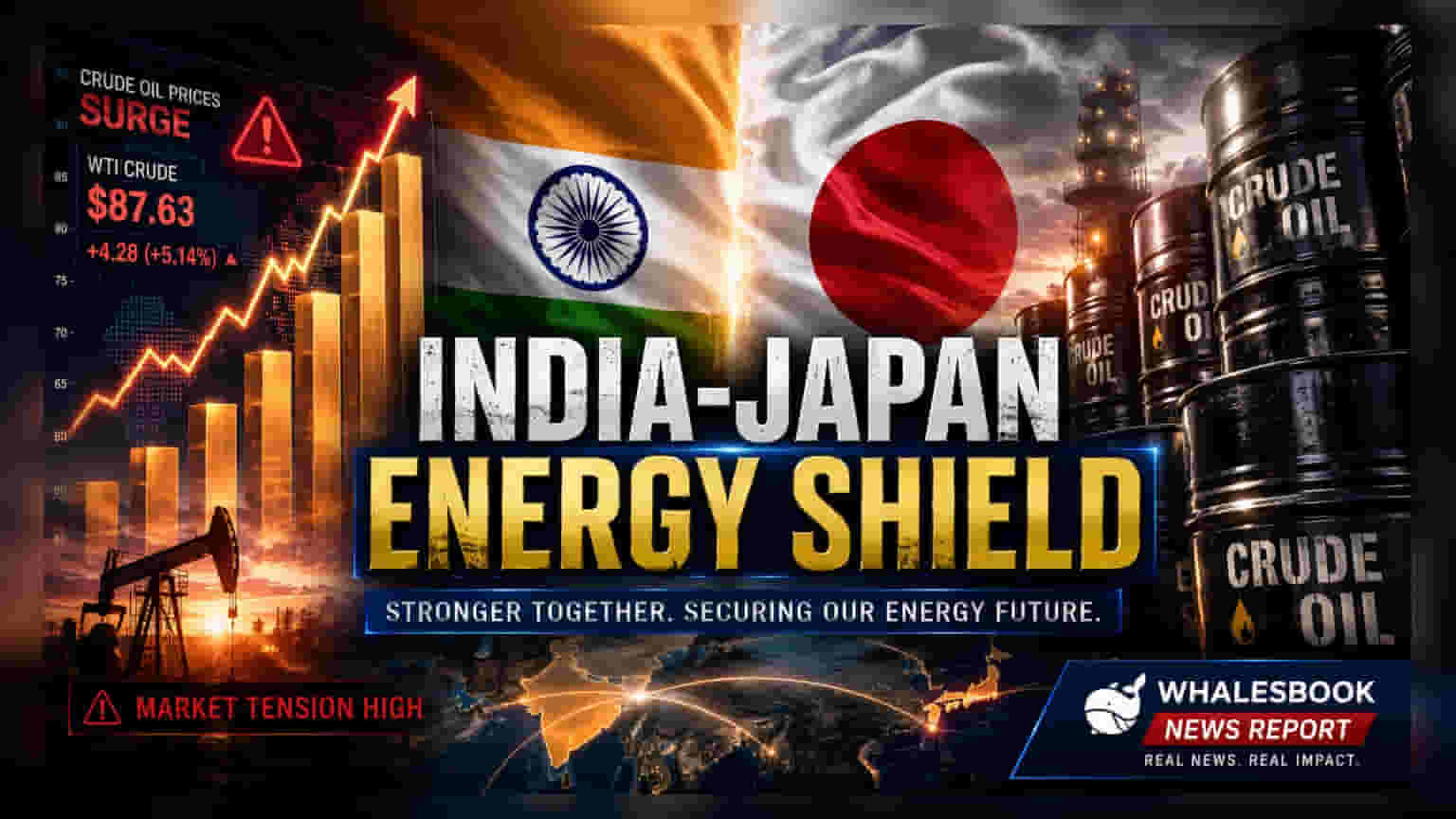
India and Japan have signed an agreement to coordinate crude oil and petroleum product stockpiling to protect against supply disruptions. The partnership includes shared market intelligence and joint investments in third-country energy projects to enhance regional energy security.
What Happened
India and Japan have officially entered into a bilateral energy security partnership to create coordinated systems for stockpiling crude oil and petroleum products. The agreement, announced following high-level discussions between the two nations, aims to build resilience against global supply chain shocks. Given that both countries are major importers of energy, this initiative focuses on creating a combined mechanism for emergency response and market stabilization. The collaboration involves official agencies from both sides, including India’s Strategic Petroleum Reserves Ltd., and aims to improve how both countries manage and store critical fuel supplies.
Why This Matters for Investors
For energy-dependent sectors in India, such as logistics, manufacturing, and transport, this pact is a strategic move to mitigate price volatility and supply risk. By coordinating with Japan, India gains access to shared market trends and potentially more stable procurement channels. The agreement also opens doors for joint investments in upstream energy projects in third countries, which could create long-term opportunities for Indian energy companies to participate in international exploration and production ventures alongside Japanese partners.
Cooperation in Energy Infrastructure
Beyond simple storage, the two nations are exploring collaboration across the entire energy transport chain. This includes technical and financial partnerships intended to modernize the handling and movement of petroleum products. By aligning their institutional frameworks, India and Japan aim to create a more predictable environment for energy sourcing, which may reduce the risk premium currently associated with volatile geopolitical regions like West Asia.
The Business Reality Check
While this pact is a positive step for national energy security, its direct impact on individual company balance sheets remains indirect. The primary benefit lies in long-term risk reduction rather than immediate earnings growth. Companies involved in energy logistics, storage infrastructure, and international oil exploration may see benefits if these joint projects move from the planning stage to actual investment. However, the timelines for such infrastructure projects are typically long, and the capital spending required will be a key factor to monitor in future disclosures.
Risks and Limits
Investors should note that energy security initiatives are sensitive to global commodity price fluctuations and the pace of geopolitical shifts. If joint investments in third-country projects face delays or cost overruns, the anticipated benefits to regional energy security could be tempered. Furthermore, the effectiveness of the joint stockpiling mechanism will depend on the actual volume of reserves maintained and the coordination speed during genuine supply emergencies.
What Indian Investors Can Track
Moving forward, the primary monitorables include updates from the India-Japan Joint Working Group on Petroleum and Natural Gas. Investors should watch for specific announcements regarding:
- The scale and location of new joint storage facilities.
- Tangible financial commitments or joint ventures announced by India’s Strategic Petroleum Reserves Ltd.
- Any collaborative upstream exploration projects that involve Indian public sector oil companies.
- Future government updates regarding the integration of these new stockpiling systems into the national energy strategy.