

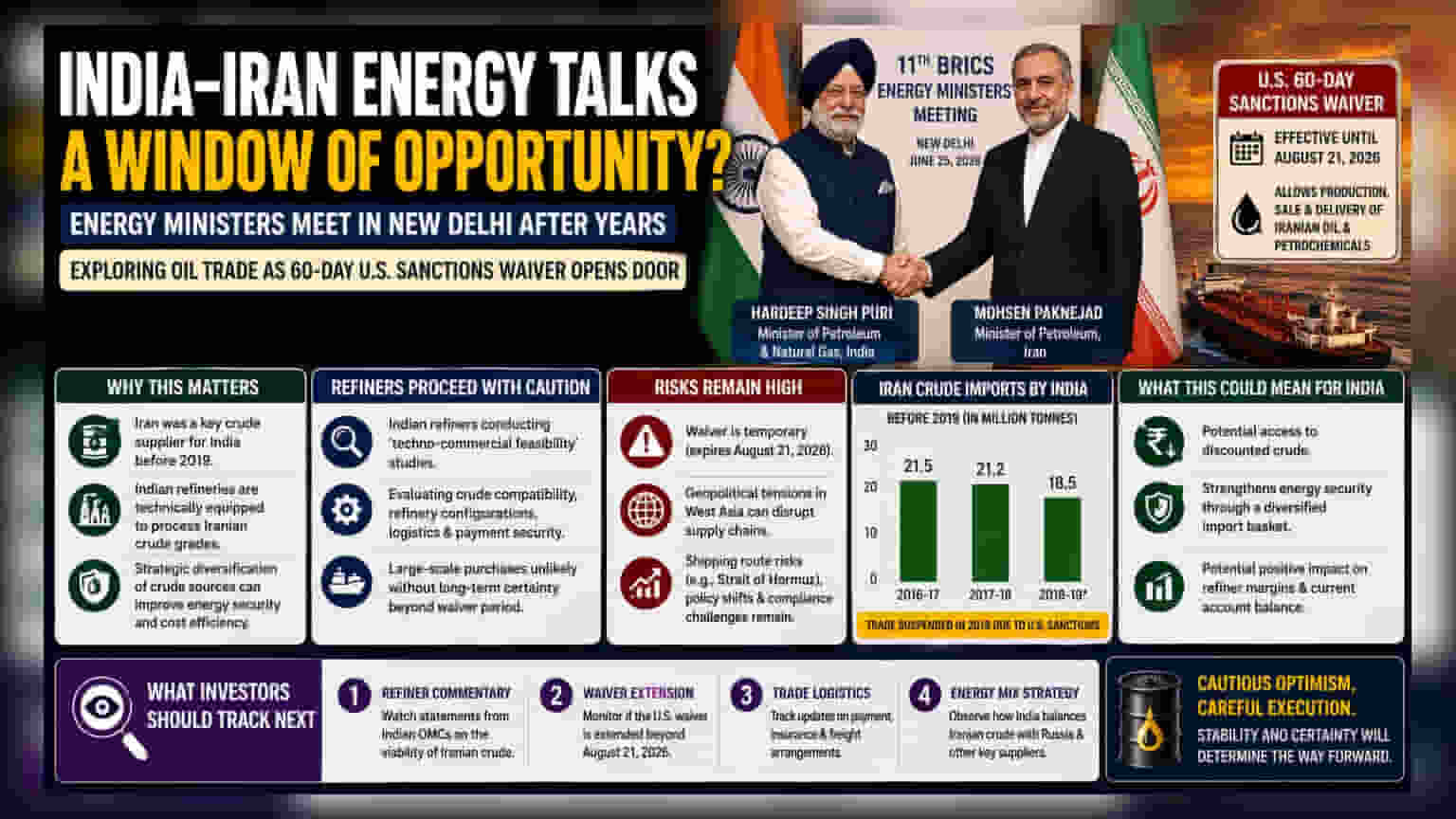
India and Iran are exploring energy cooperation after a bilateral meeting between petroleum ministers in New Delhi. The discussions follow a 60-day US sanctions waiver on Iranian energy exports, offering India an opportunity to assess crude imports. However, Indian refiners remain cautious, prioritizing feasibility studies as global energy dynamics shift.
What Happened
Union Petroleum and Natural Gas Minister Hardeep Singh Puri met with Iran's Minister of Petroleum, Mohsen Paknejad, in New Delhi on June 25, 2026. The meeting, held on the sidelines of the 11th BRICS Energy Ministers' Meeting, marks a renewed effort to explore energy cooperation between the two nations. This dialogue follows years of limited interaction, primarily due to the suspension of oil trade in 2019 following the re-imposition of US sanctions on Iran.
The Sanction Waiver Context
The timing of these talks is closely linked to a recent diplomatic development. The United States recently issued a 60-day temporary license, effective until August 21, 2026, which permits the production, sale, and delivery of Iranian oil and petrochemical products. This waiver is part of an interim agreement following a shift in regional tensions. For India, which historically relied on Iran as a key crude oil supplier, this window of opportunity has prompted a re-evaluation of potential energy imports.
Why Investors Are Watching Refiners
For Indian energy companies and refiners, the prospect of resuming Iranian crude imports is a matter of strategic diversification. Before the 2019 suspension, Iran was a significant supplier, and Indian refineries are technically equipped to process Iranian crude grades.
However, the industry is approaching this cautiously. According to industry reports, Indian refiners are currently conducting 'techno-commercial feasibility' studies. This process involves evaluating whether the crude is technically compatible with existing refinery configurations, and importantly, whether the logistics, insurance, and payment mechanisms are secure enough to withstand the temporary nature of the sanctions waiver. Large-scale buying is not expected immediately, as refiners typically require long-term certainty before altering their supply chains.
Geopolitical and Economic Risks
While the prospect of discounted crude is attractive, the risks remain high. The waiver is temporary (expiring in August), and the global energy market remains sensitive to geopolitical developments in West Asia. Any disruption in shipping routes, such as the Strait of Hormuz, or sudden changes in US-Iran diplomatic relations can affect supply chains, fuel costs, and inflation. For India, a net energy importer, securing stable and cost-effective energy is a critical objective, but it must be balanced against the risks of policy reversals or international compliance complexities.
What Investors Should Track Next
Investors and market participants may track several key developments in the coming weeks:
- Refiner Commentary: Any official statements from major Indian oil marketing companies (OMCs) regarding the viability of sourcing Iranian crude.
- Waiver Extension: Whether the US sanctions waiver is extended beyond the August 21, 2026, deadline, which would provide more stability for long-term planning.
- Trade Logistics: Updates on payment, insurance, and freight arrangements, which are essential for any resumption of trade.
- Energy Mix: How India balances potential Iranian crude with its existing imports from Russia and other traditional suppliers.