

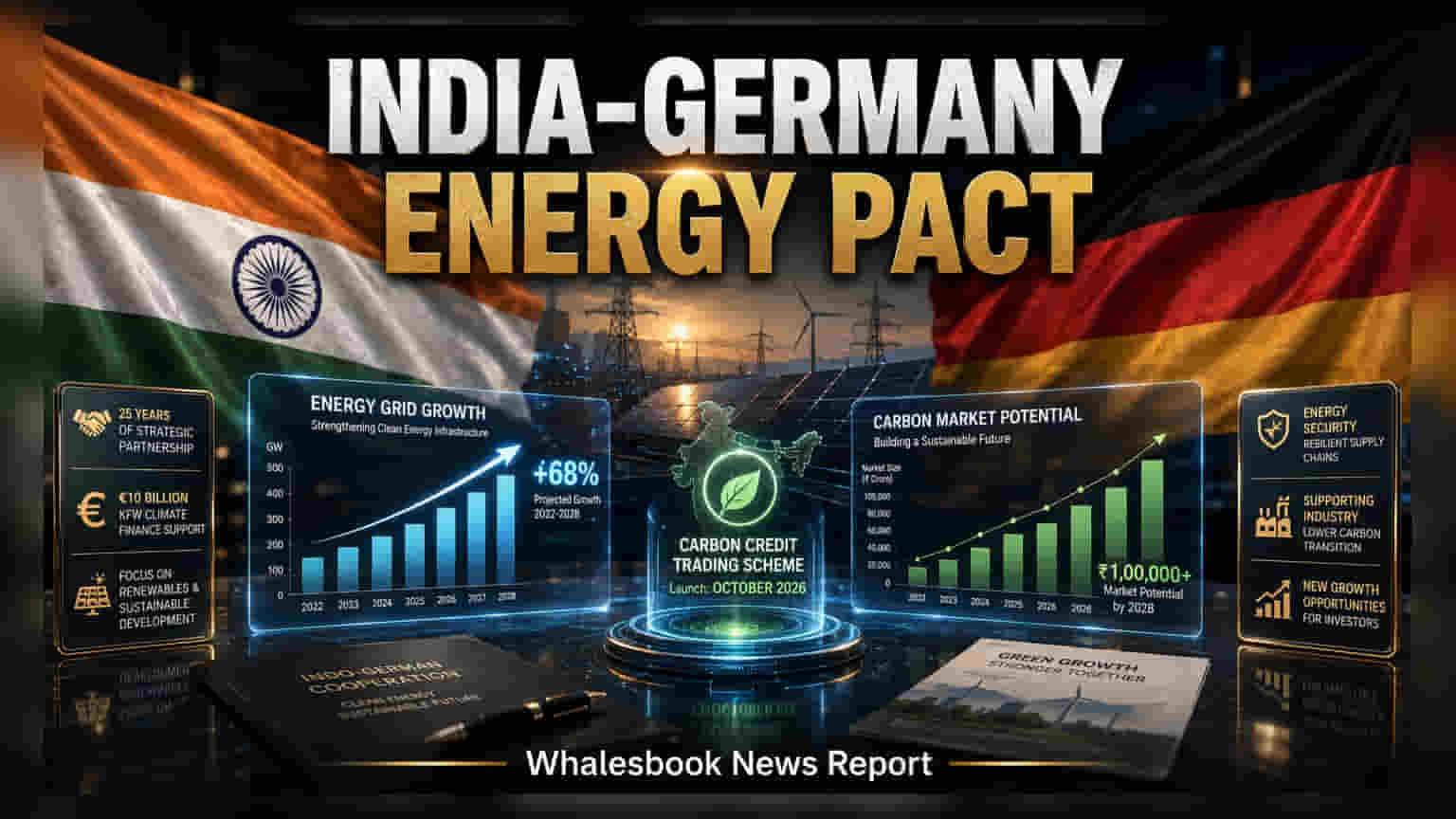
India and Germany have strengthened their cooperation on energy security and carbon markets. This partnership comes as India prepares to operationalize its Carbon Credit Trading Scheme, with the first compliance-based trades expected around October 2026. Investors are watching how these regulatory frameworks will impact the power and industrial sectors.
Indian Power Minister Manohar Lal and German Environment Minister Carsten Schneider met in New Delhi this week to refine bilateral cooperation on energy security and carbon market frameworks. The discussion, held during the 25th anniversary of the Indo-German strategic partnership, emphasized the need for resilient energy supply chains and the practical integration of carbon markets into industrial policy.
For Indian investors, the most significant aspect of this alignment is the upcoming launch of India’s Carbon Credit Trading Scheme (CCTS). The government expects to initiate the first compliance-based trades on power exchanges by October 2026. This framework is designed to help the country meet climate goals by creating a financial incentive for companies to reduce emissions. As the market goes live, power generators and energy-intensive industries may see a shift in their cost structures, with potential opportunities for companies with cleaner energy portfolios and higher operational efficiency.
Financial Support and Green Investment
Germany continues to be a major partner in India's energy transition, with the KfW Development Bank having committed approximately €10 billion in climate finance. This funding is primarily directed toward renewable energy projects and sustainable development. For companies in the renewable energy and infrastructure space, this sustained access to international green finance can help lower the cost of borrowing and support large-scale expansion plans without placing excessive pressure on balance sheets.
Risks and Market Transition
While the push toward cleaner energy is long-term, it brings specific risks that investors should monitor. Financial institutions and lenders in India remain exposed to what analysts call transition risk. This refers to the potential financial stress on banks and non-banking financial companies that have high loan exposure to carbon-intensive sectors, such as traditional thermal power or coal-based manufacturing. As regulations tighten and carbon pricing becomes a reality under the new trading scheme, companies that fail to adapt their business models may face rising costs and potential challenges in securing affordable capital.
Additionally, the operationalization of carbon markets involves inherent regulatory uncertainty. The transition from policy framework to actual market trading requires fine-tuning of infrastructure and clear rules on compliance. Any delays in the rollout or unexpected hurdles in the regulatory setup could create volatility for companies that are preparing to participate in the market.
Moving forward, the key monitorable for investors will be the official launch of the Carbon Credit Trading Scheme in October 2026. Market participants will be watching for clarity on emission caps, the participation criteria for industries, and how these rules interact with existing energy policies. Understanding how a company manages its transition to lower-carbon operations will be essential for assessing its long-term financial health in an evolving regulatory environment.