

India’s fuel consumption fell to 18.61 million metric tons in August 2026, primarily due to weaker LPG and naphtha usage. While road fuel sales remained resilient, the trend highlights shifts in industrial demand and energy policy, alongside ongoing margin pressures for oil marketing companies due to global crude volatility.
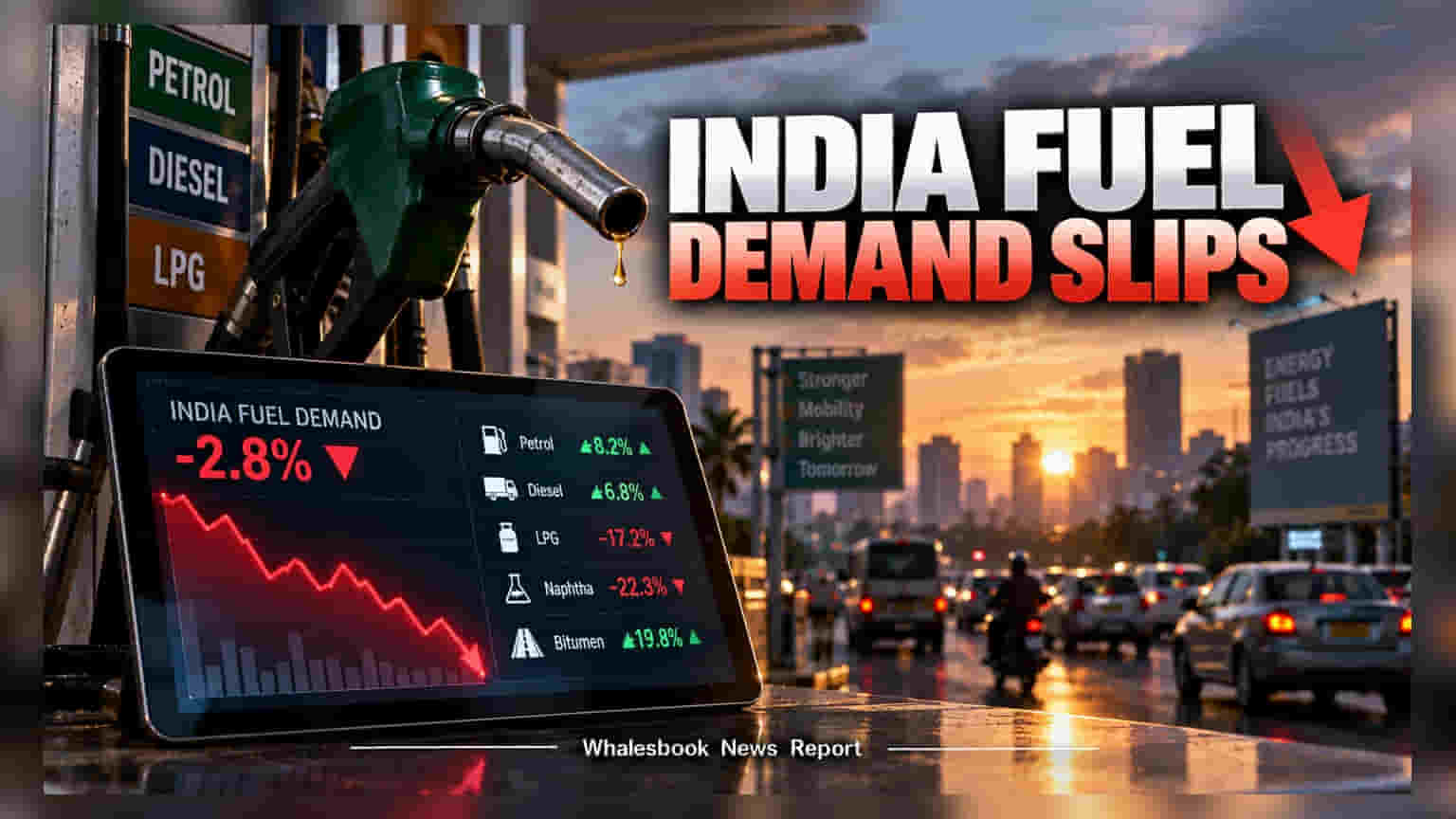
India’s total fuel consumption recorded a year-on-year decline of 2.8% in August 2026, falling to 18.61 million metric tons, according to data from the Petroleum Planning and Analysis Cell. While the overall figure shows a contraction, the underlying data reveals a split between steady transportation demand and weakening industrial and household consumption.
Transportation fuels continued to show resilience. Petrol consumption rose by 8.2% to 3.84 million metric tons, and diesel demand increased by 6.8% to 7.02 million metric tons. This growth in mobility-related fuel, combined with a 19.8% surge in bitumen sales—often linked to ongoing road infrastructure projects—suggests that economic activity related to transportation and construction remains steady.
The headline decline in total volume was driven by sharp pullbacks in non-transportation segments. LPG consumption dropped by 17.2% to 2.35 million metric tons, and naphtha usage slid by 22.3% to 0.83 million metric tons. Analysts observe that this drop is not necessarily a sign of a broad economic slowdown but reflects a structural shift in energy usage. Specifically, government-backed policies promoting a move from LPG to Piped Natural Gas (PNG) are altering household and commercial fuel preferences.
For investors, the primary concern remains the financial health of state-run Oil Marketing Companies (OMCs) such as Indian Oil Corporation, Bharat Petroleum, and Hindustan Petroleum. These companies have been operating under financial strain as they attempt to balance retail fuel prices against volatile global crude costs. The ongoing conflict in West Asia has introduced supply chain uncertainty and maintained pressure on crude oil prices, which directly impacts the cost of imports.
If the demand for specific products like naphtha continues to struggle, it may force refiners to adjust their production mix or manage their inventory differently. Furthermore, the persistent gap between international crude costs and the retail prices at the pump creates the risk of under-recoveries, where companies may not fully pass on cost increases to consumers to manage inflation.
Investors should track the upcoming quarterly results of these oil marketing firms to understand the impact of these consumption shifts on their profit margins. Additionally, tracking the trend of crude oil prices and any updates on government subsidies or pricing policies will be important for assessing the near-term financial stability of the sector.