 Whalesbook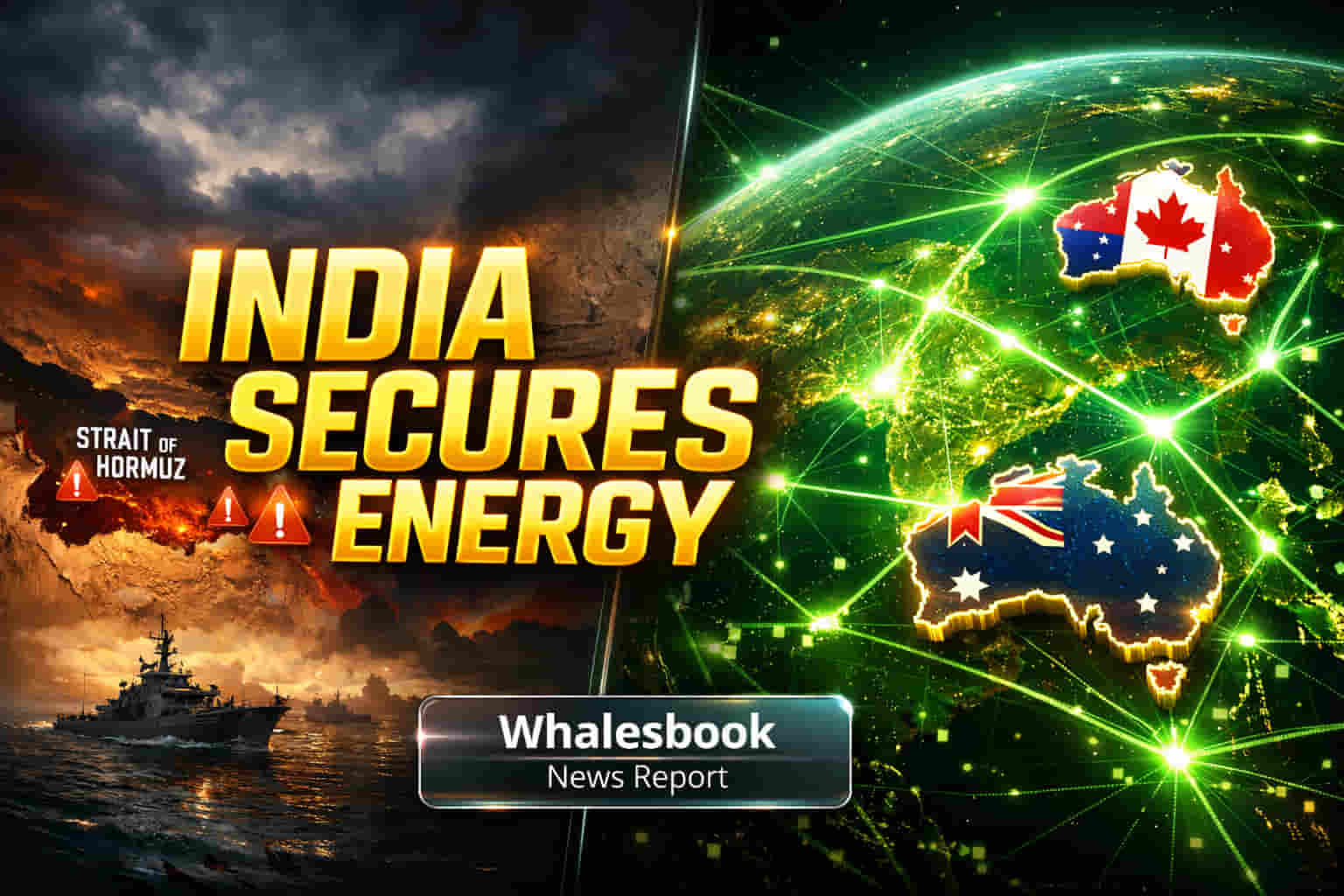


1. THE SEAMLESS LINK
This strategic pivot from singular reliance to a multi-vector approach underscores India's evolution from managing energy crises to architecting sustained resilience. The proactive diversification and diplomatic maneuvering are not merely reactive measures to geopolitical flare-ups but represent a fundamental reorientation of the nation's energy posture, enabling it to leverage its import scale for greater strategic advantage in a volatile global market.
The Geopolitical Shield: Navigating the Hormuz Hazard
The escalating US-Iran conflict has placed critical maritime chokepoints, notably the Strait of Hormuz, under intense scrutiny. This waterway, through which approximately 20% of global oil and LNG transit daily, has seen traffic plummet by up to 70% due to operational withdrawals and soaring insurance premiums, effectively creating a de facto closure. Brent crude prices surged, peaking around $91.27 per barrel on March 6, 2026, reflecting a significant risk premium due to fears of prolonged shortages. However, India's energy security remains insulated. Approximately 60% of its crude imports bypass the Strait of Hormuz, utilizing alternative routes from Russia, West Africa, the Americas, and Central Asia. This significantly limits the impact of disruptions at this single chokepoint, transforming a potential crisis into a manageable sourcing adjustment. India's strategic petroleum reserves, alongside commercial inventories, provide an additional buffer of approximately 45 days of imports, with official sources clarifying that total reserves, including products in transit and SPR facilities, offer a 7-8 week coverage. This contrasts with some Asian peers; while China can cover about 130 days and Japan eight months, India's current reserves are considered sufficient for short-term shocks.
The Expanded Supplier Network: A Decade of Diplomatic Leverage
India's strategy over the past decade has demonstrably broadened its energy sourcing base. Official figures indicate a significant expansion from 27 partner countries to 40 across six continents. This multi-vector diversification is not just about cost but about enhancing negotiating flexibility and reducing reliance on any single region. New energy supply arrangements have recently been solidified with the United States and the United Arab Emirates, while Australia and Canada have offered additional gas supplies. This deliberate expansion aligns with national interest, ensuring a competitive price and reliable delivery from a wide array of suppliers. This contrasts with the more concentrated strategies of some neighbors; while Japan focuses on bilateral cooperation and overseas equity stakes, India emphasizes a broader, risk-weighted geographic distribution.
Strategic Diplomacy and Market Influence: The Russian Oil Waiver
A key element of India's resilience strategy has been its pragmatic engagement with global sanctions regimes, exemplified by the recent 30-day US Treasury waiver allowing Indian refiners to process Russian crude loaded before March 5, 2026. This waiver, allowing access to approximately 20-22 million barrels of 'stranded' Russian oil, offers near-term relief and helps stabilize refinery operations without granting new revenue to Moscow. India has consistently complied with G7 price cap rules. This diplomatic maneuver recognizes India's crucial role in stabilizing global energy markets, a position underscored by its adherence to international law in all transactions, utilizing compliant shipping and audited channels. The waiver, while temporary, eases immediate supply pressures amidst heightened geopolitical risk and could reshape Russian crude pricing dynamics. While some analysts question the long-term impact and sovereignty implications, it demonstrably supports market stability by preventing the withdrawal of millions of barrels from global circulation.
The Resilience Dividend: Price Stability Amidst Global Volatility
This proactive and diversified energy procurement strategy has translated into remarkable domestic price stability. While petrol prices have surged significantly in countries like Pakistan (55%), Germany (22%), France (19%), and the US (11.54%) during a comparable period, India's petrol prices have increased by less than 1%. This differential highlights the effectiveness of India's energy security framework in buffering consumers from global price shocks. The nation's substantial refining capacity of 258 million metric tonnes per annum (MMTPA), exceeding domestic consumption, further enhances flexibility in processing diverse crude grades. This capability also positions India as a major exporter of refined products, demonstrating operational strength and global integration.
The Analytical Deep Dive: Comparative Strengths and Vulnerabilities
India's energy security framework, anchored in diversification and strategic sourcing, contrasts with its peers in several respects. While Japan and China maintain significantly larger strategic petroleum reserves, India's expanded supplier network and diplomatic agility offer a unique form of resilience. The diversification from 27 to 40 countries globally represents a strategic departure from traditional reliance on a few major suppliers. Unlike China's focus on overseas equity stakes, India's strategy emphasizes broad geographic distribution and risk-weighted principles. However, vulnerabilities persist. India still imports over 80% of its crude oil, and the limited strategic reserve coverage, though expanding, remains a point of concern compared to developed nations. Furthermore, while crude oil imports are diversifying, nearly 50% of India's LNG and over 85% of LPG imports still transit the Strait of Hormuz, presenting a distinct vulnerability for these essential fuels, as India lacks comparable strategic LPG reserves. The nation's high import dependency (85% of crude oil) exposes it to substantial economic risk, with each $1 increase in crude prices costing approximately $2 billion annually.
The Forensic Bear Case: Navigating the Complexities of Diversification
While India's diversified strategy has yielded resilience, potential weaknesses warrant scrutiny. The reliance on Russian oil, despite discounts, carries geopolitical implications and could be subject to future US policy shifts or competition from other buyers like China. The 30-day Russian oil waiver, while a short-term relief, highlights that India cannot manage its energy security through temporary permissions from external powers. There's also the growing complexity of managing relationships with over 40 supplier nations, each with its own geopolitical considerations. While India aims for energy independence through renewables, fossil fuels still dominate, with nearly 83% of central SOE capital expenditures going to fossils. The substantial energy subsidies budgeted at 2 trillion rupees (approx. $24 billion) could balloon by an additional $4-6 billion if oil prices consistently hover around $80 per barrel, straining fiscal space. The long-term strategy of diversifying supplier bases and expanding strategic reserves is sound, but its execution and the management of these complex relationships will be critical to avoid creating new dependencies or over-reliance on volatile markets.
Future Outlook: Sustained Demand and Strategic Imperatives
India's energy demand is projected to continue its robust growth, expected to contribute significantly to global consumption increases. Projections indicate power demand rising in the latter half of 2026. The government's strategy emphasizes ongoing diversification, enhancement of national reserves, and a deliberate shift towards a gas-based economy and green hydrogen. By 2030, India aims to produce 5 million metric tons of green hydrogen annually, a modest yet scalable target. The long-term vision includes expanding refining capacity to 400-450 MMTPA and achieving a 90-day strategic reserve buffer. This proactive approach, balancing cost-efficiency with supply chain resilience, positions India to effectively navigate future energy market uncertainties and solidify its strategic autonomy.