

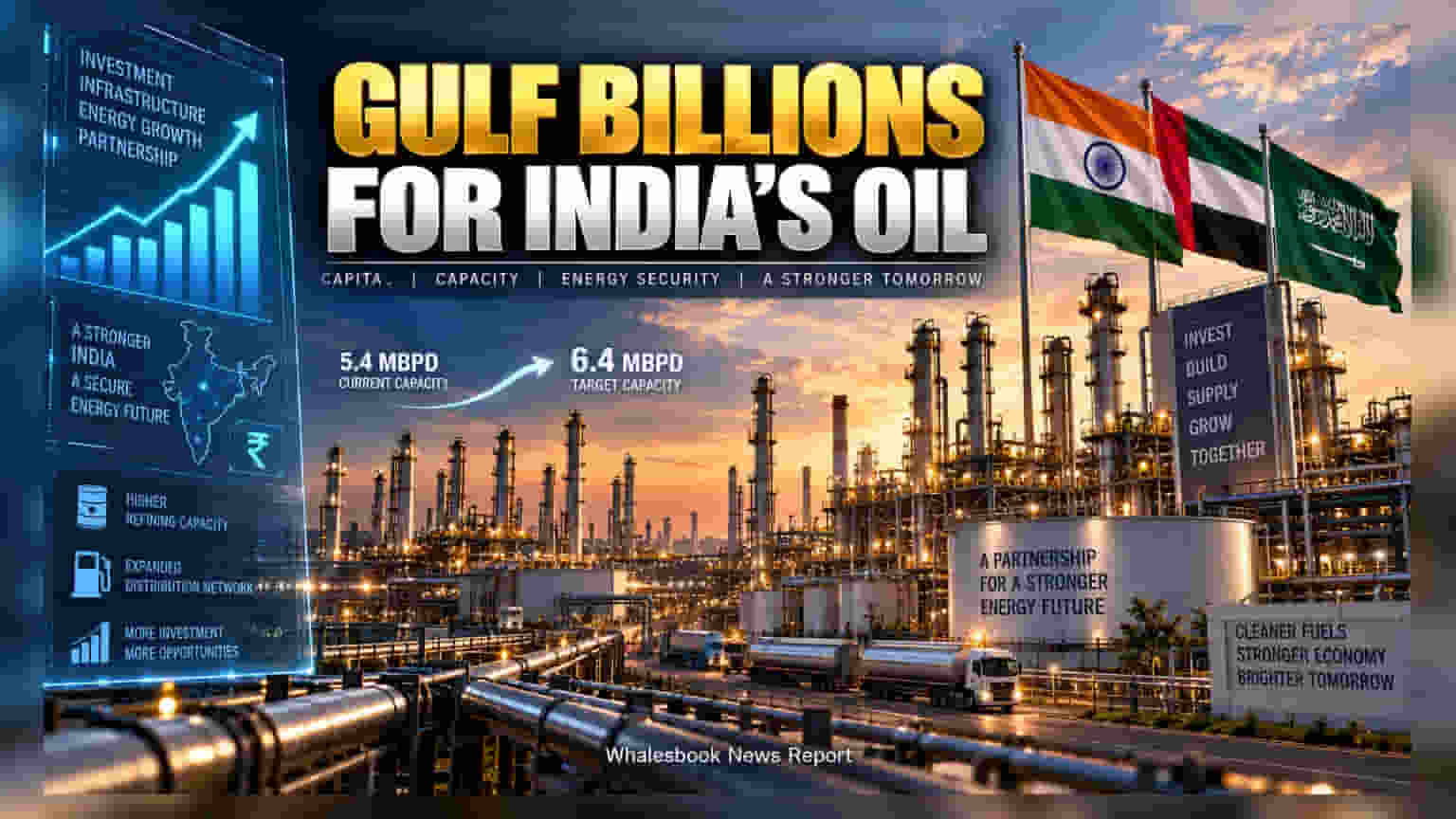
Minister Hardeep Singh Puri has indicated that India is offering UAE and Saudi investors access to its fuel retail networks to help fund major refinery expansions. The government aims to lift refining capacity to 6.4 million barrels per day. This move is designed to attract the multi-billion dollar capital needed for infrastructure while potentially altering the competitive landscape for fuel retailing in India.
The Indian government is actively seeking to attract foreign direct investment from the UAE and Saudi Arabia to accelerate the expansion of its domestic refining infrastructure. Union Minister for Petroleum and Natural Gas Hardeep Singh Puri recently signaled that the country is willing to provide international investors with secure access to India’s downstream distribution networks. This access is intended as a strategic incentive for global energy giants to participate in high-cost refinery projects.
The Scale of Expansion
India is currently working toward a target of increasing its refining capacity to 6.4 million barrels per day, up from the current level of approximately 5.4 million barrels per day. This expansion is considered essential to meet the rising domestic demand for energy as the economy grows. However, the costs associated with these projects are immense, with individual refinery units estimated to require capital spending between 780 billion and 800 billion rupees. By partnering with sovereign wealth funds or major oil companies from the Gulf, the government aims to reduce the financial burden on domestic firms while securing long-term supply partnerships.
Impact on Retail Competition
For Indian investors, the most significant change lies in the downstream sector. Currently, the retail fuel market in India is dominated by state-owned oil marketing companies such as Indian Oil Corporation, Bharat Petroleum, and Hindustan Petroleum, alongside private players like Reliance Industries and Nayara Energy. If the government opens up broader access to these distribution networks as part of a deal to secure funding for new refineries, it could lead to increased competition in the fuel retail space. Investors may track whether this potential influx of foreign retail presence impacts the market share or profit margins of established domestic players.
Potential Risks and Challenges
While the prospect of securing billions in foreign investment is positive for energy security, there are inherent risks. Large-scale refinery projects often face execution challenges, including delays in construction, cost overruns, and global fluctuations in crude oil prices that can affect profitability. Furthermore, the global shift toward cleaner energy sources means that long-term demand projections for traditional refined products must be carefully monitored. The regulatory environment also plays a key role; any changes in fuel pricing policies or retail margins will directly impact the viability of these investments for foreign partners. The success of this initiative will depend on how effectively the government can balance its need for capital with the competitive interests of existing domestic retailers, as well as the ability of the companies to deliver these projects within planned timelines and budgets.