

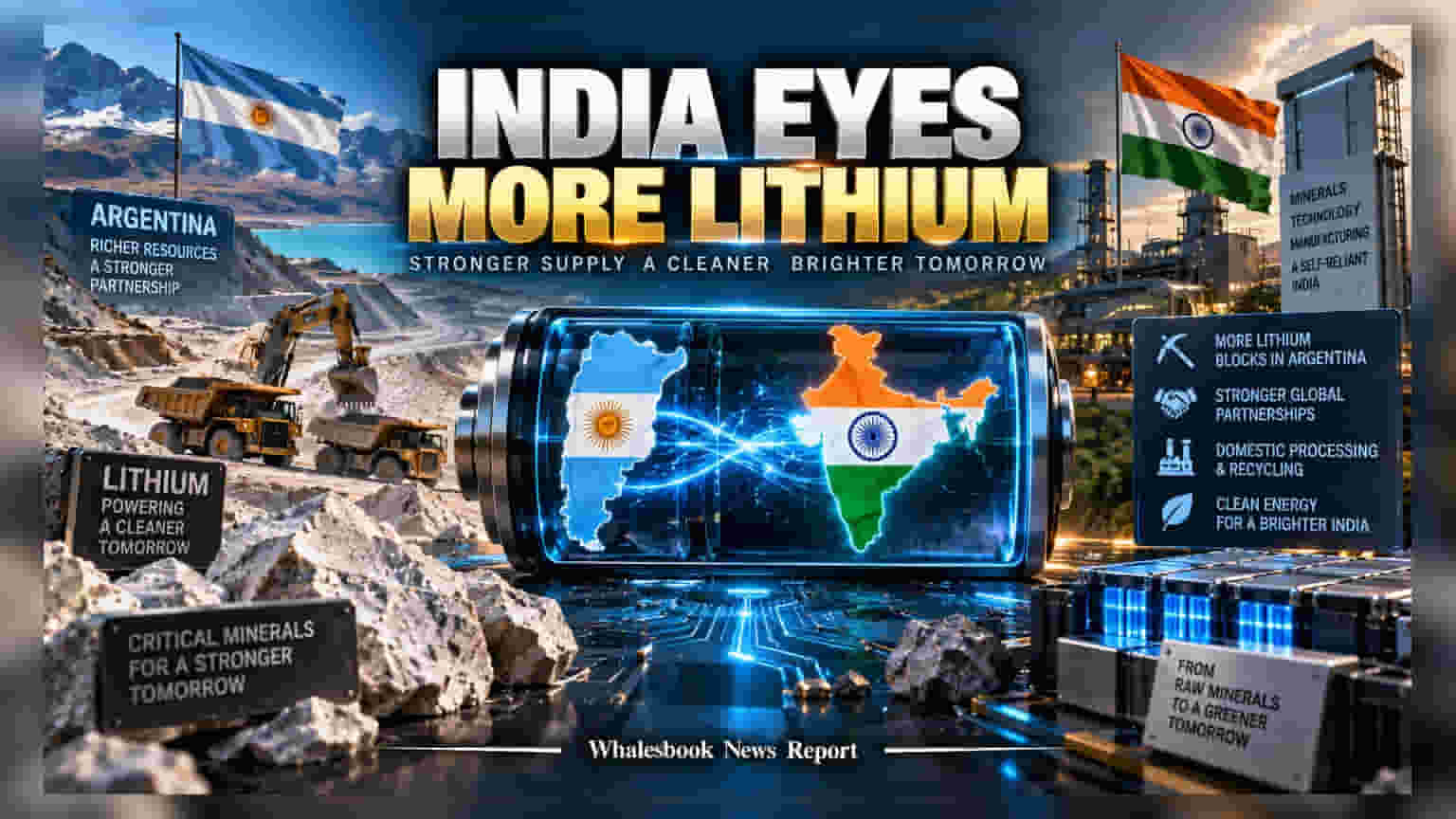
India is negotiating for five additional lithium blocks in Argentina to strengthen its critical mineral supply chain. This move, part of a ₹36,000 crore national mission, aims to secure resources for the EV and technology sectors while reducing heavy import dependence.
India is intensifying its search for critical minerals, with the government confirming that negotiations are underway to acquire five additional lithium blocks in Argentina. This expansion is being driven by Khanij Bidesh India Ltd (KABIL), a government-backed joint venture that has already secured five lithium blocks in Argentina's Catamarca province. With Phase II drilling at the existing sites completed in late August 2026, the government is now focused on scaling up its portfolio to ensure a steady supply of lithium, a vital component for batteries used in electric vehicles and consumer electronics.
Strategic Global Partnerships
Beyond the developments in South America, the Ministry of Coal and Mines is actively engaging with Australia and Chile to identify potential mineral assets. These discussions involve both direct government-to-government agreements and support for private sector participation. Minister G. Kishan Reddy has emphasized that the government is encouraging corporations to take a lead role in overseas mining and the subsequent processing of raw materials. By fostering these partnerships, the administration aims to bypass the current supply bottlenecks that have historically limited the growth of domestic battery and technology manufacturing.
Domestic Processing and Recycling Efforts
The government's strategy extends beyond overseas exploration, focusing heavily on building a self-reliant value chain through the National Critical Mineral Mission. This mission, supported by an allocation of ₹36,000 crore, is designed to accelerate domestic exploration and the setup of processing infrastructure. Plans are already in motion to establish four specialized processing plants, with preliminary sites identified in Maharashtra and Gujarat.
To further reduce import needs, the government is prioritizing a circular economy approach by investing in e-waste recycling. A dedicated allocation of ₹1,500 crore has been set aside for recovering minerals from electronic waste. Officials are currently reviewing incentives for 58 companies that have been shortlisted for this initiative. The goal is to meet a significant portion of domestic demand through recycled materials, potentially lowering the need for external sourcing in the long run.
Risks and Market Realities
While the expansion into overseas mining is a strategic step, it comes with inherent risks. One of the primary challenges remains the global concentration of mineral processing, which is currently dominated by China. This creates a supply chain vulnerability that India is working to mitigate. Additionally, lithium prices have remained volatile in the global market, influenced by shifts in inventory levels and fluctuating demand. For investors, the success of these projects will depend on effective execution, as overseas mining involves complex regulatory environments, infrastructure requirements, and technical hurdles. Furthermore, the ability of private players to contribute efficiently to these capital-intensive projects will be a key factor in the overall success of the mission.
The next important developments to monitor include official contract signings for the new Argentine blocks and updates on the progress of the planned processing facilities in India.