

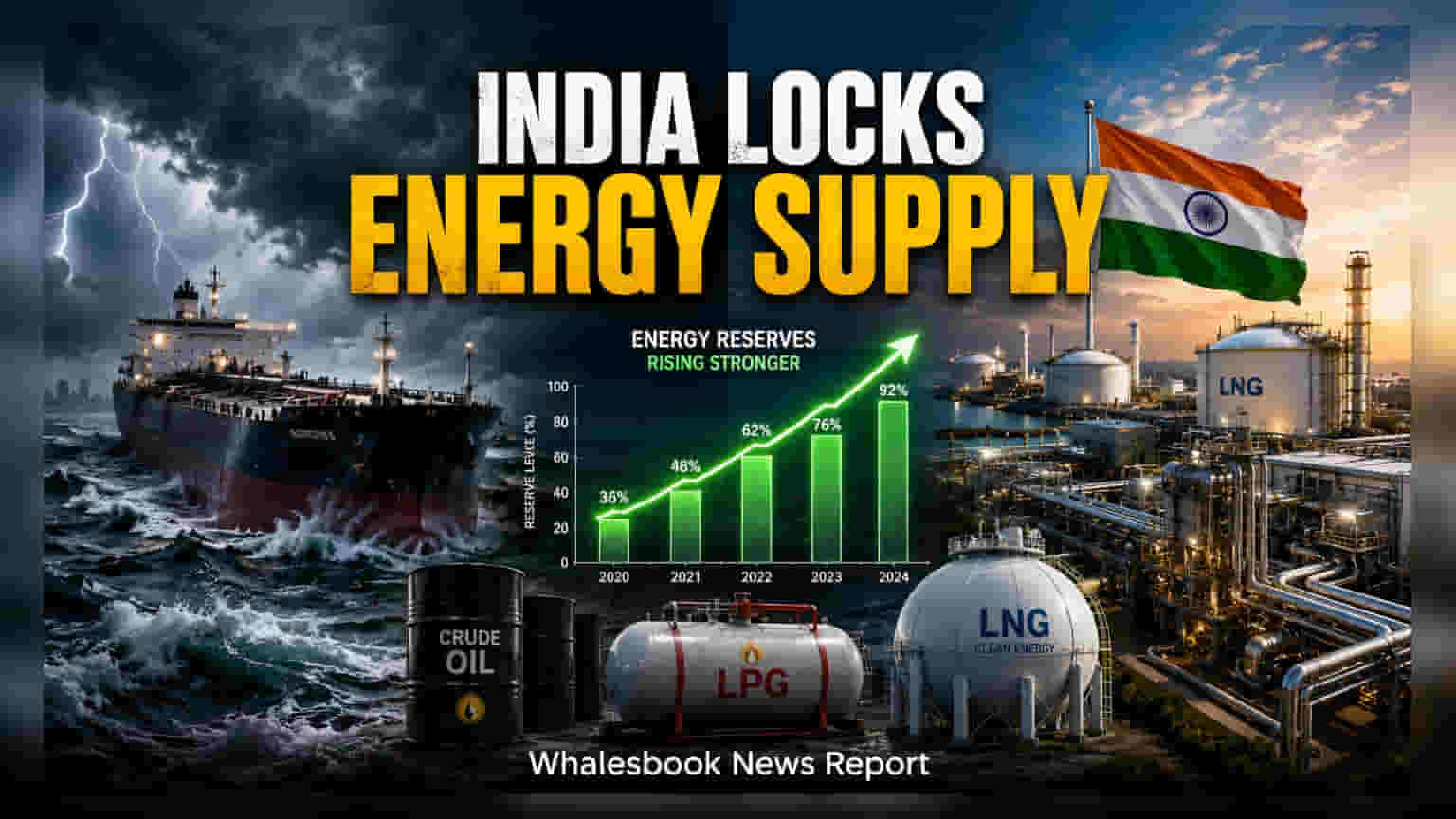
India is expanding its strategic petroleum reserves from 5.33 million metric tonnes (MMT) to 11.88 MMT to protect against global supply disruptions. This expansion aims to move the nation toward a 90-day reserve target, crucial for stabilizing fuel supplies amid geopolitical instability. The strategy includes balancing government-held physical reserves with commercial stocks held by domestic refiners.
Detailed Coverage
India is aggressively scaling up its energy security infrastructure as part of a long-term plan to protect the economy from global supply shocks. The current Strategic Petroleum Reserves (SPR) capacity, which stands at 5.33 million metric tonnes across facilities in Visakhapatnam, Mangaluru, and Padur, currently provides about 9.5 days of crude oil consumption cover. The government's Phase II expansion project is already in progress, with new capacity being added at Chandikhol in Odisha and an additional facility in Padur, Karnataka.
Strategic Reserve Targets and Expansion
Once the Phase II projects are operational, India's total SPR capacity will increase to 11.88 million metric tonnes. This expansion is a key step toward meeting the International Energy Agency's recommended 90-day inventory benchmark for member nations. Because new underground storage projects often require four to seven years to complete, the government is focusing on a dual-layered approach. This involves building dedicated state-managed reserves through the Indian Strategic Petroleum Reserve Limited (ISPRL) while simultaneously mandating that commercial oil refiners maintain a buffer of operational stock to cover the remaining period.
Challenges in LPG and LNG Storage
Beyond crude oil, India is addressing vulnerabilities in its Liquefied Petroleum Gas (LPG) and Liquefied Natural Gas (LNG) supplies. With India importing approximately 60% of its LPG, disruptions in the Gulf region pose a direct risk to energy access for over 330 million households. Proposals are being evaluated to create 25-40 days of strategic LPG reserves using underground salt caverns, which offer a safer and more efficient storage method than traditional surface tanks.
For LNG, the situation is more complex due to high costs and technical challenges associated with long-term storage. Unlike crude oil, which can be stored in large underground caverns, LNG requires specialized, temperature-controlled facilities. Experts suggest that instead of focusing solely on massive physical storage, India should prioritize a combination of increased tankage at existing regasification terminals, diversified long-term supply contracts, and flexible cargo arrangements to manage import dependence, which currently nears 100%.
Investor Monitorables for Energy Stability
For investors monitoring the energy sector, the focus remains on the execution timeline of the Phase II storage projects and the government's ability to balance fiscal spending with these long-term security needs. The effectiveness of this policy will depend on the implementation of a transparent release mechanism that allows for controlled stock usage during extreme price volatility. Key updates to follow include progress reports on the Chandikhol and Padur construction sites, updates on government-mandated commercial inventory requirements for oil refiners, and any shifts in capital allocation toward LNG terminal expansion.