

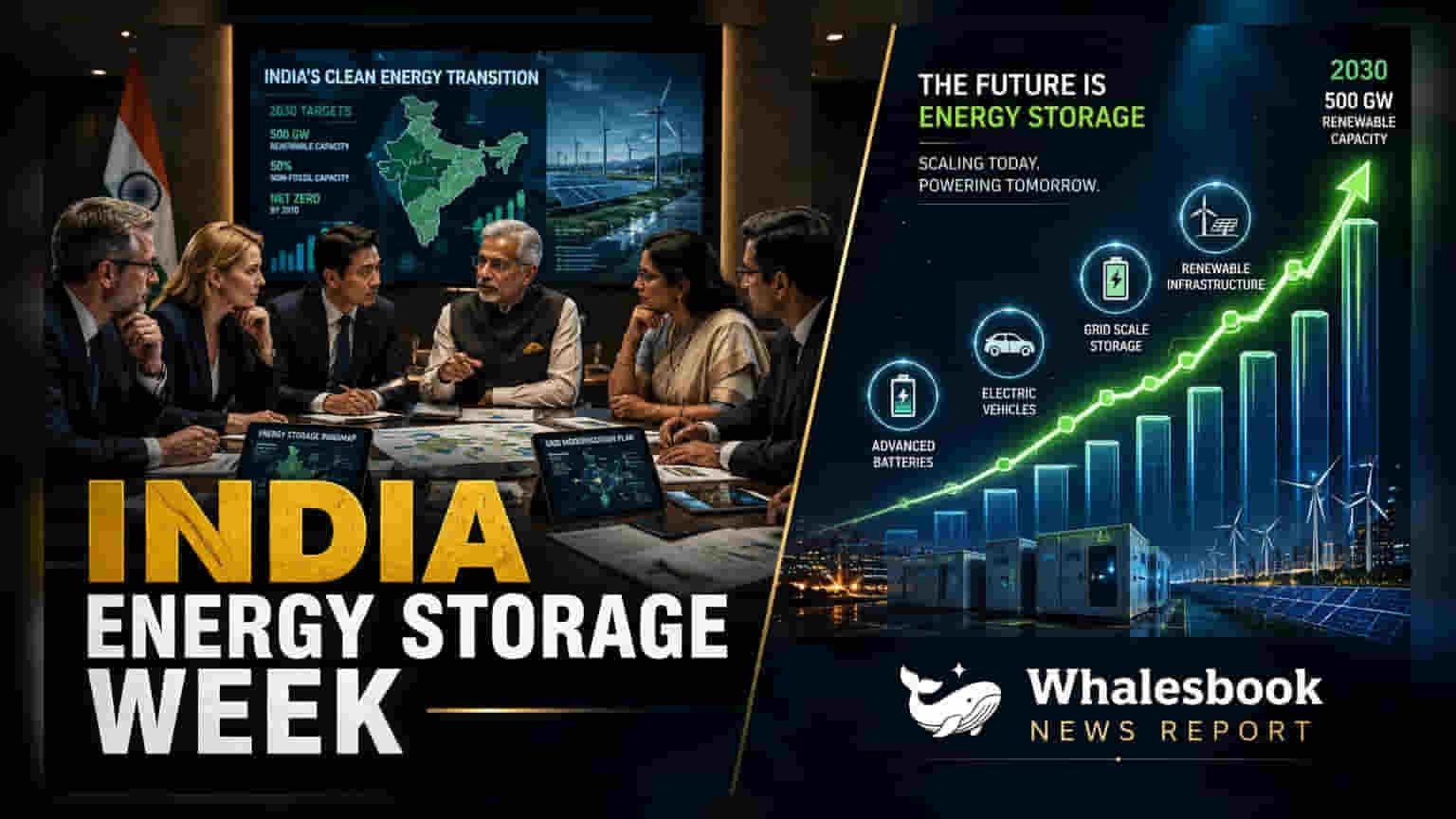
The 12th edition of India Energy Storage Week begins July 8 in New Delhi, focusing on local battery production and supply chain resilience. For investors, the event highlights the critical transition away from imported technology, a move that requires significant capital expenditure and carries long-term execution risks for the energy storage and electric vehicle sectors.
What Happened
Starting July 8, 2026, New Delhi will host the 12th India Energy Storage Week. The three-day event is set to bring together industry leaders, policymakers, and technical experts from 15 countries. While the primary focus is on knowledge sharing, the agenda highlights three critical areas for the Indian energy sector: battery manufacturing, electric mobility, and green hydrogen. Organizers expect significant participation from global firms, emphasizing the push to reduce India’s reliance on foreign technology and components in its clean energy infrastructure.
Why This Matters For Investors
For investors, the event serves as a bellwether for the industrial transition currently unfolding in the energy sector. The most significant business shift is the move from importing finished battery cells to building domestic "gigafactories" and localizing the production of essential components like cathodes, anodes, and electrolytes. This localization is essential for companies to improve their long-term profit margins and reduce exposure to global supply chain volatility. However, shifting to domestic manufacturing is a capital-intensive process. Companies in this space are currently committing large sums to expansion, which often leads to higher debt levels and pressure on free cash flow in the short to medium term.
The Capital Expenditure And Execution Test
The industry is at a point where the ability to execute complex projects determines long-term success. While demand for electric vehicle (EV) components and stationary energy storage is rising, the hurdle for listed companies is the ability to maintain profitability while funding these massive projects. Investors may track whether companies can successfully scale production without incurring significant cost overruns. The technical focus of the event—such as advanced battery recycling and alternative storage chemistries—points to a highly competitive landscape where firms that can achieve cost-efficiency and supply chain security will likely hold a business advantage.
Peer And Sector Context
The Indian energy storage sector is currently split between legacy players adapting their existing lead-acid battery manufacturing lines for new technologies and newer entrants focusing exclusively on Lithium-ion and advanced energy management systems. This creates a divergence in financial performance. Legacy firms often have the advantage of established distribution networks and existing cash flow, while newer entrants or those aggressively pivoting to new tech often show higher growth rates but carry higher financial leverage. The sector also remains sensitive to government policy, particularly the Production Linked Incentive (PLI) schemes. Delays in policy support or changes in subsidy structures can directly impact the profitability of these expansion projects.
Risks To Consider
The sector is not without risks. High dependency on imported raw materials like Lithium, Cobalt, and Nickel remains a vulnerability. Price volatility in these commodities can squeeze margins even if the final product demand remains strong. Furthermore, the risk of technological obsolescence is real; firms that invest heavily in a specific chemistry or manufacturing process might find their investments at risk if the industry shifts toward more efficient, lower-cost alternatives.
What Investors Should Track
Investors may monitor the following to understand the health of the sector: company-specific progress on the commissioning of gigafactories, management commentary on raw material sourcing, and updates on the disbursement of government PLI subsidies. Additionally, track the utilization levels of existing facilities to gauge whether the supply is keeping pace with demand without creating inventory pressure.